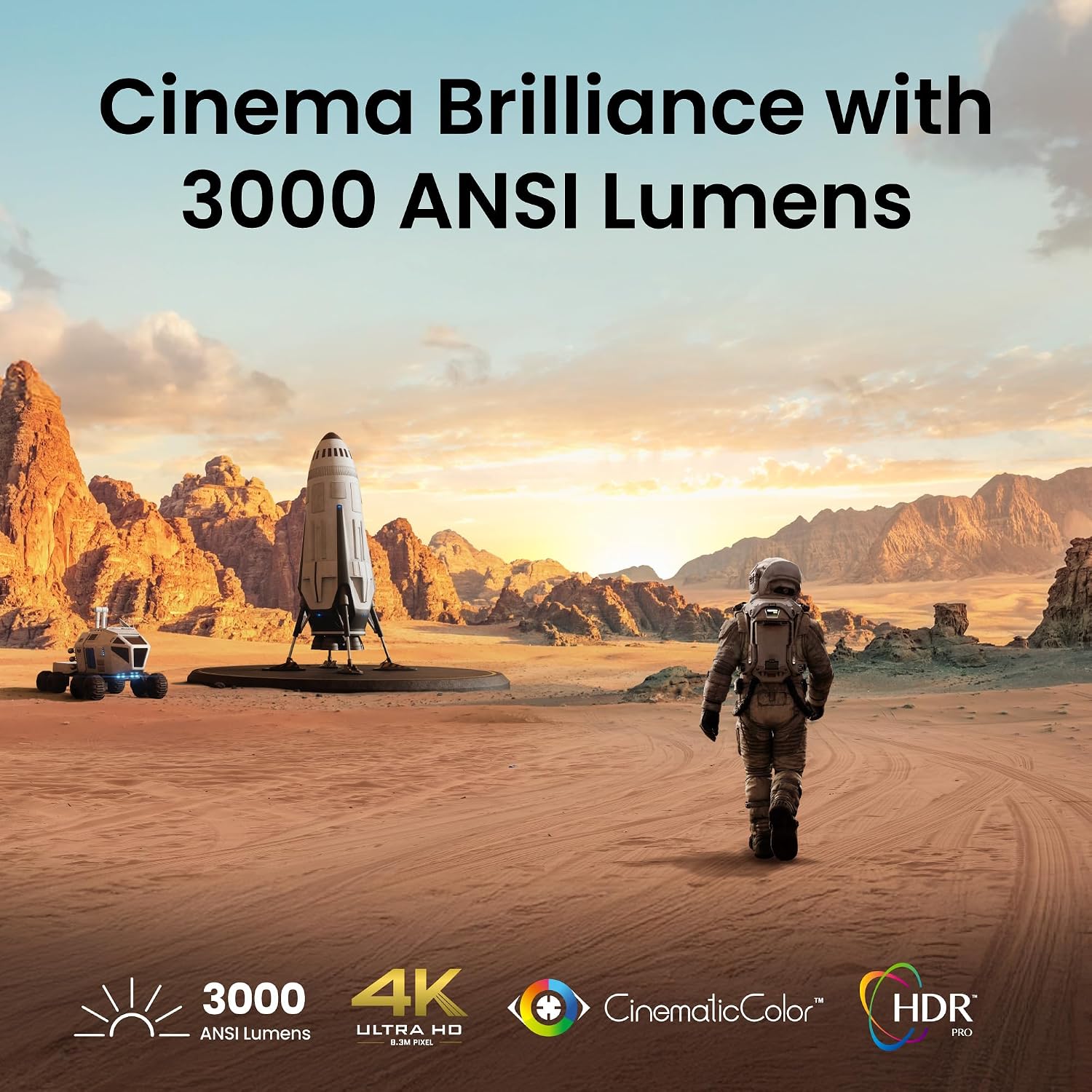
Key image features that define cinematic picture quality at home
When evaluating the best 4K home theater projectors, picture quality depends on more than resolution alone. The interplay between hdr performance, color accuracy, and contrast ratio determines how lifelike films appear on your screen, especially in dimly lit home cinema rooms. A projector with high ansi lumens but weak native contrast may look flat, while a slightly dimmer model with excellent native contrast can reveal subtle shadow detail.
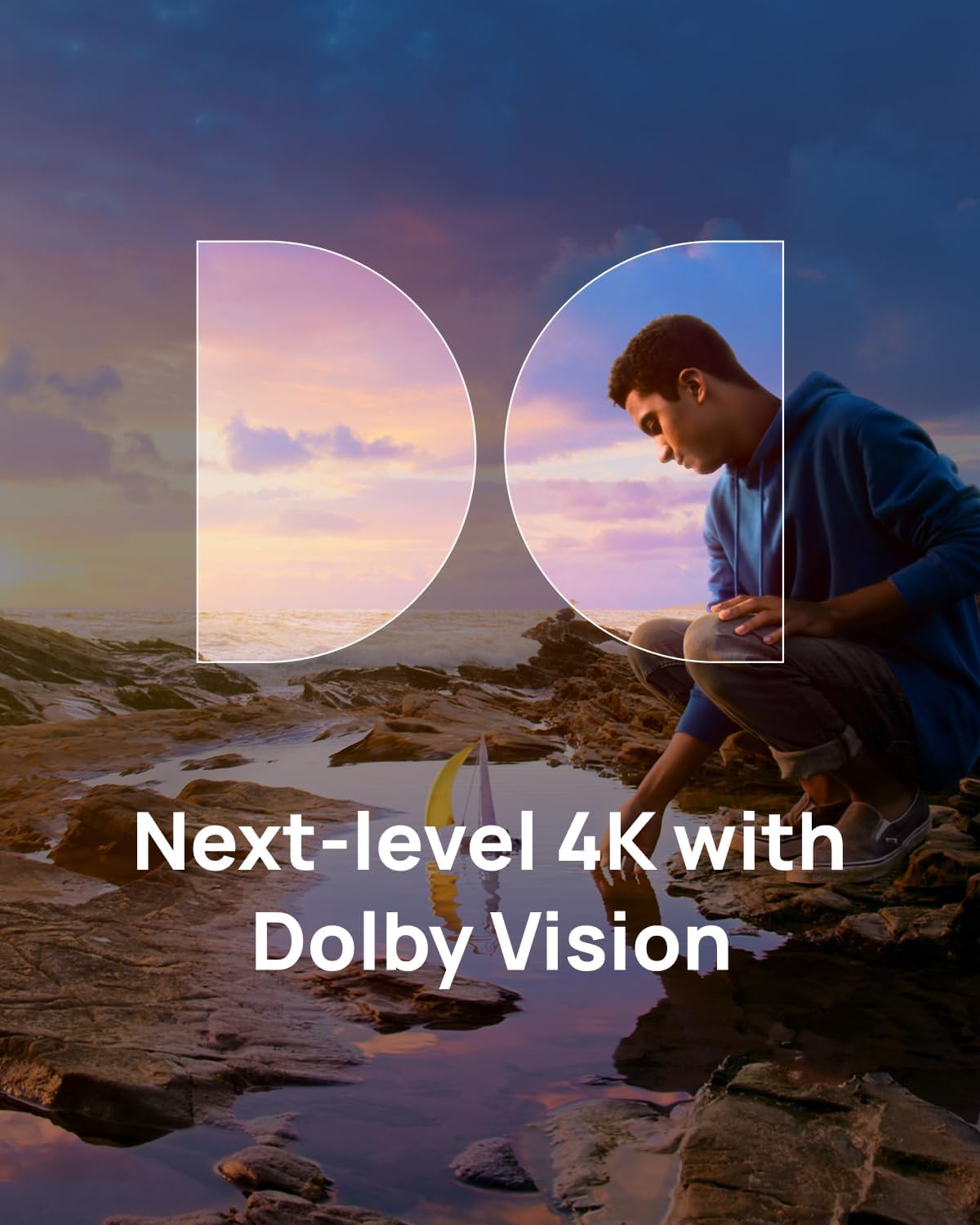
Look closely at how each projector handles hdr content, including HDR10, HLG, and any dolby vision compatibility or equivalent dynamic tone mapping. Effective tone mapping preserves highlight detail in bright scenes while maintaining deep blacks, which is crucial for modern streaming and UHD Blu ray movies mastered at high peak brightness. Many of the best projectors now offer multiple hdr presets, allowing you to tailor the image to your screen gain, room color, and preferred brightness.
The lens quality on a projector strongly influences sharpness across the entire screen. Premium models from Sony, Sony Bravia, and JVC DLA often use all glass lenses that minimize chromatic aberrations and maintain focus uniformity, which is especially visible on large home theater screens above 3 meters. For people exploring compact solutions, guides on transforming a phone into a home theater projector illustrate how even small devices can project, but dedicated 4K projectors still deliver far superior picture quality and hdr performance.
Throw distance, room layout, and choosing between short throw and ultra short designs
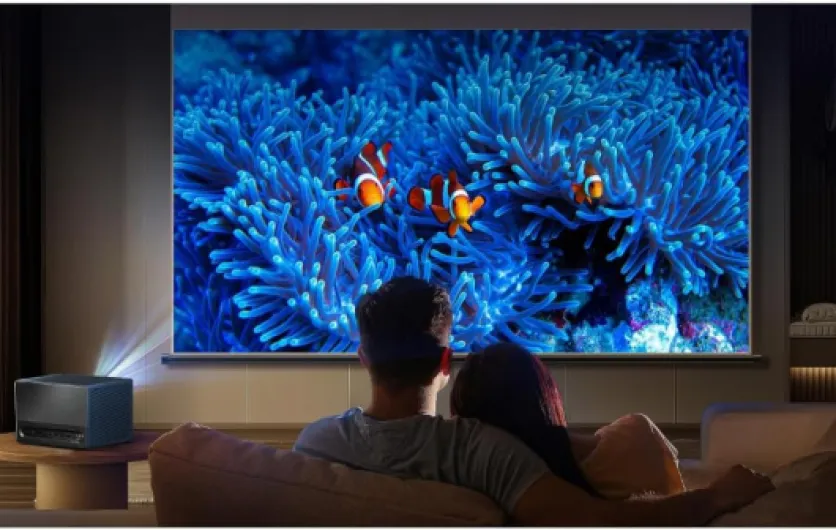
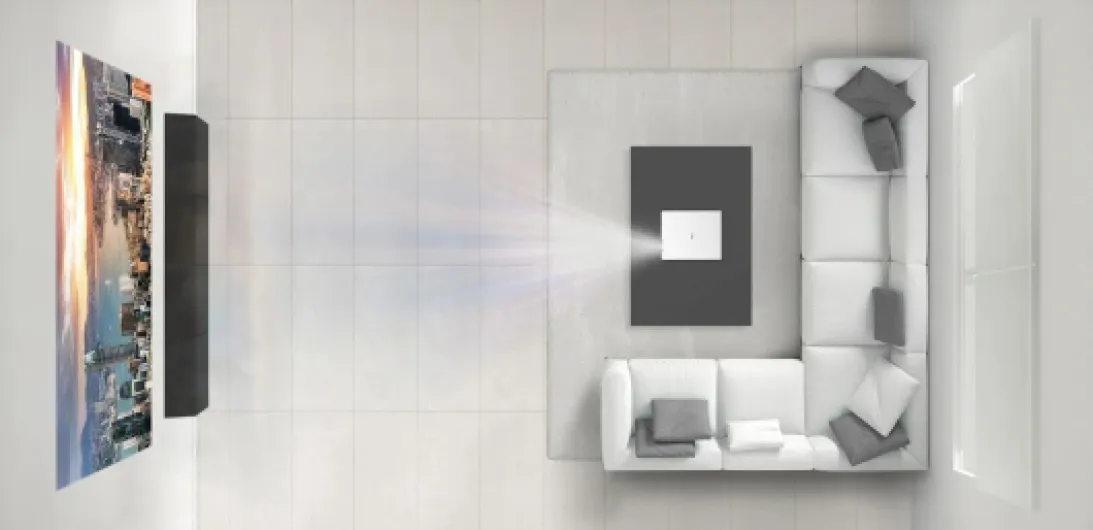
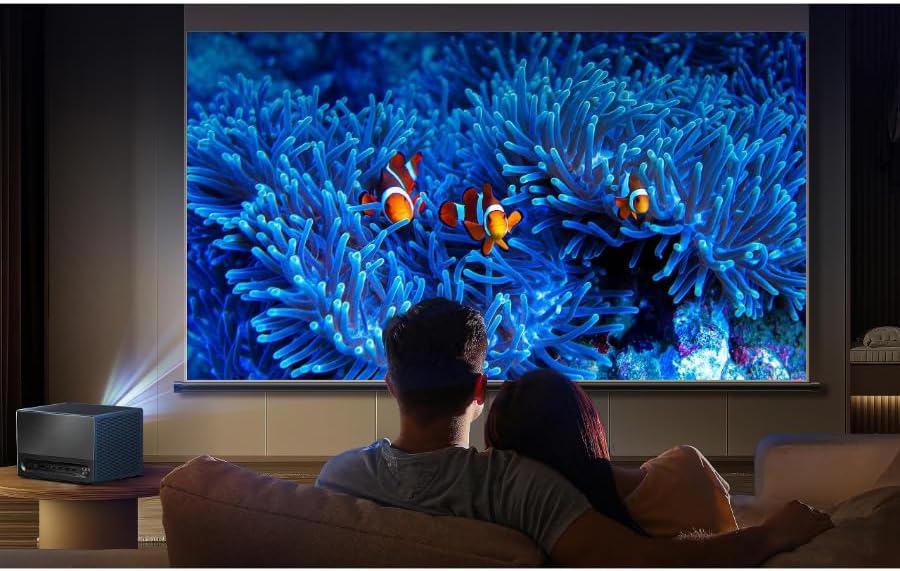
Room size and layout strongly influence which models qualify as the best 4K home theater projectors for your situation. Traditional long throw projectors sit several meters from the screen, which suits larger dedicated home cinema rooms but can be challenging in compact apartments. Short throw and ultra short throw designs solve this by projecting a large image from a position close to the wall, often just a few tens of centimeters away.
An ultra short projector can sit on a low cabinet directly under the screen, keeping cables tidy and reducing the risk of people walking through the beam. These projectors rely on complex lens systems and mirrors, so evaluating their focus uniformity and geometric stability is important when you compare best projectors in this category. Short throw models, including some XGIMI Horizon and Horizon Max variants, offer a middle ground by allowing a big picture from a coffee table or ceiling mount at a relatively modest distance.
For multi purpose living rooms, the choice between short throw and ultra short designs often comes down to furniture placement and ambient light. A high gain screen can help a lower ansi lumens projector compete with daylight, but serious home theater enthusiasts still prefer controlled lighting for optimal contrast ratio and native contrast. Readers interested in compact setups may also appreciate resources on exploring the world of pico projectors for home theaters, which show how portable projectors complement, rather than replace, a main 4K home cinema projector.
Light source, hdr formats, and advanced processing in modern projectors
The light source inside a projector shapes brightness stability, color performance, and long term running costs. Traditional lamp based models can still offer excellent picture quality and high ansi lumens, but their brightness declines over time and replacement adds to the overall price of ownership. Laser and LED light source designs, increasingly common in the best 4K home theater projectors, maintain brightness more consistently and often reach full output instantly.
Laser projectors, including several Sony Bravia and JVC DLA models, typically deliver strong native contrast and precise color control, which benefits hdr playback. When combined with advanced tone mapping, these projectors can render dolby vision mastered content convincingly even if they technically accept only HDR10 signals, by analyzing each frame and adjusting brightness dynamically. Pixel shifting technology also allows some projectors to simulate native 4K resolution from lower resolution imaging chips, which can be a cost effective route to sharp images in many homes.
Processing features now extend beyond hdr and resolution. Many best projectors include motion interpolation, dynamic iris systems to boost contrast ratio, and smart platforms with streaming apps and integrated sound solutions. Compact models such as the XGIMI Horizon and Horizon Max integrate speakers that outperform typical television sound, although serious home theater owners still prefer separate AV receivers and speaker systems for truly cinematic audio.
Comparing brands, models, and prices for different home cinema priorities
Choosing the best projector for your home theater means balancing performance, features, and budget. Premium brands like Sony and JVC DLA focus on high native contrast, refined lens assemblies, and sophisticated hdr tone mapping, which appeal to enthusiasts building dark, acoustically treated home cinema rooms. Their projectors often command a higher price, yet the resulting picture quality, especially in challenging scenes, can justify the investment for demanding viewers.
Midrange models, including several Sony Bravia projector options and competitive DLP designs, aim to deliver strong ansi lumens, accurate color, and flexible installation at more accessible prices. Many of these projectors use pixel shifting to approximate native 4K resolution, which still looks very sharp on typical 100 to 120 inch screens in most homes. For people prioritizing convenience and smart features, compact projectors like the XGIMI Horizon and Horizon Max integrate Wi Fi, Bluetooth, and capable sound systems into a single chassis.
Shoppers should also consider independent testing and each detailed review when comparing best projectors. A thorough review often measures native contrast, calibrated brightness, and hdr performance, revealing differences that marketing materials may obscure. In the middle of your research journey, it can be helpful to read a focused test of a 4K HDR short throw smart portable LED projector, which illustrates how modern technology blends portability, strong sound, and convincing home cinema picture quality.
Practical setup tips for sound, screens, and everyday home theater use
Even the best 4K home theater projectors need careful setup to reach their potential. Start by matching screen size and gain to your projector’s ansi lumens output and your room’s ambient light, because this balance directly affects perceived contrast ratio and picture quality. A high quality fixed frame screen with a suitable surface can dramatically improve both color accuracy and native contrast compared with projecting on a bare wall.
Sound is equally important for an immersive home cinema experience. While some projectors, including the XGIMI Horizon and Horizon Max, offer surprisingly capable integrated sound, a separate surround system or soundbar with a subwoofer will better match the scale of a 3 meter wide image. Position speakers to create a coherent soundstage anchored to the screen, and ensure that projector fan noise remains low enough not to distract during quiet scenes.
Calibrating basic settings such as brightness, contrast, color temperature, and sharpness helps any best projector perform closer to professional standards. Many owners use test patterns or calibration discs to fine tune these controls, which can significantly improve hdr rendering and overall picture quality. Regular maintenance, including cleaning filters and ensuring adequate ventilation around the light source, will help your projector maintain high performance for many years of home theater enjoyment.
Key statistics about 4K home theater projector adoption
- Global shipments of 4K projectors for home cinema have grown steadily, reflecting strong consumer interest in large screen entertainment at home.
- Laser and LED light source projectors now represent a significant share of premium home theater sales, due to their long lifespan and stable brightness.
- Short throw and ultra short throw models have increased their market presence as more people build home theaters in smaller living spaces.
- HDR capable projectors account for the majority of new 4K home theater models, underlining the importance of tone mapping and contrast performance.
Common questions about the best 4K home theater projectors
Are 4K projectors really better than high quality Full HD models ?
4K projectors provide higher native resolution or effective resolution through pixel shifting, which results in finer detail and smoother edges on large screens. When combined with good hdr performance and strong native contrast, the improvement in picture quality over Full HD becomes clearly visible in a dark home theater. However, in smaller rooms or on modest screen sizes, a well calibrated Full HD projector can still look impressive for many viewers.
How bright should a 4K projector be for a typical living room ?
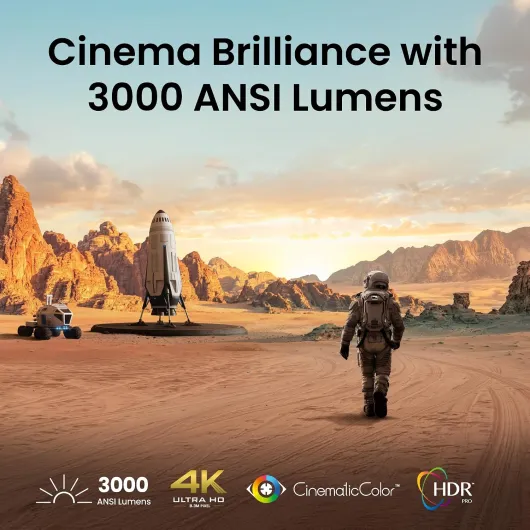
For a living room with some ambient light, many experts recommend at least around 2 000 to 2 500 ansi lumens for comfortable viewing on a 100 inch screen. In a fully darkened home cinema, lower ansi lumens can still produce a satisfying image if the projector has strong native contrast and a suitable screen. The ideal brightness also depends on screen gain, wall colors, and how often you watch during daylight hours.
Is an ultra short throw projector a good replacement for a large TV ?
An ultra short throw projector can function as a television replacement when paired with an appropriate ambient light rejecting screen. These projectors sit close to the wall, offer large images, and often include smart platforms and integrated sound, making them practical for everyday home use. However, they still rely on controlled lighting for the best hdr and contrast performance, unlike high end OLED televisions.
Do I need dolby vision support on a 4K projector ?
Native dolby vision support remains rare among projectors, but many best projectors use dynamic tone mapping to approximate its benefits. Effective tone mapping analyzes each scene or frame to preserve highlight detail and maintain deep blacks, which is crucial for modern hdr content. As long as a projector handles HDR10 well and offers flexible hdr controls, the lack of formal dolby vision support is not necessarily a deal breaker.
What screen size is ideal for a 4K home theater projector ?
For most homes, a screen between 100 and 120 inches diagonal provides an excellent balance between immersion and practicality. At typical seating distances of 3 to 4 meters, this size allows viewers to appreciate the extra detail of 4K resolution without visible pixel structure. Larger screens can be very rewarding in dedicated home cinema rooms, but they demand higher ansi lumens and stronger native contrast to maintain satisfying picture quality.

![[Built-in Official Apps/4K Support] Smart Outdoor Projector with WiFi and Bluetooth, 800ANSI Movie Projector, DoIby Audio with Dual Speaker, Auto Focus w/ YouTube&PrimeVideo Proyector, Upgrad P62 Pro Standard Black](https://www.home-theater-projector-guru.com/storage/677458/conversions/81GBqwrIy-L._AC_SL1500_-medium.webp)
![[2500 ANSI/ Official Apps/50W Audio] Outdoor 4K Projector with WiFi and Bluetooth, Auto Focus, Auto Keystone Smart Projector Support DoIby Audio, 2026 Upgrade GO2 Short Throw Projector with 360°Stand Bronze](https://www.home-theater-projector-guru.com/storage/797318/conversions/71dMhFra67L._AC_SL1500_-medium.webp)

![[2000ANSI]Smart Projector 4K with Built in Apps YouTube/PrimeVideo & Dolby, Outdoor Camping Projectors Portable Mini Projector Daylight Home Cinema with WiFi 6,Bluetooth 5.3 & HDR10+ Graphite Gray](https://www.home-theater-projector-guru.com/storage/932622/conversions/81tSOWp-GEL._AC_SL1500_-medium.webp)

![[Built-in Official Apps/4K Support] Smart Outdoor Projector with WiFi and Bluetooth, 800ANSI Movie Projector, DoIby Audio with Dual Speaker, Auto Focus w/ YouTube&PrimeVideo Proyector, Upgrad P62 Pro Standard Black](https://www.home-theater-projector-guru.com/storage/677458/81GBqwrIy-L._AC_SL1500_.jpg)
![[2500 ANSI/ Official Apps/50W Audio] Outdoor 4K Projector with WiFi and Bluetooth, Auto Focus, Auto Keystone Smart Projector Support DoIby Audio, 2026 Upgrade GO2 Short Throw Projector with 360°Stand Bronze](https://www.home-theater-projector-guru.com/storage/797318/71dMhFra67L._AC_SL1500_.jpg)

![[2000ANSI]Smart Projector 4K with Built in Apps YouTube/PrimeVideo & Dolby, Outdoor Camping Projectors Portable Mini Projector Daylight Home Cinema with WiFi 6,Bluetooth 5.3 & HDR10+ Graphite Gray](https://www.home-theater-projector-guru.com/storage/932622/81tSOWp-GEL._AC_SL1500_.jpg)