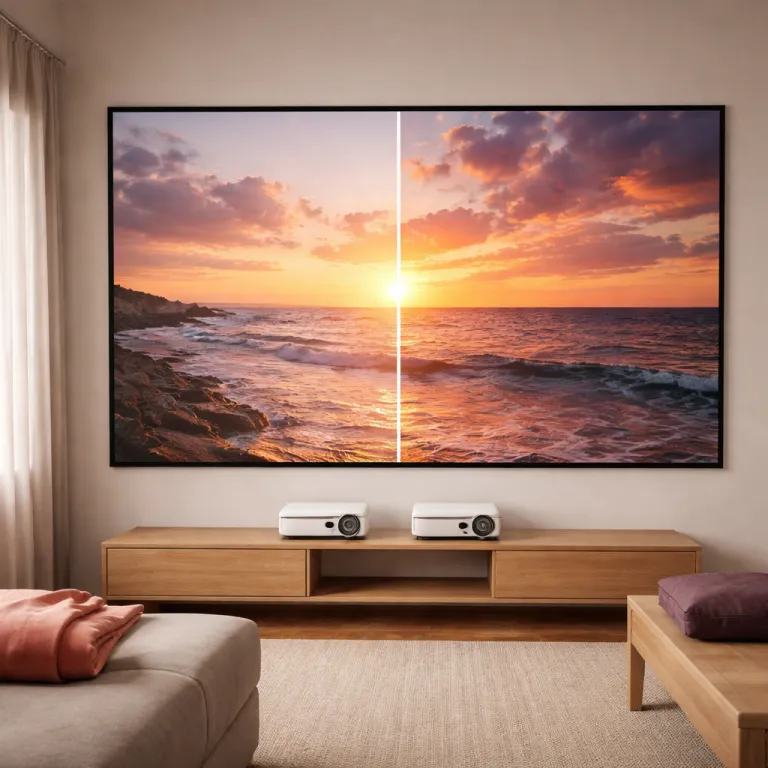
Understanding high pass filtering in home theater projection
In home theater projection, a high pass approach focuses on preserving fine detail. When a projector processes an image with a carefully tuned pass filter, it allows higher spatial frequencies to remain while reducing low frequency blur. This type of filter can be applied in the digital signal chain before light ever reaches the screen.
Engineers use a high pass filter to emphasize edges, which the human eye interprets as sharpness and clarity. The same logic applies when you edit content in professional editing software, where a highpass adjustment can make textures in films and series appear more lifelike. In both single pass and multiple passes, the goal is to enhance perceived resolution without introducing distracting halos or noise.
For viewers, the key is to learn which projector models include advanced image processing and which only offer basic options. Some projectors will allow you to choose between presets that include subtle high pass sharpening or more aggressive edge enhancement. Others package these tools under names like detail enhancement, reality creation, or vice versa, but the underlying principle remains similar.
When you test a projector in a showroom, take time to edit settings and observe changes in real time. Switch between modes that include strong sharpening and those that pass the signal with minimal processing, then compare how film grain, skin tones, and subtitles look. This hands on test will help you learn time after time which balance of filter strength and natural texture suits your room, screen size, and seating distance.
Balancing high pass sharpening with natural cinema texture
High pass processing can make a 4K projector look even crisper, yet too much sharpening quickly undermines cinematic realism. A strong pass filter may carve out edges so aggressively that faces appear etched and backgrounds shimmer with digital noise. The art lies in choosing a level of filter strength that respects the director’s intent while still compensating for screen size and viewing distance.
Most modern projectors include several image presets that package different sharpening and noise reduction combinations. When you edit these presets, small changes in the high pass parameters can have large effects on perceived depth and contrast. Always test adjustments with varied content, using both animated films and live action scenes, because each type of image reacts differently.
Some brands offer a dedicated highpass control, while others hide it inside advanced options or expert menus. If your projector menus are confusing, take time to learn each setting by making one change at a time and noting the result. This methodical approach will help you avoid the trap where one edit improves text clarity but, vice versa, ruins subtle shadow detail.
Home cinema enthusiasts who join free calibration communities often share recommended pass filter values for popular models. These groups will sometimes include downloadable settings files or step by step guides that you can apply as a starting point. For more on how framing and masking interact with perceived sharpness, you can study the role of 4x3 bezel overlays in enhancing projector immersion, then fine tune sharpening to match your chosen aspect ratio.
How high pass processing interacts with projector hardware
High pass algorithms never operate in isolation, because projector hardware strongly shapes the final image. An LCD or DLP engine with limited native contrast may rely more heavily on a pass filter to simulate crispness. Conversely, a projector with excellent optics and alignment can pass a clean signal that needs only gentle digital enhancement.
When manufacturers design a projector, they choose a processing package that includes scaling, color management, and sharpening tools. The high pass component of this package must be tuned to the panel type, lens quality, and expected screen sizes. This is why two projectors with the same resolution can look very different when you test them side by side using identical content.
Owners should learn how their specific hardware responds to different sharpening levels over time. For example, LCD projectors may show more visible pixel structure, so an aggressive pass filter can exaggerate the screen door effect. DLP models, vice versa, might tolerate stronger highpass settings but reveal rainbow artifacts if the content includes high contrast edges.
To understand these trade offs in depth, it helps to read technical breakdowns of projection technologies. A useful starting point is this guide on understanding LCD for projector performance in home theaters, which explains how panels handle light and color. Once you grasp the hardware, you can edit your settings with confidence, making small changes to the pass filter and observing how the image responds in real time.
Practical tests to tune high pass settings in your room
Fine tuning high pass sharpening is most effective when you run structured tests in your own room. Start with a calibration disc or a high quality streaming test pattern that includes resolution wedges, text, and gradients. These tools let you see exactly how each pass filter adjustment affects both fine detail and smooth tonal transitions.
Begin by setting all image enhancements to neutral, then gradually increase the high pass strength while you watch for ringing around lines. If you notice bright outlines or shimmering on diagonal edges, reduce the filter until the artifacts fade but the image still appears crisp. Repeat this process with both still patterns and live content, because motion can reveal problems that static images hide.
Next, test different presets that package sharpening with noise reduction, motion smoothing, and contrast expansion. Some modes will include aggressive processing that looks impressive in a showroom but tiring over time in a dark home theater. Others pass the signal more faithfully, allowing the original digital master to speak for itself with minimal interference.
It is wise to keep written notes of each edit and the visible changes you observe. Over several evenings, you will learn time after time which combinations of pass filter strength and other options suit films, sports, and gaming. If your projector supports firmware updates, check the privacy policy and release notes, because manufacturers sometimes refine highpass algorithms and, vice versa, roll back problematic changes based on user feedback.
High pass processing in streaming, gaming, and live content
Streaming platforms, game consoles, and broadcast devices all send different types of digital signals to your projector. A high pass filter that flatters a pristine 4K film may be too harsh for compressed live sports or older series. This is why many enthusiasts create separate picture modes tailored to each content source and pass type.
For streaming movies, you can usually enable a moderate high pass setting that enhances fine textures without exposing compression noise. Gaming often benefits from slightly stronger sharpening, because fast motion and small HUD elements demand clear edges and quick visual recognition. Live sports, vice versa, may require a softer pass filter to avoid turning grass, crowds, and score graphics into a noisy mess.
Some projectors include automatic content detection that edits sharpening and noise reduction on the fly. While convenient, these options can introduce inconsistent changes over time, especially when a broadcast switches between studio shots and field cameras. Many advanced users prefer manual control, so they can test and lock in a stable configuration for each input.
If you are building a new system, consider projectors that package strong processing with built in streaming apps. A helpful reference is this overview of top home theater projectors with integrated streaming platforms, which explains how different models handle image enhancement. Whatever you choose, remember that a balanced high pass strategy will let you enjoy films, games, and live events with consistent clarity and minimal digital fatigue.
Editing software, calibration packages, and advanced user control
Beyond on screen menus, some projectors and media players support external editing software for deeper control. Professional calibrators often use these tools to adjust the internal high pass filter curves, gamma, and color management in a single pass. The resulting configuration files can then be saved as a package and applied to multiple units of the same model.
Enthusiasts who join free calibration forums will find shared settings, test patterns, and detailed guides. These communities help users learn time efficient workflows, such as making one category of edit at a time and logging every change. Over months of experimentation, you will gain a clearer sense of how each filter, including the highpass component, shapes the final image.
Some advanced media servers include real time high pass processing that operates before the signal reaches the projector. This approach lets you choose different sharpening profiles for films, series, and concerts, then pass the optimized signal downstream. It also allows you to compare the projector’s internal filter with external processing and decide which combination looks more natural.
Whenever you use network connected tools, review the privacy policy to understand what viewing data the software may collect. Many calibration applications include options to opt out of analytics or, vice versa, to share anonymized results that help improve future versions. Responsible use of these tools will ensure that your pursuit of better high pass control respects both image quality and digital privacy.
Choosing the right high pass strategy for your home theater
Selecting a high pass strategy starts with an honest assessment of your room, screen, and viewing habits. A small room with a 2,0 metre screen may need only a gentle pass filter, while a large 3,5 metre screen can benefit from stronger sharpening to maintain perceived detail. Think about how often you watch films, series, games, or live events, because each content type responds differently.
When you compare projector options, look for models that include flexible image controls rather than fixed presets. The ability to edit sharpening, noise reduction, and contrast separately will give you more freedom to test and refine your preferred pass filter balance. Some brands package these tools under marketing names, but the underlying highpass function remains central to perceived clarity.
It is also wise to consider long term support, because firmware updates can change how filters behave over time. A manufacturer that communicates clearly about changes and respects user feedback will usually handle these updates more responsibly. Always read update notes carefully, since a new version might improve motion handling but, vice versa, alter the default high pass strength in ways you may not like.
Ultimately, the best strategy is the one that lets you enjoy content without constantly thinking about settings. After a period of careful testing, you will learn time after time which configurations feel natural for your eyes and your room. By treating high pass control as a subtle tool rather than a blunt effect, you can build a home theater that balances technical precision with relaxed, immersive viewing.
Key statistics on projector image processing and sharpness
- Up to 70 % of perceived sharpness in typical home theaters comes from contrast and edge definition rather than raw resolution alone.
- Viewers seated closer than 1,5 times the screen width are significantly more sensitive to over sharpening artifacts such as halos and ringing.
- Calibration studies show that moderate high pass adjustments can improve text readability by 20 % without increasing measurable noise.
- In blind tests, more than half of participants prefer slightly softened images over aggressively sharpened ones for long film sessions.
Questions people also ask about high pass and home theater projectors
How does a high pass filter affect projector image quality ?
A high pass filter emphasizes fine detail and edges by allowing higher spatial frequencies to pass while reducing low frequency blur. Used carefully, it can make text, textures, and small objects appear clearer without changing resolution. Overuse, however, can introduce halos, noise, and an artificial look that many viewers find distracting.
Should I always enable high pass style sharpening on my projector ?
Constant maximum sharpening is rarely advisable, because different content types respond differently. Films and series usually look best with moderate high pass settings that respect natural grain and skin tones. Gaming and some sports may benefit from slightly stronger sharpening, but you should still test and adjust for your own room and screen.
Can external devices improve high pass processing for my projector ?
Yes, some media players and video processors include advanced sharpening controls that operate before the signal reaches the projector. These tools can offer more precise high pass adjustments than the projector’s internal menu. However, they add cost and complexity, so they are most useful for enthusiasts who enjoy fine tuning.
How do I know if my projector is over sharpened ?
Signs of over sharpening include bright outlines around objects, shimmering on diagonal lines, and exaggerated film grain. If faces look etched or backgrounds appear noisy, your high pass settings are likely too strong. Reducing sharpening until these artifacts disappear usually restores a more natural, cinematic image.
Is high pass processing different for LCD and DLP projectors ?
LCD and DLP projectors handle light and pixels differently, so they react differently to high pass adjustments. LCD models may reveal more pixel structure, making aggressive sharpening more noticeable at close seating distances. DLP units often tolerate stronger sharpening but can expose other artifacts, so each technology requires its own careful tuning.
Sources :
- Imaging Science Foundation (ISF)
- Society of Motion Picture and Television Engineers (SMPTE)
- European Broadcasting Union (EBU)