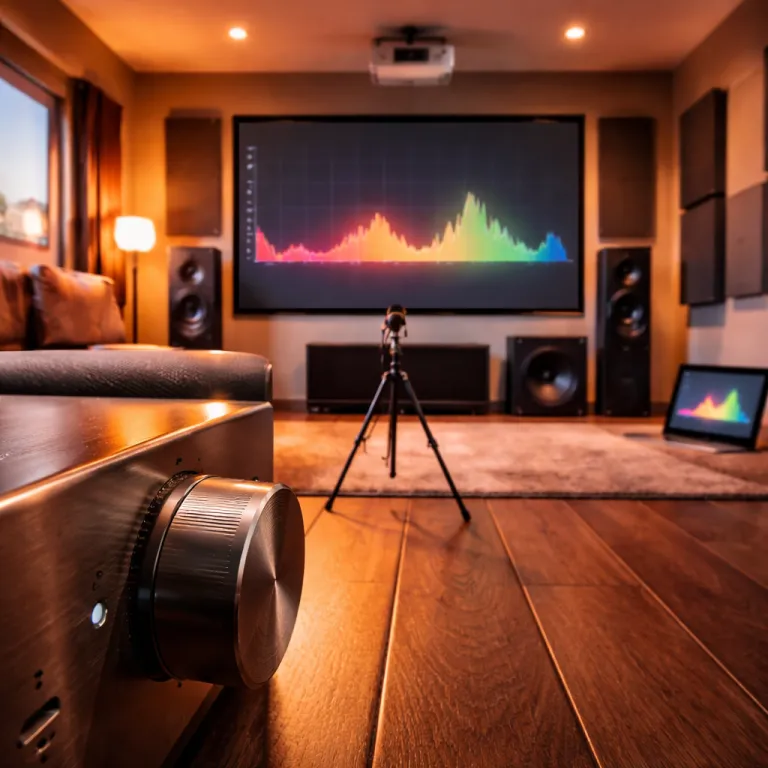
Why volume matters when you want to hear every frequency
In a home theater, many people ask what is the best volume to hear a frequency clearly. Human hearing is sensitive yet fragile, and the way we perceive frequencies depends on both sound level and the frequency range itself. When you adjust volume, you are shaping how your ears hear low frequencies, mid tones, and high frequencies across the entire audible frequency spectrum.
At very low decibel levels, your hearing struggles with bass sounds, so low frequencies seem weaker than high ones. As sound levels rise, the ear’s frequency response becomes more balanced, and you start to perceive frequencies more evenly across the range. This phenomenon is described by equal loudness contours, which show how loud each frequency must be in decibels for you to hear sounds as equally loud.
For home theater projector users, the goal is to set a safe yet engaging volume that lets you hear frequency details without risking hearing loss. Most people hear best in the 1 to 5 kHz range, where speech and many important audio cues sit. However, movie soundtracks also rely on deep low sounds and sparkling high frequencies, so you need a volume that reveals the full frequency range without making loud peaks dangerous.
When you ask what volume will let you hear frequency nuances, think in terms of balance, not just loudness. A moderate sound level around 65 to 75 decibels at the listening position usually offers a good compromise between clarity and hearing health. Above that, the risk to hearing health rises quickly, especially if you sit close to powerful speakers that can produce intense sound waves.
Understanding frequency range, equal loudness, and safe listening levels
To understand what is the best volume to hear a frequency, you first need to know the typical human frequency range. Most adults hear from about 20 Hz for very low frequencies up to around 16 kHz for high frequencies, although this audible frequency span shrinks with age and noise exposure. The ear is most sensitive to sounds between roughly 2 and 5 kHz, which is why dialogue in films feels clear even at modest sound levels.
Equal loudness research shows that at low decibel levels, you barely hear low frequencies, while high frequencies and midrange audio stand out more. As you raise the volume, the ear’s frequency response flattens, and you perceive frequencies more evenly across the khz range. This is why a soundtrack can sound thin at very low sound level settings, then suddenly feel full and rich when you increase volume slightly.
For home cinema, a practical target is to keep average decibel levels around 70, with peaks not exceeding 80 to 85 for long sessions. These levels are generally safe for hearing health if you limit marathon viewing and take breaks. When you compare laser and lamp projectors, as explained in this guide on choosing between laser and bulb projectors, remember that quieter projectors make it easier to keep overall sound levels lower while still hearing subtle frequencies.
Always consider what will happen to your ears over time, not just during one movie night. Prolonged exposure to loud sounds can cause permanent hearing loss, especially in the high frequency region where damage often appears first. A calibrated system that respects safe decibel levels lets you hear frequency details today while you protect hearing for the future.
How speakers, room acoustics, and frequency response shape what you hear
Even if you know what is the best volume to hear a frequency, your speakers and room can change everything. Every speaker has its own frequency response, which describes how evenly it reproduces low frequencies, midrange audio, and high frequencies. A speaker with a smooth frequency response helps you perceive frequencies accurately at moderate sound levels without needing to turn the system excessively loud.
Room acoustics also affect how you hear frequency content, because reflections and resonances can exaggerate certain frequencies and hide others. In small rooms, low frequencies often build up in corners, while high frequencies may be absorbed by soft furnishings, changing the audible frequency balance. This means that the same decibel levels can feel boomy in one room yet thin in another, even with identical speakers.
To find hearing comfort, start with a hearing test or at least a basic hearing check using calibrated tones across the khz range. You can then adjust your system so that you hear frequency details at a lower sound level, reducing the risk of hearing loss. Technologies such as advanced processing and encoders, described in this article on how 4-channel HEVC encoders enhance your home theater projector experience, help preserve subtle sounds so you do not need to push volume too high.
When you calibrate your speakers, use test tones to check the frequency range from bass to high frequency content. Listen for spots where sounds suddenly get louder or softer, which indicate uneven frequency response that can mislead your ears about what volume will feel natural. Correcting these issues with placement and basic treatment lets you protect hearing while still enjoying rich, detailed sound waves.
Practical method to set the best volume for every frequency
To answer what is the best volume to hear a frequency in practice, you need a simple, repeatable method. Start by playing a familiar movie scene with dialogue, music, and effects, then set the master volume so speech sounds natural at about 65 to 70 decibels. At this sound level, most people can hear frequency details in the midrange clearly without straining or feeling that the system is too loud.
Next, use a basic hearing test app or calibration disc that plays test tones across the frequency range from low frequencies around 40 Hz up to high frequencies near 12 kHz. Adjust your speaker levels so that each test tone seems similar in loudness, which helps align your system with equal loudness principles. This process makes it easier to perceive frequencies evenly, so you can hear frequency nuances without raising overall decibel levels dangerously.
Pay attention to how your ears feel during this process, because discomfort is a warning sign for hearing health. If high frequencies feel piercing or harsh, reduce treble or move slightly farther from the speakers to lower the sound level at your ears. For a deeper technical look at how content is delivered to your system, this guide on optimizing cinema series displays and audio chains shows how consistent signals help maintain predictable frequency response.
Once you have a reference volume, mark it on your receiver or amplifier so you can return to that safe point easily. Remember that what will feel balanced today may change if your hearing changes, so repeat a hearing test periodically to find hearing shifts early. This routine helps you understand what your ears need and lets you protect hearing while still enjoying powerful, immersive sounds.
Age, hearing loss, and how we perceive frequencies over time
When considering what is the best volume to hear a frequency, you must account for age and hearing loss. Many adults gradually lose sensitivity to high frequencies, especially above 8 kHz, which can make sound seem dull unless volume is increased. However, simply turning the system loud is not a safe solution, because higher decibel levels can accelerate further hearing loss.
A professional hearing test can map your personal frequency response, showing which frequencies you hear well and which need more support. With this information, you can adjust tone controls or equalization so that low frequencies, midrange, and high frequency content all feel balanced at moderate sound levels. This approach respects hearing health while still letting you perceive frequencies across the audible frequency band.
People with early hearing loss often struggle with consonants in speech, which sit in the higher khz range, even when they hear low frequencies clearly. In a home theater, this can make dialogue hard to follow unless you raise volume, which also raises loud effects and music. Instead, use features like dialogue enhancement and dynamic range control, which lift important sounds without pushing overall decibel levels into unsafe territory.
Think of free hearing not as unlimited loudness, but as the freedom to enjoy sounds without fear of damage. By tailoring your system to your own hearing test results, you can hear frequency details at a sound level that remains comfortable for long sessions. Over time, this strategy will help protect hearing and maintain your ability to understand what is happening on screen through subtle audio cues.
Protecting hearing while enjoying powerful home theater sound
Balancing excitement and safety is central to what is the best volume to hear a frequency in a home cinema. Blockbuster films are mixed with wide dynamic range, meaning quiet sounds and loud peaks can differ by many decibels. If you set the average sound level too high, those peaks can exceed safe decibel levels and increase the risk of hearing loss.
To protect hearing, aim for a reference volume where dialogue sits around 65 to 70 decibels and peaks rarely exceed 85. Use a simple sound level meter or a reliable app to measure sound waves at your main seat, rather than guessing by ear. This helps you perceive frequencies clearly while keeping both low frequencies and high frequencies within a safe envelope for hearing health.
Consider using night mode or dynamic range compression when watching late, which reduces the gap between quiet and loud sounds. This allows you to hear frequency details in whispers and effects without raising the master volume to unsafe levels. It also helps people with reduced high frequency sensitivity find hearing comfort, because important audio cues are brought forward without overwhelming bass.
Remember that what will keep your ears safe is not only peak volume, but also duration of exposure. Take short breaks during long marathons to let your ears recover, especially after scenes with intense high frequency content or very loud low frequencies. By treating your ears as carefully as you treat your projector and speakers, you maintain free hearing and long term enjoyment of every audible frequency.
Fine tuning for different content, rooms, and personal preferences
Even with guidelines for what is the best volume to hear a frequency, personal taste and content type still matter. A quiet drama with subtle sounds may require a slightly higher sound level than an action film to make dialogue and ambience clear. Conversely, action movies with heavy bass and sharp high frequencies often feel better at a slightly lower master volume to keep decibel levels safe.
Different rooms also change how you perceive frequencies, because furnishings, size, and shape all influence frequency response. In a small, reflective room, high frequencies can feel harsh at volumes that would be comfortable in a larger, treated space. Adjusting speaker placement and adding basic absorption can smooth the frequency range, so you can hear frequency details at lower, safer sound levels.
Use content specific presets on your receiver to tailor the balance of low frequencies, midrange, and high frequency information. For example, a “movie” mode might emphasize the khz range important for dialogue, while a “music” mode keeps the entire audible frequency band more neutral. Over time, you will understand what settings let you perceive frequencies comfortably without pushing loud peaks that threaten hearing health.
Ultimately, the best practice is to combine objective tools like a hearing test and sound level meter with your own comfort. Ask yourself what volume will let you enjoy the soundtrack fully while still feeling relaxed after several hours. When you regularly check and adjust, you find hearing balance that respects both your love of audio and your long term ability to hear frequency nuances.
Key statistics about hearing, frequency, and safe listening
- Up to 85 dB is generally considered a safe continuous listening level for several hours in a home environment.
- Many adults experience reduced sensitivity above 8 kHz, which can affect how they perceive high frequencies in movie soundtracks.
- Exposure to 95 dB for more than about 1 hour can significantly increase the risk of noise induced hearing loss.
- The typical human audible frequency range extends from about 20 Hz to 16–20 kHz, but this range narrows with age and noise exposure.
- Regular hearing tests are recommended at least every few years for frequent home theater users to monitor hearing health.
Common questions about volume, frequency, and home theater hearing
What is a safe volume for long movie nights at home
For most people, keeping average sound levels around 65 to 75 decibels at the main seat is considered safe for multi hour sessions. Peaks can rise higher briefly, but try not to exceed about 85 dB for extended periods. Using a sound level meter helps you verify that your preferred volume remains within safe limits for hearing health.
How can I tell if my home theater is too loud
If your ears ring after a film, or if dialogue sounds muffled for a while, your system is likely too loud. Another sign is needing to shout to talk to someone sitting next to you during playback. Measuring sound levels and reducing volume until these symptoms disappear is essential to protect hearing.
Do I need a professional hearing test if I only watch movies at home
Regular hearing tests are still valuable, especially if you enjoy powerful sound or watch films frequently. A hearing test can reveal early high frequency loss that you might not notice in daily life. With that information, you can adjust your system to maintain clarity at safer volumes.
Why do I struggle to hear dialogue even when the volume is high
Difficulty hearing dialogue at high volume often indicates issues with frequency response or early hearing loss in the higher khz range. Boosting overall volume raises loud effects as well, which can worsen listening fatigue. Instead, use dialogue enhancement features and consider a hearing check to address the specific frequencies causing problems.
Can room acoustics really change how loud my system feels
Yes, room acoustics strongly influence how you perceive frequencies and overall loudness. Hard, reflective rooms can make high frequencies feel harsh at moderate decibel levels, while very soft rooms can swallow detail and encourage higher volumes. Treating the room and adjusting speaker placement often lets you enjoy the same content at lower, safer sound levels.