
Summary
Editor's rating
Value for money: good 1080p workhorse if your expectations are realistic
Basic white box design, functional but a bit cheap in places
Setup, noise, and daily use: mostly easy, with a few small annoyances
Build quality and lifespan: feels decent, but lamp cost and hours matter
Image quality, brightness, and gaming: good in the dark, just okay in bright rooms
Specs look strong on paper, reality is a bit more down to earth
Pros
- Sharp and bright enough 1080p image in dark or moderately lit rooms
- Low input lag (~16ms) makes it suitable for casual and even fairly serious gaming
- Dual HDMI, USB power, and easy setup with auto vertical keystone
Cons
- Real-world brightness in strong daylight is weaker than the 4000 ANSI lumens claim suggests
- Fan noise in normal mode is noticeable; eco mode is better but dimmer
- Leveling feet feel flimsy and are annoying if you move and re-adjust the projector often

Specifications
View full product page →| Brand | ViewSonic |
A bright budget-ish projector that’s not magic in daylight
I’ve been using the ViewSonic PX704HD as a mixed-use projector: movies in the evening, a bit of casual gaming, and some PowerPoint-style stuff in a lit room. On paper, it looks strong for the price: 1080p, 4000 ANSI lumens, low input lag, and up to a 300" image. In practice, it’s good, but it’s not the miracle light cannon the spec sheet suggests, especially if you expect perfect visibility in bright daylight.
The first thing I noticed: in a dim or dark room, it looks very good for 1080p. The image is sharp enough, colors are decent out of the box, and you don’t have to tweak a million settings to get something watchable. Compared to cheap no-name projectors, it’s clearly a step up. Compared to higher-end 4K models, you can see the difference if you look closely, but for normal movie nights it’s more than fine.
Where it’s a bit disappointing is daytime use with a lot of ambient light. It’s usable with blinds half closed or in a room that isn’t flooded with sun, but if you were hoping for TV-level brightness at noon on a white wall, that’s not happening. One Amazon reviewer who bought it for a care home clearly expected too much, and I kind of see why they were annoyed, even if 4000 lumens on the box will always be optimistic in real life.
Overall, after living with it, I’d say it’s a pretty solid all-round projector for home cinema and office/classroom use, as long as you understand its limits. It’s not perfect, the fan isn’t silent in normal mode, the feet feel cheap, and the claimed brightness feels a bit optimistic. But for the money, if you plan to use it mainly in the evening or in controlled light, it gets the job done quite well.
Value for money: good 1080p workhorse if your expectations are realistic
On the value side, I think the PX704HD sits in a pretty reasonable spot. It’s not the cheapest 1080p projector out there, but you’re paying for a known brand (ViewSonic), proper ANSI lumen rating, decent color, and low input lag. For home cinema people who mostly watch in the evening, it’s a good balance between price and performance. You get a clean 1080p image, enough brightness for lights-on viewing, and a projector that can double as an office/classroom unit without looking like a toy.
Compared to ultra-cheap Amazon projectors, this is clearly a step up: those often fake their resolution or brightness, and you end up with blurry text and washed-out colors. Here, text is readable, movies look decent, and you can actually use it for presentations in a semi-lit room. Compared to more expensive 4K DLP projectors, you obviously lose resolution, but some users (and I tend to agree) feel that a good 1080p image like this can look sharper and more stable than a low-end 4K model with compromises. So in that sense, if you don’t care about the 4K label and you sit a normal distance away, the value is actually quite strong.
Where the value is less clear is if you need serious daylight performance. If your main use is daytime viewing in a bright, uncontrolled room, I’d argue you might be better off either saving for a higher-end projector with even more real-world brightness, or just getting a big TV. The angry reviewer who lost money on the return clearly mis-matched their needs with what this projector can realistically do. So it’s not that the product is bad; it’s that the advertised 4000 lumens can make people think it’s something it isn’t.
So, in simple terms: for evening home cinema, casual gaming, and typical office/classroom use with blinds and normal lighting, the PX704HD offers good value for money. It’s not the bargain of the century, but it’s a solid, reliable workhorse with enough performance to justify its price. If you go in expecting a cinema-like image in the dark and decent usability with lights on, you’ll probably be happy. If you expect it to fight full sun like a giant TV, you’ll be disappointed and feel you overpaid.
Basic white box design, functional but a bit cheap in places
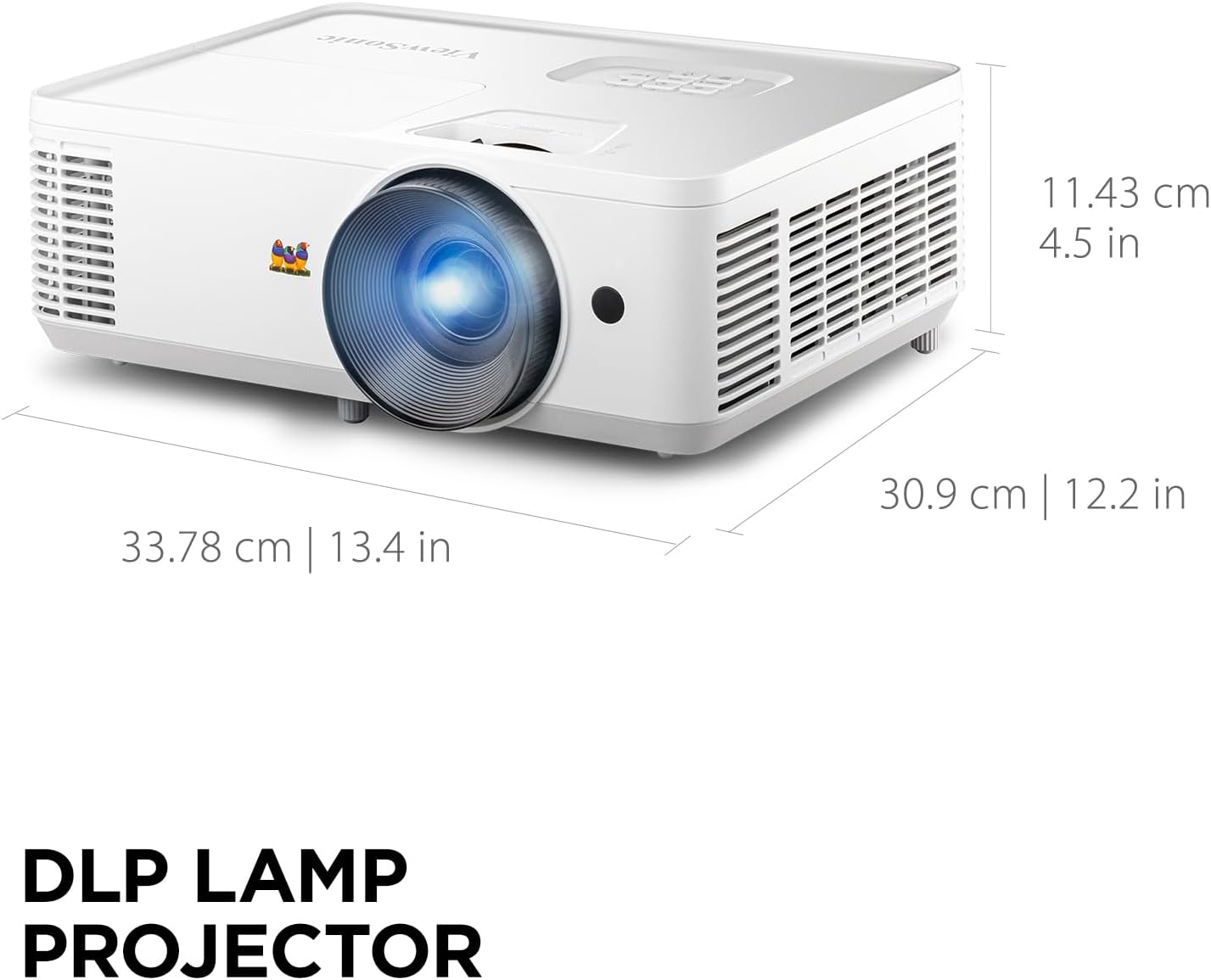
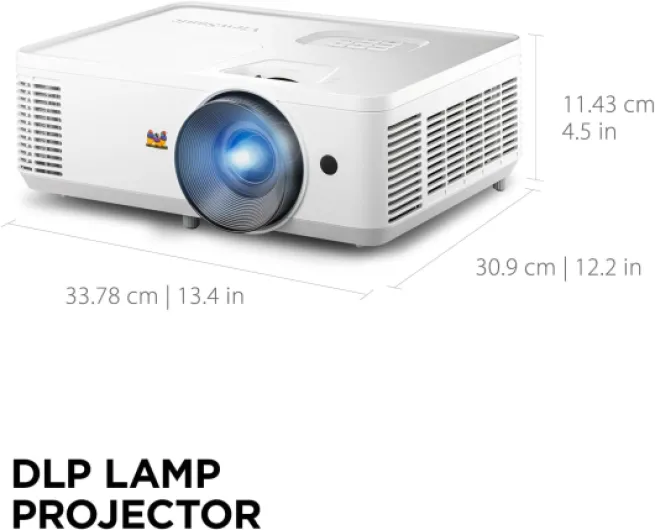
Design-wise, the PX704HD is nothing fancy. It’s a standard white plastic projector box, about 30.9 x 23.4 x 11.5 cm and roughly 6 pounds. It’s light enough to move around the house or throw in a bag for office use, but it still feels like a proper projector, not a tiny portable toy. The lens is offset to one side, vents on the other, and all the usual buttons on top. It’s the kind of design you forget about, which honestly is fine for a projector that will likely sit on a table or ceiling mount most of the time.
The ports are on the back: two HDMI ports, USB-A (mainly for power, e.g. for a Fire TV Stick), and audio out. That’s practical if you’re plugging in a laptop or a console and leaving it. For casual users, dual HDMI is enough. If you’re the type who has a receiver, multiple consoles, and a Blu-ray player, you’ll probably run everything through an AV receiver anyway, so it’s not a big issue. I had no problem hooking up a laptop, PS5, and a streaming stick by swapping cables occasionally.
One thing that annoyed me a bit is the leveling feet. Another reviewer mentioned it and I agree: they’re screw-type and feel flimsy and a bit fiddly to adjust. If you’re constantly setting this up in different rooms, you’ll notice it. Once it’s in place on a stable surface or ceiling mounted, you forget about it, but the first setup is a bit “meh”. The remote, on the other hand, is fine: lots of direct access buttons (keystone, zoom, input), and it’s easy enough to navigate the menu.
In terms of noise and heat, the design is okay but not silent. In standard mode you can hear the fan, especially in a small room, but during a movie you eventually tune it out. In eco mode it quiets down to a more acceptable level, and several users report they mostly stick to eco for that reason. So overall: design is practical and boring, feet feel cheap, remote is decent, and it’s easy enough to live with once you’ve set it up.
Setup, noise, and daily use: mostly easy, with a few small annoyances
From a comfort and usability angle, the PX704HD is pretty straightforward. Out of the box, it’s basically plug in power, connect HDMI, turn it on, and you have an image. The auto vertical keystone actually helps if you’re just dropping it on a coffee table and pointing it at the wall. It won’t fix a totally off-angle setup, but for small height differences it straightens the image quickly. You still have manual options if you want to fine-tune, but for casual use, the auto feature is good enough.
The remote control has direct keys for keystone, zoom, picture modes, etc., so you don’t have to dig through menus every time. Boot time is fairly quick; you’re not waiting ages to get a picture. Switching inputs is also fast. This makes it easy to move between “Netflix via streaming stick” and “laptop presentation” without much fuss. For someone using it in both home and work contexts, this kind of small convenience matters more than fancy features you never touch.
Where comfort takes a small hit is fan noise and heat. In normal mode, you hear it. It’s not a jet engine, but in a quiet room you’re aware of it until the movie starts and your brain tunes it out. Switching to eco mode really helps: the fan drops to a more acceptable hum, and several users, including me, basically leave it in eco unless the room is unusually bright. You sacrifice some brightness, but for evening use it’s still more than enough, and the reduced noise plus extended lamp life are worth it.
The other comfort annoyance is again the adjustable feet. They’re screw-type, a bit wobbly, and not very confidence-inspiring. If you’re constantly adjusting height and angle because you don’t have a fixed screen, it gets old. Once you mount it to a ceiling or fix it on a stable shelf at the right height, this problem disappears, but the initial months of moving it around can be a bit of a hassle. Overall, though, day-to-day comfort is good enough: easy setup, usable auto keystone, manageable noise in eco, and not much to babysit after the first configuration.
Build quality and lifespan: feels decent, but lamp cost and hours matter
In terms of durability, I’d rate the PX704HD as decent mid-range, not tank-like but not flimsy either. The plastic shell is typical for this category: it doesn’t flex too much, no weird creaks, and the vents and lens area look properly finished. It’s made in China like most projectors in this price bracket, so nothing surprising there. One user reported over 300 hours of use with no issues, which is in line with what you’d expect early on. I haven’t seen widespread reports of early failures in the reviews, which is reassuring.
The important part with this kind of projector is the lamp life and replacement cost. It’s rated around 4000 hours in standard mode (more with eco modes). If you use it, say, 2 hours per day, that’s several years before you even think about a new lamp. If you’re running it all day in a classroom or office, you’ll chew through that much faster. Replacement lamps aren’t free, so you should factor that into the long-term cost. It’s not a deal breaker, but it’s one of those hidden costs people forget when comparing to cheaper LED projectors with theoretically longer lifespans.
The warranty is 2 years, which is okay but not generous. It covers you for early defects, but don’t expect miracles if something happens well into year three. The negative review about the partial refund after opening the box is more about the seller’s return policy than the hardware itself, but it’s a good reminder: if you’re buying this for a very specific scenario (like a super bright room), make sure the return policy is clear before you break the seal.
Physically moving it around, it holds up fine. I’ve carried it between rooms and packed it for a small office session a few times; no issues with ports loosening or plastic cracking. The feet are the weakest part from a durability feel perspective, just because they’re small and a bit wobbly. If you can, I’d recommend either a decent ceiling mount or a stable shelf setup to avoid constantly screwing and unscrewing those feet. Overall, durability seems solid enough for home and light professional use, as long as you accept that at some point you’ll pay for a new lamp if you use it heavily.
Image quality, brightness, and gaming: good in the dark, just okay in bright rooms
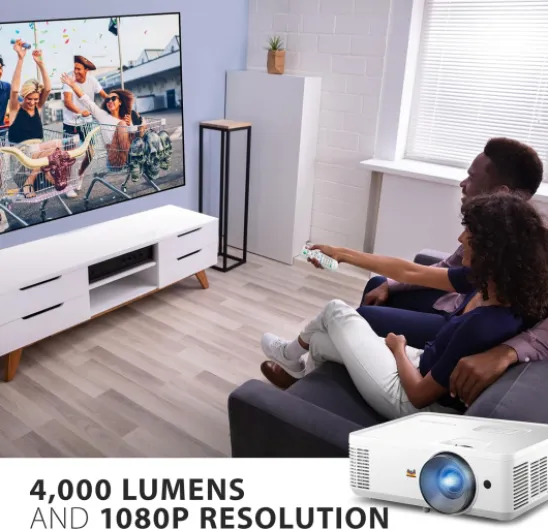
Let’s talk about what actually matters: what the image looks like. In a dim or dark room, the PX704HD delivers a sharp 1080p picture with decent colors. I projected around 3m wide (roughly 120") on a light grey wall, similar to one of the Amazon reviewers, and was pleasantly surprised. Text from a laptop is readable, movies look clean, and you don’t see obvious pixel structure unless you sit pretty close. Compared to a no-name 1080p LED projector I used before, the ViewSonic looks clearly sharper and more consistent across the screen.
Brightness is where expectations and reality diverge a bit. On paper: 4000 ANSI lumens. In practice: bright enough for lights on, but not magic against sunlight. In a room with curtains half drawn and some ceiling lights, it’s usable for slides, YouTube, or a football match. In a room with big windows and direct sun, the image washes out quite a bit, especially on a white wall. The reviewer using it in a “care home during daylight hours” was clearly expecting more. I wouldn’t say it looks like “less than half” the brightness, but I get why someone relying on it in a very bright space might be underwhelmed.
For contrast and color, it’s decent for this price range. Blacks are still dark grey (it’s a projector, not an OLED TV), but in a dark room the contrast is acceptable, especially on a grey wall or proper screen. Colors out of the box look a bit punchy; with a bit of tweaking in the menu, you can get a fairly natural look. One German reviewer even said they stuck with this instead of a more expensive 4K projector because it looked sharper and was quieter, which doesn’t surprise me: cheap 4K DLPs often look softer than a good 1080p unit.
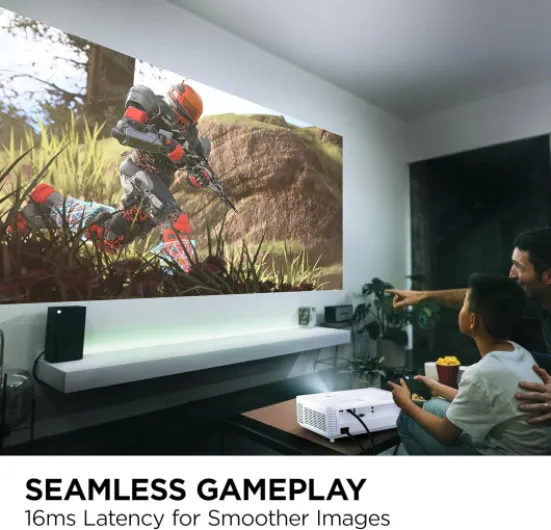
For gaming, that 16ms input lag spec actually holds up pretty well. I tried some console gaming (racing games and shooters), and it felt responsive enough that I didn’t think about lag at all. If you’re a hardcore competitive gamer you’ll always prefer a monitor, but for couch gaming on a big screen it’s totally fine. Overall, performance is strong in controlled light and very good in the dark, but if your main use is bright daytime viewing, you might need to lower your expectations or look at a significantly more expensive, brighter setup.
Specs look strong on paper, reality is a bit more down to earth
On the spec sheet, the ViewSonic PX704HD looks like a very capable mid-range projector. You get 1080p native resolution (1920x1080), up to 4000 ANSI lumens, a 22,000:1 contrast ratio, and support for up to a 300" screen. It uses a 0.65" DMD chip and ViewSonic’s SuperColor tech, so it’s clearly not one of those random low-res LED projectors pretending to be Full HD. For connectivity, you get dual HDMI, a USB-A power port, and a 3.5mm audio jack, which covers most basic setups: laptop, console, streaming stick, soundbar, etc.
There’s also auto vertical keystone, which is handy if you’re just plonking it on a table and don’t want to fight with the settings every time. Input lag is advertised at 16ms, which is in the range where casual and even more serious gamers won’t be too annoyed. Lamp wattage is around 240–290W, lamp life is rated at about 4000 hours (more in eco modes), and it’s meant for home cinema, business, and education. So it’s clearly pitched as a versatile unit, not a niche home-theater-only machine.
In real use, I’d say most of these specs feel believable except the way the brightness is marketed. Yes, it’s brighter than a lot of cheap projectors, and you can use it with some lights on, but the jump from the numbers on paper to what your eyes see in a bright room is not as big as the brochure makes it sound. Contrast also depends heavily on your room: on a grey wall or a decent screen in a dark room, blacks look okay; in a white, bright room, everything washes out quickly.
So as a "presentation": the PX704HD sells itself as a strong, flexible projector that can handle home cinema and office duties. In practice, I’d say it’s genuinely good for home and small-room presentations with controlled light, and only "okay" if you’re trying to fight direct sunlight or big bright windows. If you buy it with realistic expectations, the spec sheet lines up fairly well. If you think 4000 lumens means “like a giant TV in full sun”, you’ll be disappointed.
Pros
- Sharp and bright enough 1080p image in dark or moderately lit rooms
- Low input lag (~16ms) makes it suitable for casual and even fairly serious gaming
- Dual HDMI, USB power, and easy setup with auto vertical keystone
Cons
- Real-world brightness in strong daylight is weaker than the 4000 ANSI lumens claim suggests
- Fan noise in normal mode is noticeable; eco mode is better but dimmer
- Leveling feet feel flimsy and are annoying if you move and re-adjust the projector often
Conclusion
Editor's rating
The ViewSonic PX704HD is a solid 1080p projector that does its job well as long as you understand its limits. In a dark or dim room, the image is sharp, bright enough, and pleasant to watch. Colors are decent, and the low input lag makes it quite usable for console gaming on a big screen. Dual HDMI, simple setup, and auto vertical keystone make it easy to live with, whether you’re using it at home or occasionally in a small office or classroom.
Where it falls short of the marketing hype is daylight performance. Yes, it’s brighter than a lot of cheaper projectors, but it’s not a miracle device for rooms flooded with sunlight. If your main use is evening movies, Netflix, and occasional presentations with curtains or blinds, it’s a good fit and the price feels fair. If you need something that looks great at noon in a very bright space, you’ll either have to tweak your room (curtains, screen) or look at spending more on a higher-end model or a big TV.
So, who is this for? It’s good for people who want a reliable, reasonably bright 1080p projector for home cinema, mixed with occasional gaming and office/classroom use, and who mostly use it in controlled light. Who should skip it? Anyone expecting true TV-like brightness in full daylight, or people who are very sensitive to fan noise and want near-silent operation without using eco mode. If you’re realistic about those points, the PX704HD is a pretty solid choice that gets the job done without too many surprises.