
Summary
Editor's rating
Is it good value, or should you piece a system together?
Bulky receiver, compact speakers: living-room reality check
Build quality and long-term feel
How it actually sounds for movies, TV, and games
What you actually get in the box
Day-to-day use: does it actually solve the “TV audio sucks” problem?
Pros
- Proper 5.1 surround with a solid entry-level Yamaha receiver (RX-V385) included
- Handles 4K, HDR, and Dolby Digital Plus, so streaming apps output real 5.1
- Standard speaker wire connections and HDMI ARC make it flexible and upgrade-friendly
Cons
- All speakers are wired, so you have to deal with long cables to the rear
- Bundled speakers are decent but not great; audiophiles will want to upgrade
- Auto-calibration (YPAO) can make the sound worse if you don’t tweak settings manually

Specifications
View full product page →| Brand | Yamaha |
A real 5.1 setup instead of yet another soundbar
I picked up the Yamaha YHT-4950U because I was tired of soundbars pretending to be “cinema” and then sounding flat during action scenes. I wanted a real 5.1 system, but without going down the rabbit hole of buying a separate receiver and then hunting for matching speakers. This kit looked like a decent compromise: one box, everything inside, brand I already trust, and not totally insane in price.
For context, I’m not an audiophile with golden ears. I just watch a lot of movies and series, play games on a console, and stream Netflix/Prime from a Roku and a TV app. Before this, I had a mid-range soundbar with wireless sub. Dialog was often muddy, and I constantly had to ride the volume between quiet scenes and explosions. After a while, that gets old.
I’ve been using the YHT-4950U for a few weeks in a medium-sized living room. TV is about 10 feet from the couch, and I can’t drill into walls or do a crazy install. I wanted something that sounds clearly better than a soundbar, handles 4K and streaming apps properly, and doesn’t need a degree to operate once it’s set up.
Overall, this Yamaha kit delivers what I expected: proper surround, solid bass, and a receiver that handles modern formats like Dolby Digital Plus without drama. It’s not perfect, and there are a few annoyances, but for a starter home theater setup, it feels like a pretty solid step up from the usual TV + soundbar combo.
Is it good value, or should you piece a system together?
Price-wise, the YHT-4950U sits in that spot where you start asking: should I just buy a separate receiver and speakers? Honestly, if you’re super picky about audio and ready to spend more time and money, building your own setup will beat this. But if you just want one box that gives you real 5.1 with a modern receiver, this kit makes sense. The RX-V385 on its own is a solid entry-level receiver, and getting it bundled with a functional speaker set isn’t a bad deal.
Compared to a decent soundbar with sub and maybe wireless rears, this Yamaha kit is usually in the same ballpark or a bit higher, depending on sales. For that money, you’re trading some convenience (more cables, more boxes) for better surround separation and more flexibility with HDMI inputs and formats. In my opinion, if you actually care about surround and not just louder TV sound, this is better value than a fancy soundbar.
Where the value is less strong is if you already own decent bookshelf speakers. In that case, you might be better off buying just the receiver and adding speakers you like, instead of paying for this whole kit. The bundled speakers are fine but nothing more. They do the job, but they’re not something you’d brag about. The good news is, because the connections are standard, you can upgrade speakers later and keep the receiver.
Overall, I’d say the YHT-4950U hits a sweet spot for beginners or people upgrading from TV speakers or a soundbar. You’re not getting premium audio, but you are getting a proper 5.1 experience, a capable receiver, and a straightforward path to better sound without getting lost in endless choices. For the money, that’s a pretty solid trade-off.
Bulky receiver, compact speakers: living-room reality check
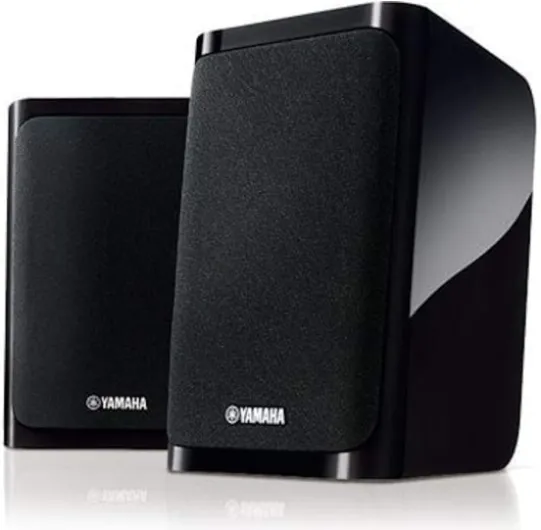
Design-wise, this thing is very “classic Yamaha receiver” plus small black boxes for speakers. No surprise, no design award, but it blends in and doesn’t scream for attention. The receiver is bigger than many people expect: about 17" wide, 6" high, and 12" deep. If your TV stand has a tight shelf or poor ventilation, measure first. In my case, it barely fit in the media console and I had to move a shelf up one notch.
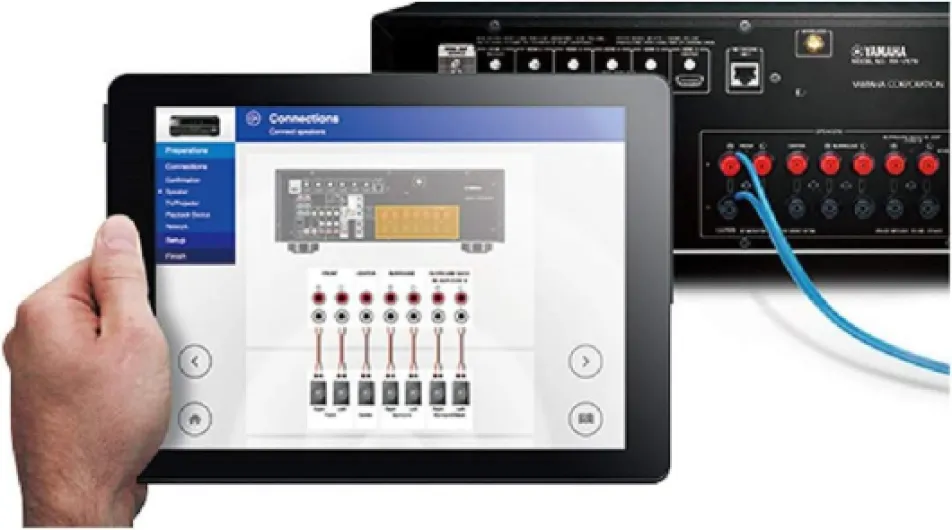
The front panel is functional: volume knob, basic buttons, a simple display. No color screen, no gimmicks. It’s fine if you like old-school AV gear. On the back, there are clearly labeled speaker terminals and HDMI ports. Speaker connections are standard spring/banana-style, which is a big plus if you ever upgrade speakers later. No proprietary plugs like some all-in-one systems from LG or Samsung.
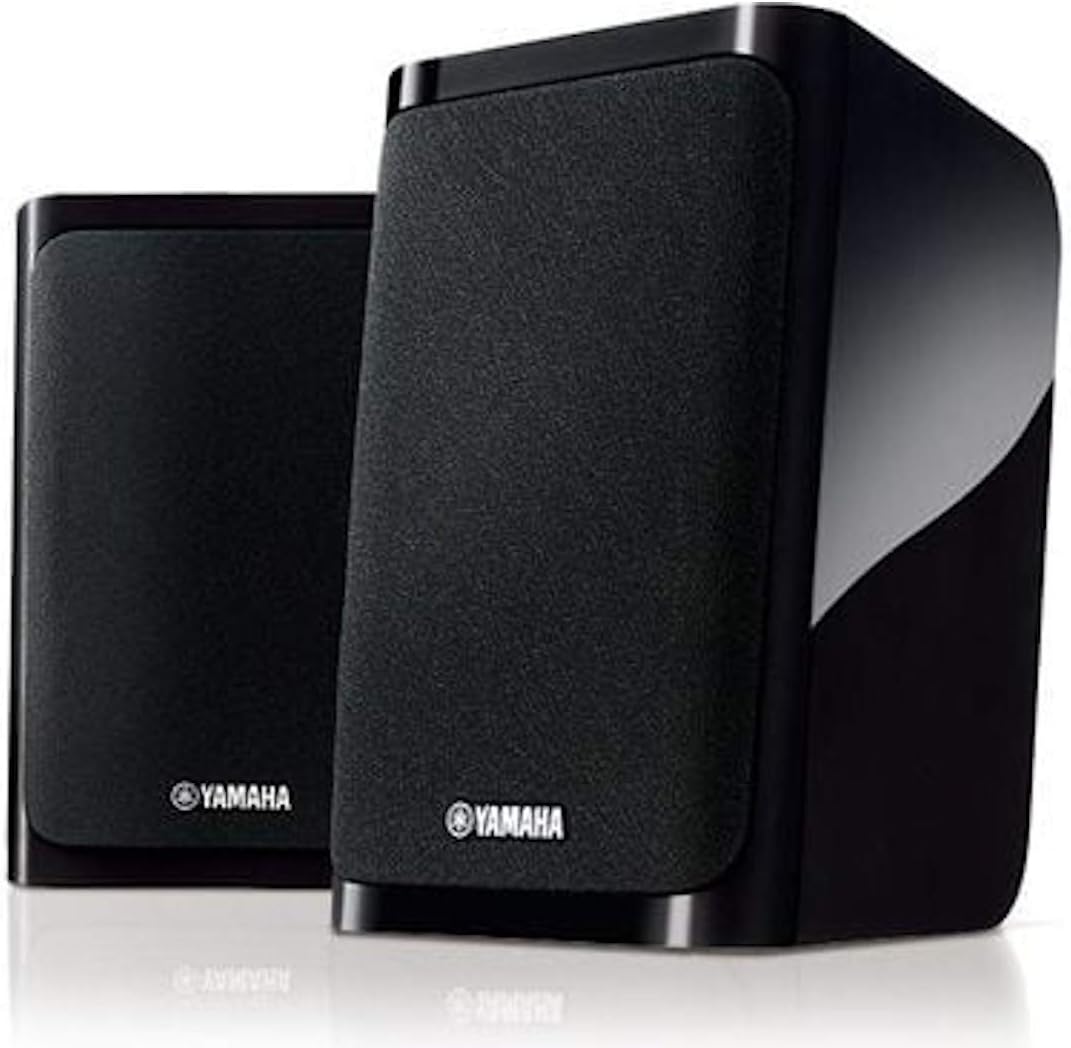
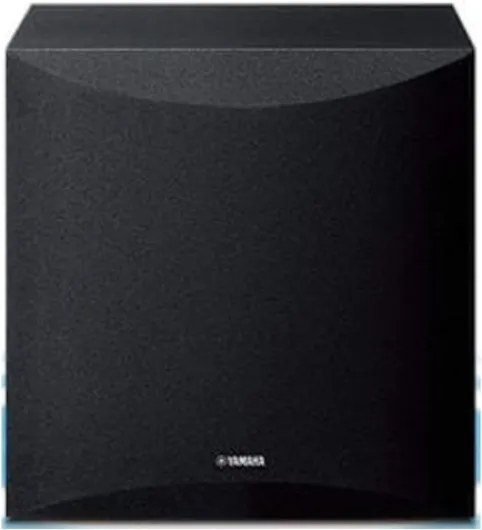
The speakers themselves are compact: the four satellites are small enough to sit on a shelf or be wall-mounted without dominating the room. The center speaker is wider but still low-profile, so it slides under most TVs. The subwoofer is a basic black box, not huge but not tiny either, roughly 11" x 11" x 13". It tucks nicely in a corner. Everything is matte black, which is practical if you don’t want dust and fingerprints to show.
In daily use, the design is more about practicality than style. Cables do end up everywhere, especially to the rear speakers. If you’re used to a single soundbar with one power cord, this will feel messy at first. I had to run speaker wire along baseboards and tape it down to keep it from being a trip hazard. Not pretty, but that’s just the reality of a wired 5.1 system. If you can live with that, the overall look is discreet and easy to blend into a normal living room.
Build quality and long-term feel
In terms of build, the Yamaha receiver feels sturdy and old-school. It’s not some flimsy plastic box. The chassis has a bit of weight to it, the buttons don’t feel loose, and the volume knob has decent resistance. Nothing fancy, just that typical AV receiver feel that suggests it’ll sit in your cabinet for years without much drama. Yamaha has been making this kind of gear forever, so that helped my confidence when I bought it.
The speakers are more basic. They’re light, mostly MDF and plastic, and you can tell they’re built to hit a price point. That said, they don’t feel like toys. The terminals take normal speaker wire, which is nice, and the cabinets don’t rattle or buzz at normal listening levels. I’ve pushed the system pretty hard during a couple of movie nights, and I didn’t hear any obvious distortion or “I’m about to die” noises from the satellites or the center.
The subwoofer is where I was a bit cautious at first. It’s a powered unit, and cheaper subs sometimes develop hum or issues over time. So far, it’s been quiet when idle and behaves as expected. The finish is basic black vinyl, which is fine. You’re not going to baby this thing; it sits in a corner and does its job. Just don’t expect premium materials or fancy finishes.
From a future-proof angle, the receiver supporting 4K, HDR, and HDCP 2.2 means it should stay relevant for a while if you upgrade TVs or streaming devices. There’s no Wi-Fi or built-in apps, but that’s not a durability issue; you’ll probably swap external streamers long before this receiver dies. Overall, the whole kit gives the impression of being solid enough for several years of regular use, even if the speakers are more “good enough” than high-end. If something fails, I’d bet it’ll be a speaker or the sub long before the receiver itself.
How it actually sounds for movies, TV, and games
Let’s talk sound, because that’s the point. Compared to a mid-range soundbar, the difference is pretty noticeable. Dialog is clearer, surround effects are actually behind you, and the sub gives a proper low-end thump instead of a weak rumble. The first time I fired up a Netflix show with Dolby Digital Plus, the center channel really stood out: voices were easier to follow without cranking the volume.
Movies are where this kit shines the most. In action scenes, you get explosions from the sub, effects from the surrounds, and the front stage feels more open. I tested with a couple of Marvel movies and some sci-fi stuff, and the room-fill is just better than any soundbar I’ve owned. You can actually hear things panning from front to back. The subwoofer won’t shake the whole building, but for a normal living room it’s punchy enough to feel in your chest without becoming a muddy mess.
For gaming, surround cues are helpful. On a console, hearing footsteps or environmental sounds from behind you does add something. I wouldn’t say it turns you into a pro gamer, but it’s more immersive. Music is decent too, but here you feel the limits of the bundled speakers a bit more. They’re fine for Spotify or Bluetooth streaming, just don’t expect the detail and warmth of proper hi-fi bookshelf speakers.
One thing I’ll mention: the YPAO auto calibration is hit or miss. On my first run, it made the system sound a bit flat and off, especially for music. I ended up redoing levels manually and got better results. If you’re picky, be ready to spend some time in the menus. Once dialed in, though, the overall performance is solid for the price: proper 5.1, enough power for most rooms, and no weird decoding issues with modern streaming formats.
What you actually get in the box
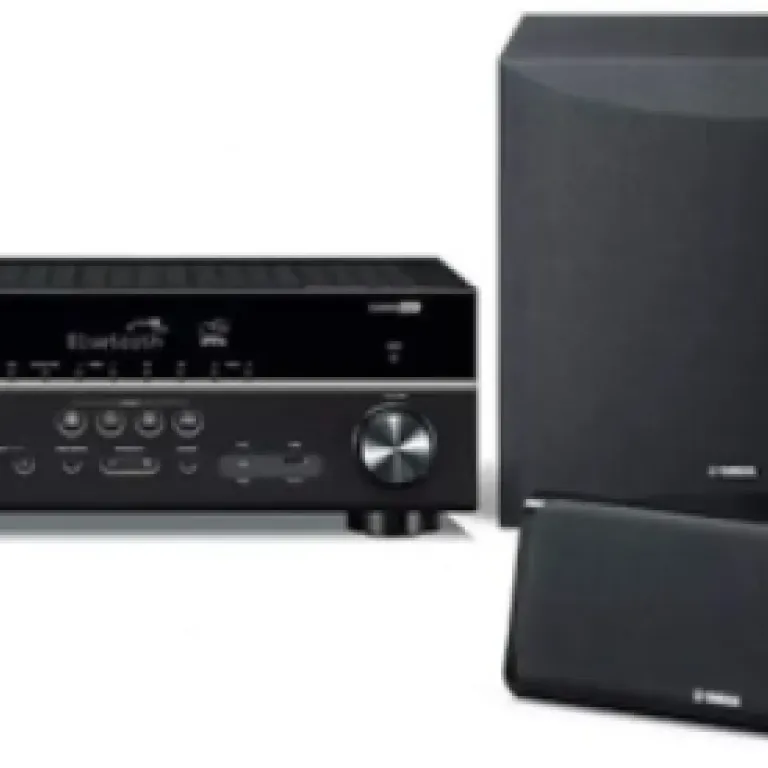
The YHT-4950U is basically a bundle: you’re getting a Yamaha RX-V385 receiver plus a matched 5.1 speaker set and a powered subwoofer. So: one center speaker, two fronts, two surrounds, and the sub. Everything is wired; there’s no wireless rear speakers, no Wi-Fi, and no fancy streaming platform. Bluetooth is there for music, and that’s about it on the “smart” side.
On the receiver side, you get 4 HDMI inputs and 1 HDMI out, with support for 4K, HDR (including Dolby Vision and HLG), and HDCP 2.2. That means it plays fine with a 4K TV, a Roku/Fire Stick, a console, and maybe a Blu-ray player, all at once. I plugged in a PS5, a Roku, and my cable box without any handshake drama. It also supports Dolby Digital Plus, which matters if you use Netflix, Amazon Prime, or other streaming apps that send 5.1 that way.
In the box, Yamaha gives you speaker wire, but honestly it’s on the short and thin side if you have a larger room. I had to buy extra 16-gauge wire for the rear speakers to get clean runs along the walls. You also get the YPAO calibration microphone, remote, and the usual paperwork (but the full manual you’ll probably end up downloading from Yamaha’s site).
In practice, this is a complete starter home theater kit: you don’t need to buy anything else to get sound, but if you want a cleaner or more flexible install (longer cables, wall mounts, etc.), you’ll end up adding a few accessories. Compared to piecing together a receiver and separate speakers, it’s simpler and more coherent, but you obviously trade away some customization and top-tier speaker quality. For the price bracket, that trade-off feels fair.
Day-to-day use: does it actually solve the “TV audio sucks” problem?
In everyday use, the main question for me was: do I still ride the volume all the time, or does this fix that? Overall, it’s much better than the soundbar I had. Dialog tracks are clearer, and I don’t have to jump for the remote every time a scene switches from talking to action. The dedicated center speaker really helps with shows where people mumble or mix levels are weird.
The receiver also does a good job handling different sources. I have a cable box, a Roku, and a console plugged in. Switching inputs is quick and direct; my universal remote can jump straight to HDMI2 or HDMI3 without cycling through everything. That sounds minor, but it’s a big quality-of-life improvement if you switch sources often. Also, the fact it handles Dolby Digital Plus correctly means Netflix and Amazon on the Roku finally give real 5.1, instead of stereo or broken audio, which I had with an older system.
Another useful detail is the input volume trim. Some sources are louder or quieter than others. On my setup, the cable box was softer than the Roku, and the tuner was too loud. Being able to tweak each input’s level means I don’t get sudden volume jumps between devices. It’s a bit buried in the menus, but once set, you forget about it and everything feels more consistent.
Is it perfect? No. The on-screen menus look dated, and initial setup can be a bit of a chore if you’re not used to AV receivers. But once everything is dialed in, for normal daily TV, streaming, and gaming, this system gets the job done. You turn it on, pick your input, and you get clear, punchy surround sound without constant fiddling, which is what I wanted in the first place.
Pros
- Proper 5.1 surround with a solid entry-level Yamaha receiver (RX-V385) included
- Handles 4K, HDR, and Dolby Digital Plus, so streaming apps output real 5.1
- Standard speaker wire connections and HDMI ARC make it flexible and upgrade-friendly
Cons
- All speakers are wired, so you have to deal with long cables to the rear
- Bundled speakers are decent but not great; audiophiles will want to upgrade
- Auto-calibration (YPAO) can make the sound worse if you don’t tweak settings manually
Conclusion
Editor's rating
The Yamaha YHT-4950U is basically a no-nonsense way to get into real 5.1 surround without going full nerd on separate components. The receiver is the star of the show: it handles 4K, HDR, Dolby Digital Plus, and gives you enough HDMI inputs and settings to manage a normal living room setup. The speakers and sub are more basic, but they do their job and give you a clear step up from TV speakers or a mid-range soundbar.
If you watch a lot of movies and series, and you want proper surround effects and clearer dialog, this kit makes sense. It’s especially appealing if you’re using streaming devices or apps, since it actually decodes Dolby Digital Plus properly. On the downside, everything is wired, there’s no Wi-Fi or fancy streaming built in, and the auto-calibration can be hit or miss. You also need to accept some cable management and a bulky receiver in your furniture.
I’d recommend this to people who are tired of weak TV audio, don’t want to research a full custom setup, and are okay with running speaker wires. If you already own good speakers or you’re aiming for audiophile-level sound, skip this and build your own system around a better receiver and speakers. But for a first real home theater system at a sane price, it’s a good value, practical option that actually makes movie nights feel more like, well, movie nights.