Key criteria to evaluate before choosing a streaming home theater projector
Selecting among the best home theater projectors with built in streaming apps starts with understanding your room and viewing habits. A bright living room with large windows demands more light output than a dedicated home theater with controlled ambient light. Before you compare projectors, measure the distance from lens to screen and note whether a short throw or standard throw design will fit your furniture layout.
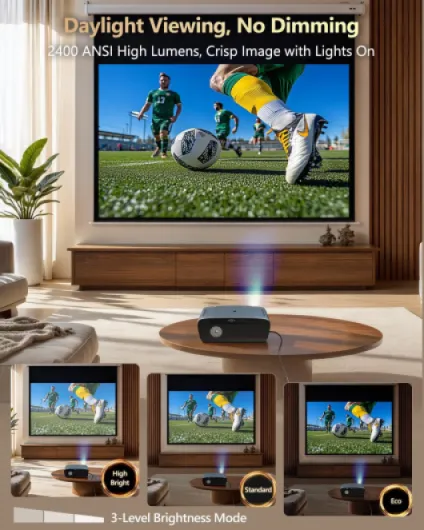
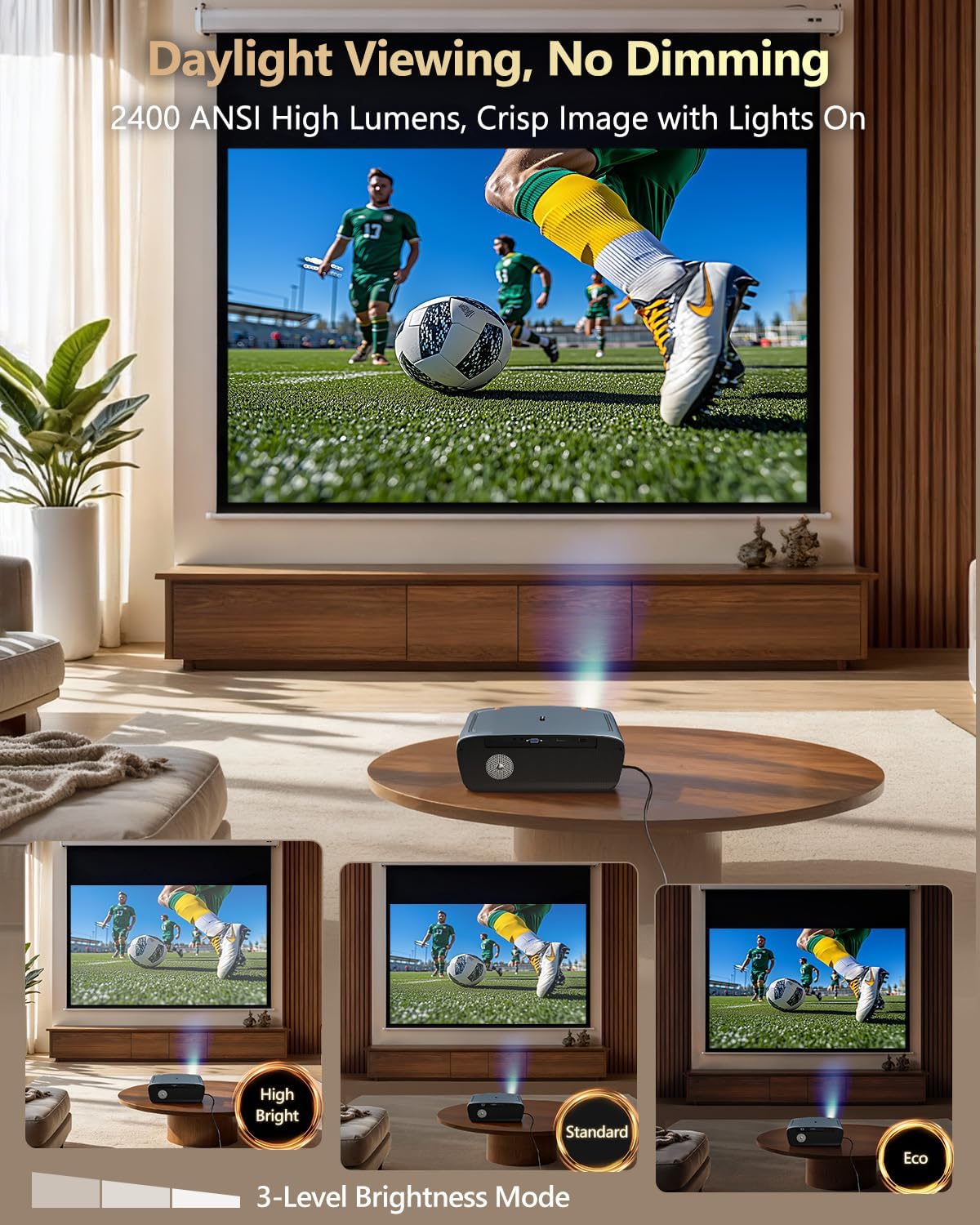
Brightness, expressed in lumens, directly affects how the image looks in real conditions, not just in a dark demo. For example, a projector with 3000 lumens or more can handle some ambient light, while a portable projector around 350 lumens will suit smaller screens and darker rooms. Alongside brightness, contrast and color accuracy define picture quality, so you should read full technical sheets and user impressions rather than relying only on marketing claims.
Price remains a decisive factor, especially when comparing premium 4K projectors and more modest 1080p models with streaming. The Hisense L9Q ultra short throw projector uses a triple laser light engine and targets serious home cinema fans who want a large image close to the wall. In contrast, the Aurzen EAZZE D1 Pro focuses on affordability and portability, trading raw brightness for a compact chassis and built in Netflix, Prime Video, and YouTube streaming.
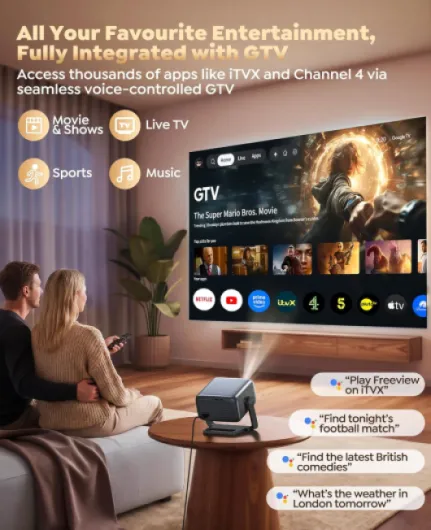
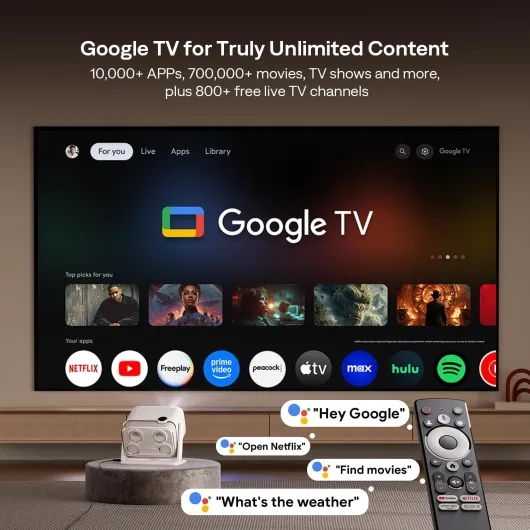
Smart platforms also differ significantly between projectors, even when they all promise streaming convenience. Some models rely on Google TV, others use Roku OS, and a few implement custom interfaces that may limit app availability over time. When you evaluate options, include long term app support, Bluetooth stability, and firmware updates in your criteria, and consider reading an in depth guide on advanced projector ecosystems such as high end home theater projector platforms.
Spotlight on premium smart projectors for serious home cinema
Among the best home theater projectors with built in streaming apps, the Hisense L9Q stands out for its ultra short throw design and strong brightness. Placed just centimetres from the wall, this theater projector can create a large image that rivals a big television, while its triple laser light source delivers rich colors. With 5000 lumens of light output, it handles ambient light in a living room better than many conventional projectors, especially when paired with an ambient light rejecting screen.
The Xgimi Horizon 20 Max targets enthusiasts who want both home theater immersion and gaming responsiveness. This smart projector offers 4K resolution, a 240 Hz refresh rate, and low input lag, which benefits fast paced games as well as smooth streaming. Its generous lens shift range, with 120 percent vertical and 45 percent horizontal adjustment, makes placement easier in rooms where the projector cannot sit perfectly centered to the screen.
Because the Horizon 20 Max runs Google TV with Wi-Fi and Bluetooth, it behaves like a premium streaming hub as well as a best projector candidate. Owners can install major streaming apps directly, pair Bluetooth speakers or headphones, and move the unit between rooms without losing their profiles. For readers who want to explore the broader Xgimi ecosystem, an article on Xgimi projectors for home cinema provides additional context about image quality and design philosophy.
In this premium bracket, price reflects not only brightness and resolution but also build quality, audio performance, and support. The Hisense L9Q includes powerful integrated sound that can reduce the need for a separate audio system in smaller rooms. When comparing these projectors with other high end models, pay attention to lens shift flexibility, short throw capabilities, and how well the built in streaming integrates with your existing smart home devices.
Mid range and portable options with built in streaming apps
Not every buyer needs the brightest or most expensive model among the best home theater projectors with built in streaming apps. Mid range and portable projector options can still deliver satisfying image quality, especially in smaller rooms or for occasional movie nights. The ViewSonic LX60HD, for instance, offers 1080p resolution, LED light, and Google TV streaming at a more accessible price than many 4K competitors.
With 3000 lumens of brightness, the LX60HD can project a clear image on a moderate size screen even with some ambient light present. Its LED light source promises long life, which reduces maintenance and total cost of ownership for home users. Built in Wi-Fi and Bluetooth make it easy to connect wireless speakers, while the Google TV interface keeps popular streaming apps within a familiar home screen layout.
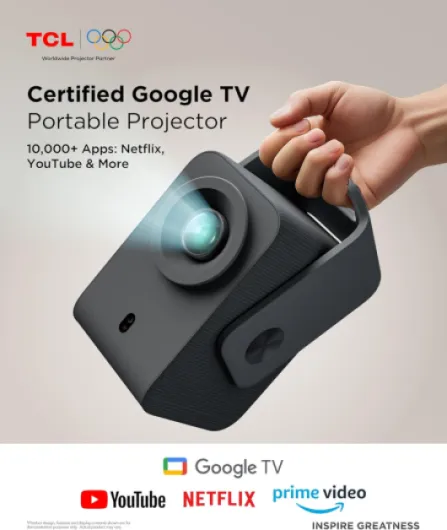
On the more compact side, the Aurzen EAZZE D1 Pro and Roku D1R Cube focus on portability and simplicity. These smart projectors integrate Netflix and other major streaming services, so you can carry your home theater experience between rooms or even to a holiday rental. Their lower brightness levels mean they perform best in darker environments, but the trade off is a lightweight chassis and a friendly price that appeals to first time projector owners.
When comparing these portable projectors with larger home theater models, consider how often you will move the device and how big your typical screen will be. A portable projector with modest brightness can still produce pleasing picture quality on a 100 inch surface in a dim room. For readers interested in technical comparisons of optics and light engines, resources such as detailed projector feature breakdowns can help contextualize specifications like lens shift and light source type.
Room setup, screen choices, and managing ambient light
Even the best home theater projectors with built in streaming apps will underperform if the room setup is neglected. The relationship between projector placement, screen size, and seating distance determines how immersive the image feels and how sharp it appears. Before mounting anything, sketch your living room or dedicated home theater and mark where the projector, screen, and viewers will sit.
Short throw and ultra short throw projectors simplify placement because they can sit close to the wall, reducing shadows and cable runs. Traditional projectors may require ceiling mounting, but lens shift features allow vertical and horizontal adjustment without keystone distortion. When a projector with generous lens shift is combined with a fixed frame screen, you gain flexibility to fine tune the image without compromising picture quality.
Screen choice also influences perceived brightness and contrast, especially in rooms with ambient light. A grey or ambient light rejecting screen can deepen blacks and maintain contrast when lights are on, which benefits both movies and streaming series. In darker home cinema spaces, a white screen may maximize light efficiency, allowing a projector with moderate brightness to appear more vivid.
Sound should not be overlooked, even though many smart projectors include built in speakers. Bluetooth connectivity lets you pair a soundbar or AV receiver, turning a compact projector into the heart of a full home theater system. When planning your setup, route power and HDMI cables carefully, and read full installation guides where available, because a thoughtful layout will extend the life of both the projector and the screen.
Balancing budget, performance, and long term value
For buyers comparing the best home theater projectors with built in streaming apps, budget often defines the shortlist before any technical specification. Entry level models like the Aurzen EAZZE D1 Pro and Roku D1R Cube prioritize price and portability, making them attractive for casual viewing or small apartments. Mid range projectors such as the ViewSonic LX60HD raise brightness and audio power, offering a more robust home theater experience without reaching flagship costs.
Premium options like the Hisense L9Q and Xgimi Horizon 20 Max command higher prices because they combine strong brightness, refined image quality, and advanced features. The Xgimi Horizon 20 Max, for example, pairs a triple laser light source with high refresh rates, which benefits both cinema and gaming. Meanwhile, the Hisense L9Q leverages its ultra short throw design to deliver a large image in tight spaces, effectively replacing a big television in a modern living room.
When assessing long term value, consider light source life, warranty coverage, and software support for streaming apps. LED and laser projectors typically offer tens of thousands of hours of use, which reduces maintenance compared with lamp based designs. Reliable firmware updates ensure that streaming platforms remain functional, so a projector with strong manufacturer support will age more gracefully than a cheaper alternative with limited updates.
Shoppers who read full specifications and seek a full review for each candidate model tend to make more satisfying choices. User feedback on amazon and specialist forums can highlight issues with Bluetooth stability, app performance, or fan noise that do not appear in marketing materials. Ultimately, the best projector for your home will align brightness, contrast, streaming convenience, and price with how you actually watch films, series, and live events.
Expert insights, future trends, and what to read next
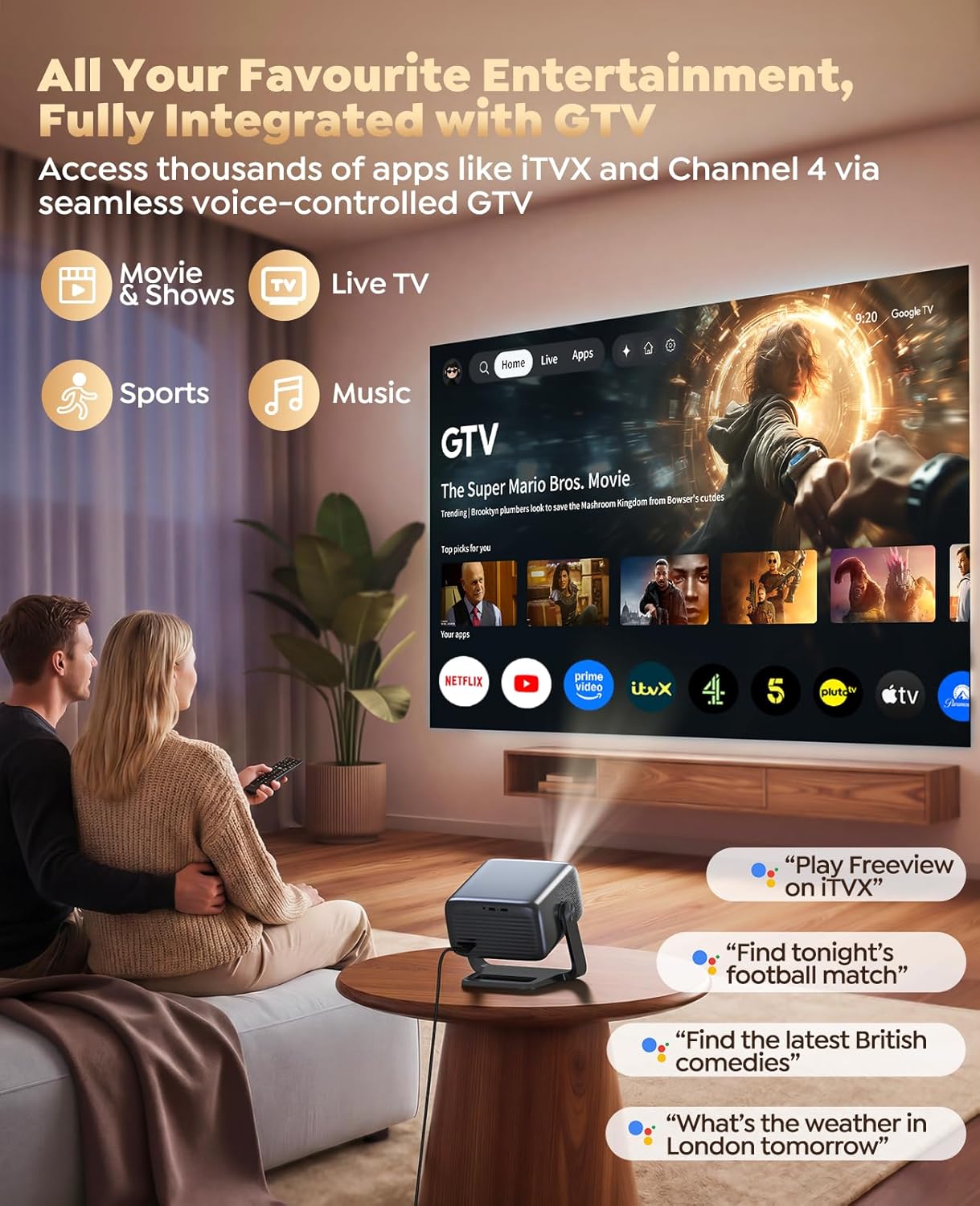
Industry observers note that home theater projectors with built in streaming apps are steadily replacing older models that relied on external sticks or boxes. As smart platforms mature, manufacturers integrate more advanced features such as voice control, personalized recommendations, and multi user profiles on the projector home screen. This evolution makes the projector feel less like a niche theater device and more like a central entertainment hub for the entire home.
Experts reviewing the Hisense L9Q emphasize how its triple laser light source and strong brightness contribute to a refined image, even in rooms with some ambient light. Commentators evaluating the Xgimi Horizon 20 Max highlight its combination of gaming friendly refresh rates and rich color accuracy, positioning it as a versatile smart projector. Coverage of the ViewSonic LX60HD often focuses on its balance of LED efficiency, 1080p resolution, and integrated Google TV streaming at a competitive price.
For readers who want to deepen their understanding of projector technologies, it is helpful to read full technical breakdowns and at least one full review for each shortlisted model. These analyses explain how factors like lens shift, short throw ratios, and light source types affect real world picture quality. They also clarify how different projectors handle HDR content, motion processing, and upscaling, which matters when streaming mixed resolution libraries.
Looking ahead, the line between portable projector and fixed home theater machine will likely continue to blur. Manufacturers are already experimenting with brighter compact designs, improved Bluetooth audio, and more sophisticated ambient light compensation. As you follow these developments, keep revisiting your own room, screen, and viewing habits, because the best home theater projectors with built in streaming apps will always be those that fit your daily life rather than just headline specifications.
Key statistics about smart home theater projectors
- Average LED or laser light source life for modern smart projectors typically ranges between 20 000 and 30 000 hours of use.
- Many mainstream home theater projectors with built in streaming apps now offer brightness levels around 3000 lumens, supporting screens up to roughly 120 inches in moderately lit rooms.
- Ultra short throw projectors can often create 100 inch images from distances of less than 0.3 metres between lens and wall.
- Input lag on gaming oriented smart projectors such as performance focused 4K models can reach as low as 10 milliseconds in dedicated modes.
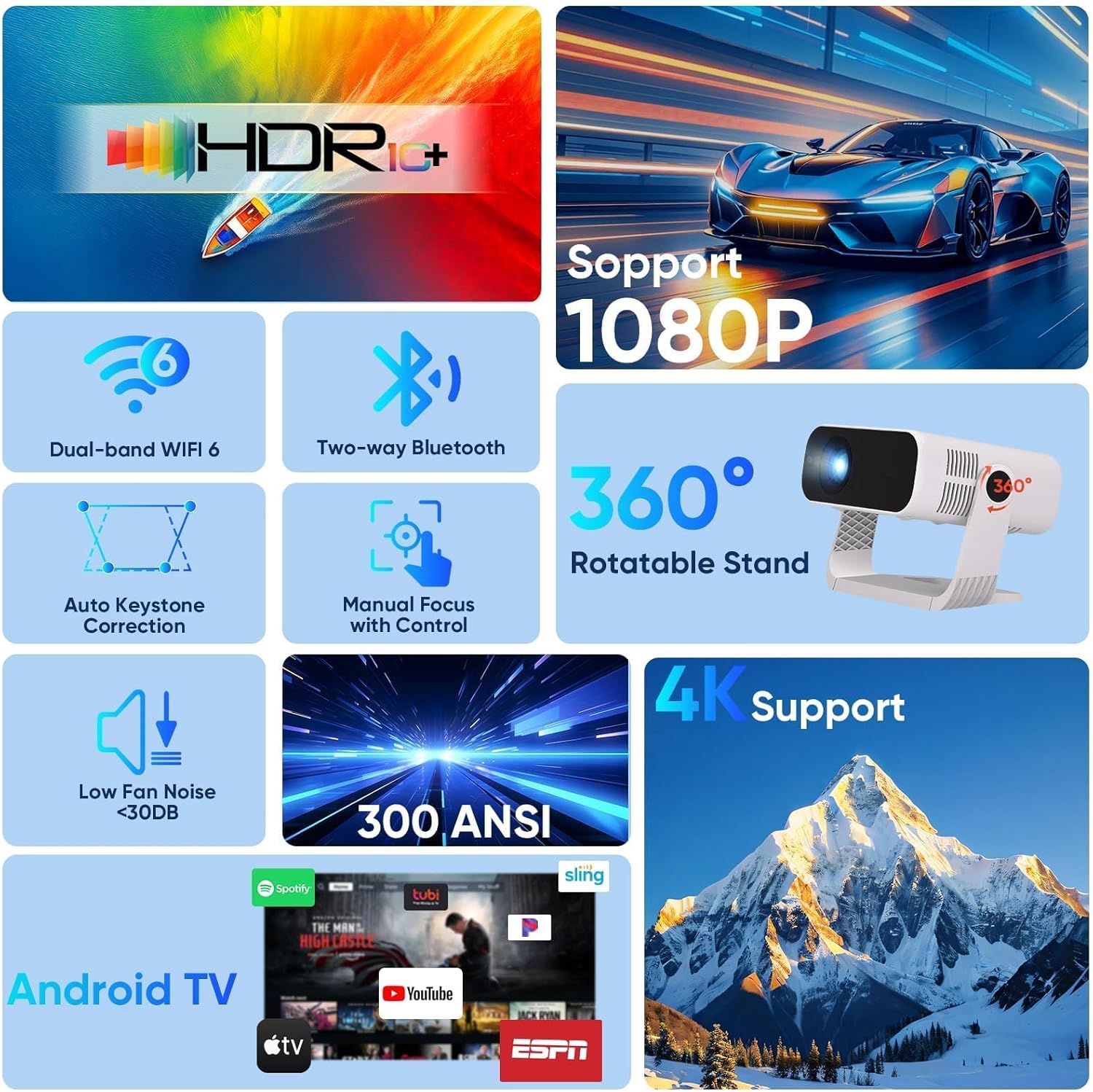
- Most current smart projector platforms support dual band Wi-Fi and Bluetooth, enabling both high bandwidth streaming and wireless audio connectivity.

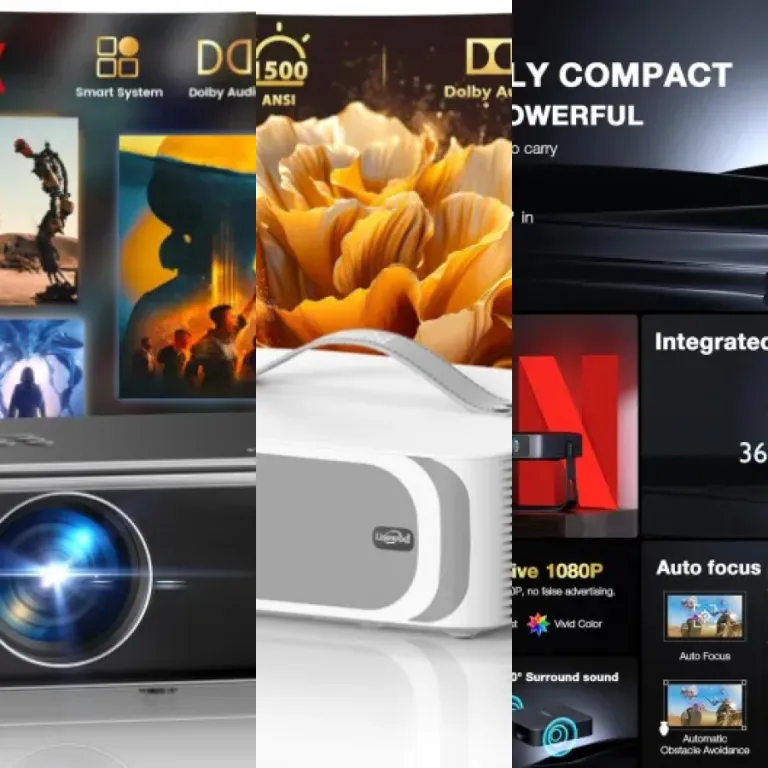
![[Officially-Licensed APP & Native 1080P] Smart Projector with 4K Support, Compatible with Netflix, Mini Projector with WiFi and Bluetooth, Auto Focus & Keystone 360° Rotatable Home Theater X6Pro Black](https://www.home-theater-projector-guru.com/storage/887690/conversions/71JbuWMLRDL._AC_SL1500_-medium.webp)

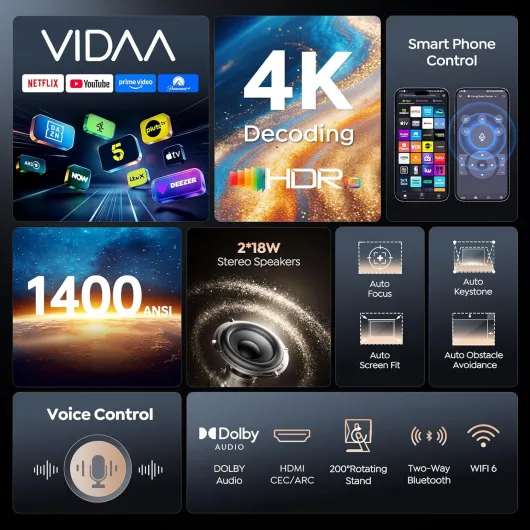
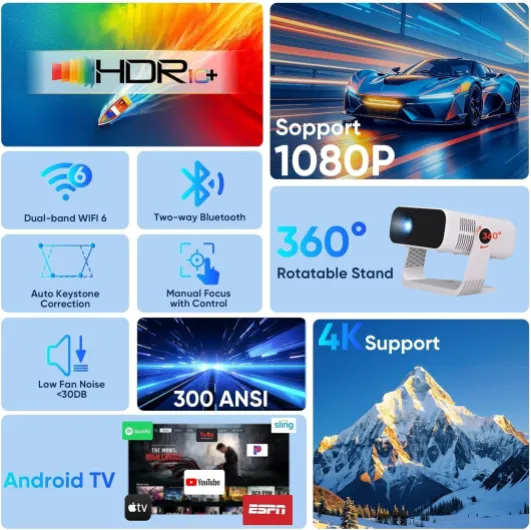
![[2000ANSI]Smart Projector 4K with Built in Apps YouTube/PrimeVideo & Dolby, Outdoor Camping Projectors Portable Mini Projector Daylight Home Cinema with WiFi 6,Bluetooth 5.3 & HDR10+ Graphite Gray](https://www.home-theater-projector-guru.com/storage/932622/conversions/81tSOWp-GEL._AC_SL1500_-medium.webp)
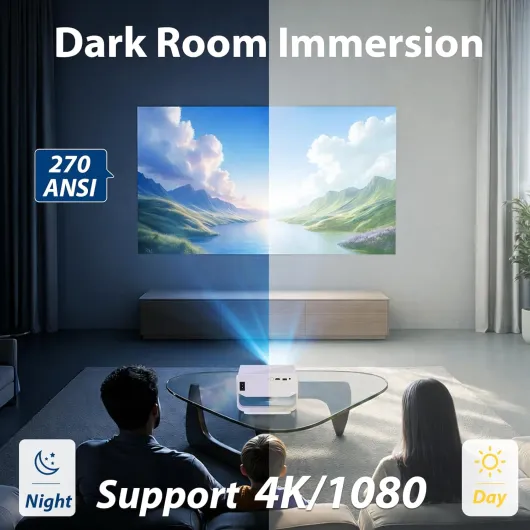
![[Built-in Official Apps/4K Support] Smart Outdoor Projector with WiFi and Bluetooth, 800ANSI Movie Projector, DoIby Audio with Dual Speaker, Auto Focus w/ YouTube&PrimeVideo Proyector, Upgrad P62 Pro Standard Black](https://www.home-theater-projector-guru.com/storage/677458/conversions/81GBqwrIy-L._AC_SL1500_-medium.webp)
![[AI Movin 2.0 System/1500 ANSI/Auto Focus] Outdoor-Projector with WiFi and Bluetooth, Portable-Projector 30W DoIby Audio APPS Built-in, Lisowod 4K Support Smart Proyector with HDR10+ 2025 Upgraded Standard White](https://www.home-theater-projector-guru.com/storage/544346/conversions/715j3ozBDPL._AC_SL1500_-medium.webp)
![[Netflix Officially & Dolby Audio] Aurzen Eazze D1 4K Supported Smart Projector with Auto Focus & Auto Keystone, HDR10, 60Hz Portable Projector for iOS/Android/USB/TV Stick, White](https://www.home-theater-projector-guru.com/storage/709110/conversions/71atPB0a8JL._AC_SL1500_-medium.webp)
![[Officially-Licensed APP & Native 1080P] Smart Projector with 4K Support, Compatible with Netflix, Mini Projector with WiFi and Bluetooth, Auto Focus & Keystone 360° Rotatable Home Theater X6Pro Black](https://www.home-theater-projector-guru.com/storage/887690/71JbuWMLRDL._AC_SL1500_.jpg)
![[2000ANSI]Smart Projector 4K with Built in Apps YouTube/PrimeVideo & Dolby, Outdoor Camping Projectors Portable Mini Projector Daylight Home Cinema with WiFi 6,Bluetooth 5.3 & HDR10+ Graphite Gray](https://www.home-theater-projector-guru.com/storage/932622/81tSOWp-GEL._AC_SL1500_.jpg)

![[Built-in Official Apps/4K Support] Smart Outdoor Projector with WiFi and Bluetooth, 800ANSI Movie Projector, DoIby Audio with Dual Speaker, Auto Focus w/ YouTube&PrimeVideo Proyector, Upgrad P62 Pro Standard Black](https://www.home-theater-projector-guru.com/storage/677458/81GBqwrIy-L._AC_SL1500_.jpg)
![[AI Movin 2.0 System/1500 ANSI/Auto Focus] Outdoor-Projector with WiFi and Bluetooth, Portable-Projector 30W DoIby Audio APPS Built-in, Lisowod 4K Support Smart Proyector with HDR10+ 2025 Upgraded Standard White](https://www.home-theater-projector-guru.com/storage/544346/715j3ozBDPL._AC_SL1500_.jpg)