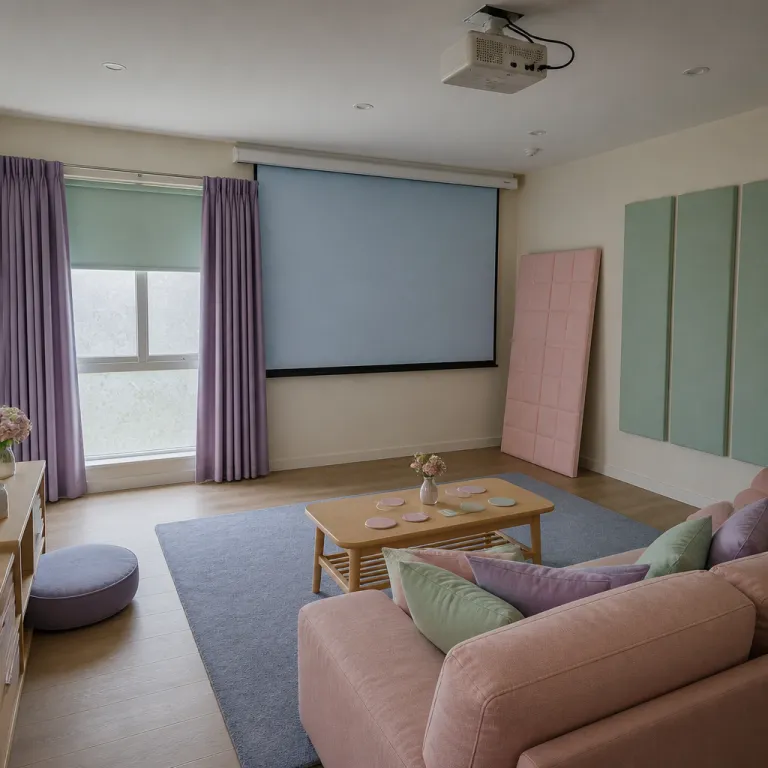
Why projector ambient light control matters more than raw lumens
Most people first blame the projector when the image looks washed out. In reality, projector ambient light control inside a bright multipurpose room usually matters more for contrast than buying a higher specified light projector with inflated projector lumens on the box. A modest 2 000 lumen unit in a tamed room ambient often beats a 3 500 lumen business projector blasting into uncontrolled lighting.
Ambient light acts like a gray veil over the projection screen. Every stray light source in your living room, from downlights to kitchen spill, lifts the black floor of the projected image and erases shadow detail that your projector brightness can never fully restore. That is why the same product can look cinematic at night and flat at noon on the identical matte white projector screen.
Think of contrast as the real currency of perceived brightness. When room lighting is high, the projector must fight both the screen and the walls ceilings around it, so the effective brightness reaching your eyes is far lower than the rated lumens suggest. Good projector ambient light control lets a lower light output projector behave like a much higher powered model in bright rooms without forcing you into eye searing modes.
Shaping the room: angles, walls, and smart light paths
The cheapest way to control ambient light is to change angles, not hardware. Before you upgrade to a laser projector or a new projection screen, walk around the room and map every light source that hits the screen at a direct or shallow angle. Your goal is to keep light striking the projector screen from the same direction as the projector lens as little as possible, because that is where contrast dies fastest.
Start with the walls ceilings that sit opposite your screen. Light colored paint throws light back toward the projected image, so even a dim floor lamp can double perceived brightness on the wall and crush blacks in the projected content. Darker matte finishes on the front wall and ceiling strip away those reflections and help any light projector, from short throw models to long throw projectors, maintain deeper blacks in both small and large rooms.
Ceiling cans are another silent killer of projector ambient light control. If overhead lighting must stay on, use narrow beam bulbs and tilt them away from the screen size area so the light falls behind the seating instead of across the projected image. That simple angle tweak often lets a mid range laser light source compete with a supposedly higher brightness business projector in the same bright room.
For more advanced multi screen setups, a video wall controller can route different content to multiple projectors while you still manage room lighting intelligently. When each projected image is positioned to avoid direct ambient light, you gain flexibility without sacrificing contrast or needing extreme projector brightness. Thoughtful geometry beats brute force lumens in most living rooms across the United States.
Windows, blackout tactics, and living with daylight
Daylight is the hardest ambient light to tame because it is both bright and broad spectrum. A typical living room near a large window can sit at 200 lux or more, which overwhelms any reasonable projector brightness unless you apply serious projector ambient light control with curtains and shades. The aim is not total darkness but reducing room ambient to a level where your projected image regains punch.
Blackout curtains are the highest impact, lowest complexity upgrade for most rooms. Affordable options from mainstream brands can drop measured light on the projection screen from office like levels down to single digit lux, which lets even older lamp based projectors with modest projector lumens look surprisingly high contrast. Pair them with side tracks or overlapping panels so no light leaks onto the projector screen edges, because those bright borders subconsciously lower perceived contrast.
If you cannot fully block windows, layer solutions instead of chasing a single perfect product. Sheer shades can soften harsh light sources while darker side panels catch the remaining spill, and a carefully chosen light rejecting screen then does the final cleanup on the projected image. For first time buyers, a step by step setup guide such as a detailed unboxing to calibrated picture walkthrough helps you prioritize which room lighting fixes to tackle before obsessing over a new laser projector.
Remember that different rooms in the same home behave very differently with daylight. A side lit den might only need partial shades and a matte white projection screen, while a front lit open plan space demands aggressive control ambient strategies and possibly a short throw light projector placed closer to the screen size area. Match your projector ambient light control plan to the worst case daylight scenario, not just cozy evening movie sessions.
Choosing the right screen for imperfect lighting
Once you have done the free room tweaks, the projection screen becomes your main tool for projector ambient light control. A basic matte white screen works beautifully in a dark room, but in a bright room it reflects ambient light almost as efficiently as the projected image. That is why many living room setups benefit more from a good ambient light rejecting surface than from chasing ever higher projector lumens.
Ambient light rejecting screens use optical layers or micro structures to favor light coming from the projector while rejecting light from other angles. In practice, that means ceiling lights and windows off to the side contribute less to the final image, so your projector brightness translates into deeper blacks and richer colors instead of gray haze. The trade off is that viewing angle narrows slightly, so you must align the projector, screen size, and seating carefully to keep everyone inside the optimal cone.
Short throw and ultra short throw projectors complicate this choice because their light source hits the screen from below at a steep angle. They need dedicated ALR designs tuned for that geometry, otherwise the screen may reject as much projected image as ambient light and leave you with a dim picture. When matched correctly, a laser projector with stable light sources and a good UST ALR screen can look almost like a giant television in bright rooms, especially when room ambient is already reduced with curtains and thoughtful room lighting.
Do not ignore the front wall color around the screen either. A dark frame area absorbs stray light and visually deepens blacks, while a bright wall makes even a high contrast projected image feel flatter. In mixed use rooms across the United States, a balanced approach using a moderately high gain light rejecting screen, controlled lighting angles, and a sensibly bright light projector usually beats chasing extreme high brightness business projectors.
Matching projector type and brightness to real rooms
Projector ambient light control does not mean you can ignore projector brightness, but it changes how you read the numbers. For a typical 100 inch screen size in a semi dark room, a calibrated 1 500 to 2 000 ANSI lumens from a home cinema projector is often the best balance between punchy highlights and quiet fan noise. In a truly bright room with limited control ambient options, you may need closer to 2 500 calibrated lumens, which usually means a modern laser projector or a very efficient lamp model.
Laser light sources bring two advantages to imperfect rooms. First, their color stability over time means the projected image you calibrate today will look similar years later, even as the room lighting and décor slowly change. Second, many laser projectors maintain higher brightness in accurate picture modes than older lamp projectors, so you get more usable lumens on screen without resorting to harsh business presets that crush shadow detail.
Longevity matters too when you are running higher brightness to fight ambient light. A detailed analysis of how long laser projectors actually last shows that heat, dust, and aggressive high power modes are the main killers of light sources, especially in rooms with poor ventilation. If you must push projector brightness to handle a bright room, give the chassis breathing space, clean filters regularly, and avoid stacking the projector near other hot AV product components.
Finally, think about how you use content across different rooms. A sports focused setup in a bright room might justify a high brightness light projector and a robust ambient light rejecting screen, while a movie centric den can prioritize contrast and quieter operation. The best match is always between your viewing habits, your room ambient realities, and a projector whose lumens, light source, and optics are honestly specified rather than optimistically marketed.
FAQ
How bright should my projector be for a living room with some lights on ?
For a 100 to 120 inch screen size in a living room with partial ambient light, aim for at least 1 800 to 2 200 calibrated ANSI lumens. That level of projector brightness, combined with basic projector ambient light control like dimmable room lighting and curtains, usually delivers a satisfying projected image without harsh picture modes. If your room ambient is very high and cannot be dimmed, consider 2 500 to 3 000 calibrated lumens plus an ambient light rejecting projection screen.
Is an ambient light rejecting screen worth it if I can darken the room ?
If you can reduce room lighting to near dark with blackout curtains, a good matte white projector screen often gives the most natural image. Ambient light rejecting screens really shine in rooms where some light sources must stay on, such as family rooms or open plan spaces. In those cases, ALR materials help your projector lumens work harder by rejecting off axis ambient light that would otherwise wash out the projected image.
Do I need a laser projector for a bright room, or is a lamp model enough ?
You do not strictly need a laser projector for a bright room, but laser light sources make life easier. They typically maintain projector brightness more consistently over time and often deliver higher usable lumens in accurate modes than comparable lamp projectors. If you watch a lot of content with some lights on, the combination of stable brightness and lower maintenance can justify the higher upfront product cost.
Can a short throw projector work well in a multipurpose room ?
A short throw or ultra short throw light projector can work very well in a multipurpose bright room when paired with the right screen. Because the projector sits close to the wall, people walking around the room cast fewer shadows across the projected image. Just make sure you use a projection screen designed for short throw angles, ideally with ambient light rejecting properties, and control ambient light from overhead and side windows as much as possible.
What simple changes improve projector contrast without buying new gear ?
Start by turning off or dimming any light source that directly hits the projector screen, then angle remaining fixtures away from the image area. Darken the wall around the screen with paint or fabric to reduce reflections from room lighting and nearby light sources. Finally, close curtains during critical viewing, lower projector brightness to a calibrated level, and adjust seating so viewers sit within the optimal angle of the projected image.