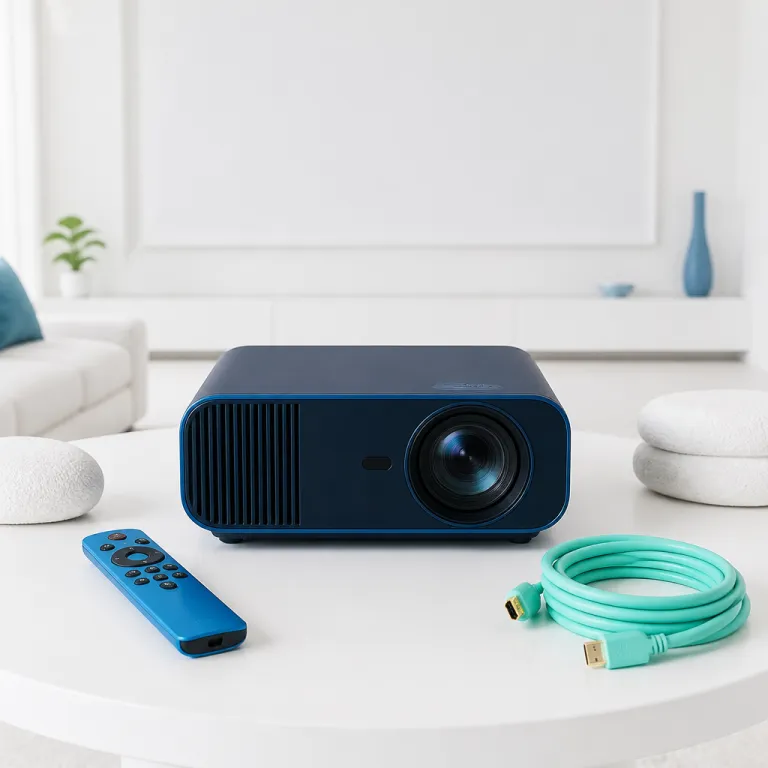
Projector vs TV 2026: when the living room crossed 100 inches
A few years ago, a 100 inch screen meant a basement cave. Today, the projector vs TV 2026 debate in a typical living room feels very different, because ultra short throw projectors and light rejecting screens finally work as daily displays. That shift is why the 100 inch image is no longer a fantasy for people who are comparing projectors and tvs on a realistic budget.
The inflection point came when ultra short throw laser projectors hit around 3 000 ANSI lumens. At that brightness level, a projector in a living room can punch through moderate ambient light on a good ALR screen, so the image quality holds up for news, streaming and casual sports. Once that happened, the cost per inch calculation flipped and the larger screen stopped being a luxury reserved for dedicated rooms.
Look at the numbers behind projector vs TV 2026 and the size argument. An 85 inch premium Mini LED TV often lands between 29 and 47 dollars per inch, while a 100 inch laser projector package with an ALR screen can sit closer to 20 to 35 dollars per inch. Stretch to a 120 inch projection screen and the cost per inch can drop again, which is why projectors and tvs no longer compete on the same psychological playing field. These ranges are consistent with public pricing from major electronics retailers and aggregated deal trackers that monitor large screen display costs over time.
In practical terms, that means a homeowner can place an ultra short throw projector on a low cabinet, pair it with a 100 inch ALR screen and get a larger screen than almost any retail TV. The living room suddenly feels like a small cinema, and the projector vs TV 2026 question becomes less about whether projectors are bright enough and more about whether you value immersion over plug and play convenience. Once you have that larger image on the wall, going back to smaller tvs feels like trading stadium seats for a tablet.
Brands understood this shift and changed their language quickly. Hisense markets its Hisense Pro laser models as replacements for best tvs rather than as niche home theater projectors, and XGIMI and Epson follow the same playbook with their own best projectors lines. The projector vs TV 2026 conversation now happens in furniture stores and lifestyle showrooms, not just in specialist AV dealers.
There is still a gap in raw light output between the brightest Mini LED tvs and even the best projectors. A premium Mini LED TV can hit higher peak brightness for HDR highlights, while a projector must spread its light across a much larger screen area. That is why ambient light control and a proper ALR screen remain essential if you want the best image quality from a projector in a bright living room.
Yet for many people, the trade is worth it. A 100 inch projection screen engages more of your peripheral vision, so movies and games feel better and more involving even if the absolute nit count is lower than on smaller tvs. When you sit three meters back and the image fills most of your field of view, the projector vs TV 2026 decision becomes a question of experience rather than only of specs.
Cost structure also favors projection once you cross a certain size. A short throw or ultra short throw projector plus a decent projector screen can undercut the cost per inch of very large tvs, especially when you factor in seasonal deals and bundle pricing. For buyers who track every cost inch of their setup, projectors quietly became the rational choice for larger screen sizes.
Why 100 inches feels different from 75: immersion, eye strain and daily use
Size is not just a number on a box. The jump from a 65 or 75 inch TV to a 100 inch projection screen changes how your eyes and brain process the image, which is why projector vs TV 2026 debates often miss the real point. At 100 inches, the screen becomes part of the room rather than a rectangle in the corner.
From a viewing distance of around three to three point five meters, a 100 inch image fills a large portion of your horizontal field of view. That level of coverage pulls your peripheral vision into the scene, so films, sports and best gaming titles feel more like a window than a display, and this is where projectors and tvs diverge in character. A larger screen at the same distance also lets you see more detail from 4K content without needing to sit uncomfortably close.
Eye strain is another under rated factor in projector vs TV 2026 decisions. Projectors reflect light off a screen, which is closer to how we see objects in the real world, while tvs emit light directly into your eyes at high brightness. Many people report that long movie sessions on a bright Mini LED TV feel harsher than the same films on a well calibrated projector in a dim room.
That does not mean projectors always win on comfort. If you run a projector in a living room with uncontrolled ambient light, you may be tempted to crank brightness and sacrifice black levels, which can also increase visual fatigue over time. The service best practice is to balance screen size, ambient light control and brightness so your eyes are not fighting glare or washed out shadows.
Daily usability still favors tvs in some scenarios. A TV wakes instantly, handles quick news checks and background viewing without any thought, and modern smart platforms on best tvs are mature and responsive. Projectors, even ultra short throw models like the Hisense Pro series, still take a few seconds to light up and may need occasional focus or keystone checks if the projection screen or cabinet shifts.
That said, the gap is narrowing. Many ultra short throw projectors now integrate solid soundbars, tidy cable management and fabric finishes that let them blend into a living room more like furniture than gear, and this makes the projector vs TV 2026 choice less about clutter. Some models even pair with floor rising ALR screens that vanish into a slim base when not in use, so the larger screen does not dominate the room all day.
Long term ownership also matters when you weigh projectors and tvs. Laser light engines promise tens of thousands of hours with minimal dimming, while traditional lamp projectors require periodic lamp replacements that raise the real cost inch over time. For a deeper look at how a projector ages in a real home, a detailed long term review such as five years with a projector can be more revealing than any spec sheet. Independent lab tests and manufacturer datasheets commonly rate modern laser light sources at around 20 000 to 30 000 hours before brightness drops to half, which aligns with these long term impressions.
Gamers face a specific set of trade offs. Best gaming performance still tends to favor certain best tvs with extremely low input lag and strong HDR tone mapping, but several best projectors now offer game modes with competitive latency and large, bright images. Many recent gaming focused projectors and tvs measure input lag in the 10 to 20 millisecond range in third party benchmarks, which is good enough for most console players. If you sit at the right distance, a 100 inch projection can make racing and open world games feel better and more natural than on smaller tvs, even if the absolute contrast is lower.
Room, light and screens: when projectors really beat TVs
Projector vs TV 2026 is not a spec sheet question, it is a room question. The same projector can look either stunning or flat depending on how you manage ambient light and choose your screen, while a TV is more predictable but less flexible in size. Understanding your living room is the first step toward deciding whether a larger screen projector setup makes sense.
Start with light control. If your living room has big windows and you watch a lot of daytime sports, a bright Mini LED TV will still look better in raw punch, because it can overpower ambient light without washing out blacks completely. A projector in that same room needs help from an ALR screen and some basic shading to keep the image quality acceptable.
An ALR screen, or ambient light rejecting screen, uses optical layers to reflect light from the projector toward the viewer while rejecting light from other directions. Paired with an ultra short throw projector, a good ALR screen can make a 100 inch image look surprisingly bright and contrasty even with lamps on, which is why these combinations dominate projector vs TV 2026 discussions for living room use. The trade is that ALR materials cost more than simple matte white fabrics, so they raise the overall price of the setup.
Placement is the next constraint. Short throw and ultra short throw projectors sit close to the wall, which keeps cables tidy and avoids shadows when people walk around the room, while traditional long throw projectors need ceiling mounts or rear shelves. For many first time buyers, the simplicity of an ultra short throw projector on a media console is what finally makes a larger screen viable in a shared living space.
Specific models illustrate how far the tech has come. Hisense Pro laser projectors, for example, pair a bright ultra short throw engine with a matched ALR projection screen, so the package behaves more like a giant TV than a traditional projector and screen kit. Other brands offer similar bundles, and some even include calibration presets tuned for living room ambient light rather than dark theater rooms.
There are also niche options like the VisionMaster Max, which targets buyers who want a premium light rejecting screen to pair with their own choice of projector. A high quality VisionMaster Max style screen can lift perceived contrast dramatically in rooms with mixed lighting, making the projector vs TV 2026 decision tilt toward projection for evening viewing. When you see a well set up ALR screen beside a bare wall projection, the difference in image quality is obvious even to non enthusiasts.
Smart platforms and streaming apps used to be a clear win for tvs. Now, many projectors ship with Google TV or similar interfaces, and guides such as how to choose the right Google TV projector can help you match the software experience to your habits. Once the interface gap closes, the main remaining advantages for tvs are peak brightness and the simplicity of a single integrated slab.
Calibration and setup still require more patience with projectors. To get the service best performance, you need to align the projector, square the image to the projector screen, set the right picture mode and sometimes tweak color temperature, while a TV often looks acceptable out of the box. If you enjoy tinkering and want the best projectors performance, that process can be satisfying, but if you hate setup friction, a large TV may still be better for your living room.
Money, tech trends and who should stay with a TV
Follow the money and the projector vs TV 2026 story becomes clearer. Once you calculate cost per inch for a 100 or 120 inch larger screen, projectors usually win on raw value, especially when you factor in seasonal deals and bundled ALR screens. The question is whether that lower cost inch aligns with how you actually watch content in your room.
For a mixed use living room where people watch a lot of daytime content, a bright Mini LED TV still offers the most consistent image quality. Peak brightness, local dimming and strong anti reflection coatings let these best tvs handle harsh ambient light without crushing blacks completely, which matters for sports and news. In that scenario, a projector might become a secondary device for movie nights rather than the primary display.
In a dimmer room or a basement, the calculus flips. A good ultra short throw or short throw projector on a 100 to 120 inch projection screen can deliver a more cinematic image than smaller tvs, even if the absolute contrast ratio is lower, because the sheer size increases immersion. When you sit at the right distance, the larger image hides some of the remaining weaknesses in black level and makes HDR grading feel more natural.
Tech trends also favor projection in subtle ways. Laser light sources reduce maintenance and keep brightness more stable over time, while improvements in DLP and LCD panels raise native resolution and color accuracy, and this narrows the gap with premium tvs. At the same time, furniture friendly designs and integrated soundbars turn ultra short throw projectors into objects that can live in a stylish living room without looking like lab equipment.
Not everyone should switch, though. If your viewing distance is under three meters and your wall cannot accommodate more than a 75 inch screen, a large TV will probably look better and be easier to live with, because a projector needs space to breathe. People who mainly watch daytime sports or leave the display on as background light may also prefer tvs, since projectors are less efficient as always on appliances.
Gamers who chase the absolute lowest input lag and the most consistent HDR tone mapping may still find best gaming performance on certain high end tvs. That said, several best projectors now offer game modes with input lag under 20 milliseconds, which is good enough for most console players, and the larger screen can make racing and action titles feel better even if the black levels are not perfect. The key is to match your priorities to the strengths of each display type rather than chasing specs in isolation.
For buyers who want guidance on specific models, curated lists of top home theater projectors with keystone correction, such as those found in a dedicated projector buying guide, can narrow the field quickly. These resources often highlight real failure points like DLP rainbow artifacts, fan noise and long term color drift, which matter more in daily use than another claimed 200 lumens. When you read between the marketing lines, you see that the best projectors are designed for real rooms, not just for lab measurements.
Ultimately, the 100 inch living room is now normal because the tech, price and furniture design all converged. Projectors and tvs will continue to coexist, but for anyone who cares about immersion and can control ambient light reasonably well, projection has quietly won the size argument. What matters most is not the lumens on the box, but the last row on movie night.
Key figures that explain the 100 inch living room shift
- Cost per inch for very large displays has converged, with many 85 inch premium Mini LED TVs selling in the range of 29 to 47 dollars per inch, while 100 inch ultra short throw projector bundles with ALR screens often land between 20 and 35 dollars per inch according to major retailer pricing data, which makes projection more attractive once you cross 100 inches.
- Brightness levels for mainstream ultra short throw laser projectors have climbed to around 3 000 to 3 500 ANSI lumens in the mid price segment, a range that allows acceptable image quality in living rooms with moderate ambient light when paired with a good ALR screen, closing much of the usability gap with bright tvs. These figures are typical of models tested by independent review labs and reflected in manufacturer spec sheets.
- Market positioning has shifted, with brands such as Hisense, XGIMI and Epson promoting their ultra short throw projectors as TV replacements rather than niche home theater gear, reflecting a broader trend toward projector as furniture designs that integrate soundbars and fabric finishes for living room use.
- Viewing geometry studies in home cinema design suggest that a 100 inch screen at a distance of roughly three meters can occupy a significantly larger portion of the viewer’s horizontal field of view than a 75 inch TV at the same distance, which increases perceived immersion and makes movies and games feel more engaging.
- Laser light source lifespans for modern projectors are commonly rated in the tens of thousands of hours, often around 20 000 hours or more before brightness drops significantly, which reduces long term maintenance compared with older lamp based projectors and improves the real world cost per inch over years of use. These ratings are widely published in manufacturer documentation and validated in long term endurance tests.
- Input lag measurements from specialist gaming and AV reviewers frequently show modern gaming focused tvs and best projectors clustering in the 10 to 20 millisecond range in dedicated game modes, which explains why large screen projection has become viable for many console players who previously avoided it for responsiveness reasons.