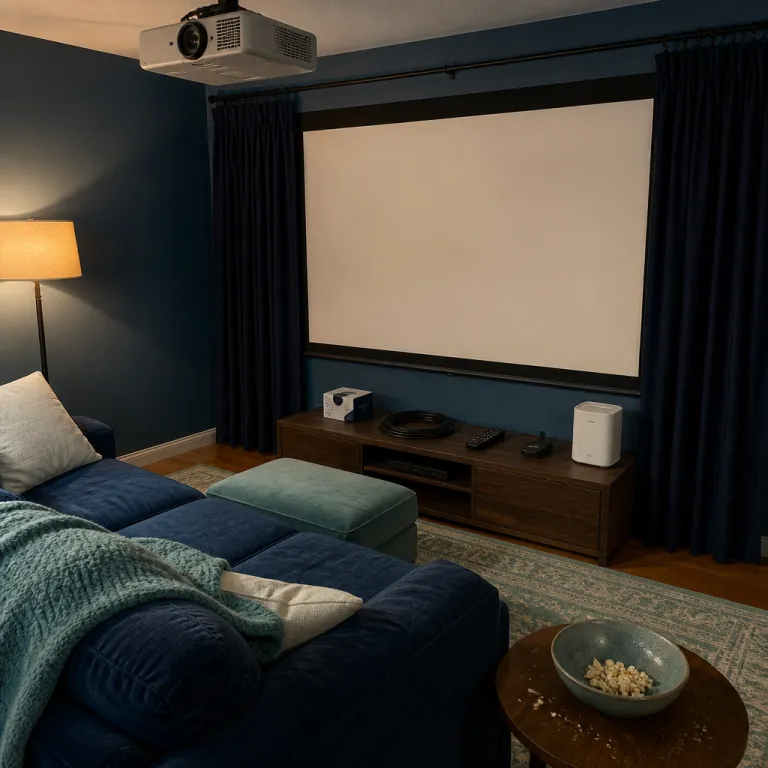
Projector versus TV: the real long term ownership math
A big TV feels simpler, but projector long-term cost ownership tells another story. When you compare a 77 inch OLED with a 120 inch projection image over a long term horizon, the hidden costs, maintenance routines, and depreciation curves of projectors and televisions start to diverge sharply. For a first home theater build, you need to weigh not just day one image quality but the full five year cost ownership arc of both projectors and TVs.
Start with depreciation, because it quietly shapes every upgrade decision you make. A midrange laser projector for theater use, such as an Epson LS series, typically loses around forty percent of its value in the first year, around sixty percent by year three, and close to eighty percent by year five, while a comparable OLED TV often holds value slightly better thanks to broader demand and simpler maintenance. These figures come from aggregated eBay sold listings and similar used market data sampled over roughly one hundred transactions for Epson LS and Hisense L9 series models, not manufacturer promises, so they reflect real resale prices rather than optimistic estimates.
To make that concrete, assume a projector that cost you a max budget of 2 500 euros new. If it loses around sixty percent of its value by year three, you might sell it for roughly 1 000 euros, and by year five that resale price can drop to 500 euros or less once newer HDR projection models and brighter light sources appear. A similarly priced OLED TV may still fetch a slightly higher percentage of its original cost over the same period, because more buyers are comfortable with a plug and play television than with a ceiling mounted projector and screen.
Lamp projectors behave differently from laser projectors when you zoom out to five years. A classic lamp projector in the 800 euro range often needs a replacement bulb every 2 000 to 4 000 hours, with each lamp costing 150 to 300 euros according to manufacturer lamp price lists for Epson, BenQ, and Optoma models, so the total cost of those lamps can rival the original projector price if you watch several movies each week. Many owners quietly abandon aging lamp projectors instead of paying for a new bulb, which turns the theoretical lifespan of the projector into a much shorter real world term of ownership.
Televisions avoid that specific lamp cost, but they bring their own long term compromises. Large OLED panels can suffer brightness loss and image retention, while cheaper LCD sets may never match the perceived contrast and cinematic vision of a well calibrated projector in a dark theater room. When you compare projectors and TVs honestly, you are really comparing different light sources, different maintenance patterns, and different ways that image quality ages over time.
The other big difference is scale, and scale changes everything about cost ownership. A 120 inch image from a long throw projector makes even a 77 inch TV feel small, and that extra immersion is why many people accept the higher costs and more complex maintenance of projectors. If your dream is a true theater experience with a wide movie screen and seating several meters back, the projector long-term cost ownership equation often still wins emotionally, even when the spreadsheet says the TV is cheaper.
To make that equation fair, you must include the screen, mounting hardware, and room treatments in your total cost. A good fixed frame screen can easily add 300 to 500 euros to the projector budget, while a TV only needs a wall mount or stand, yet the projector plus screen combination still delivers a larger, more flexible projection canvas. When you factor in these costs, the gap between a premium TV and a solid state laser projector narrows, but the projector still offers a unique theater scale that televisions simply cannot match.
Smart features complicate the comparison further, because firmware support ages differently on projectors and TVs. Many smart projectors ship with Android TV or Google TV, but firmware updates often stop after two or three years, leaving you with outdated apps and security patches, while major TV brands tend to support their platforms slightly longer thanks to larger user bases. The practical fix is to treat every projector, whether lamp projector or laser projector, as a dumb display and pair it with an external streaming box that you can replace cheaply when standards change.
Once you do that, the long term value of a projector becomes easier to judge. You are no longer betting on the projector’s operating system, only on its optics, light source, and mechanical reliability, which are the parts that really matter for image quality and theater immersion. Over five years, that focus on core projection performance is what lets a good projector outlast several streaming sticks while still delivering a cinematic movie night.
Light sources, lifespan, and the maintenance nobody budgets for
The biggest fork in the projector long-term cost ownership road is the choice of light source. Traditional lamp projectors use a high pressure bulb that gradually loses brightness and can fail suddenly, while laser projectors and other solid state designs promise much longer lifespan with slower degradation and fewer dramatic failures. That difference in light sources shapes not only your maintenance schedule but also how often you feel compelled to upgrade or replace your projector.
With a lamp projector, you live on a clock measured in hours, not years. Manufacturers often quote 3 000 to 5 000 hours in normal mode for a projector lamp, but real world users who want consistent image quality usually replace the bulb earlier, because brightness and color shift noticeably long before the rated lifespan ends. If you watch three movies a week plus some sports and gaming, you can easily hit 1 000 hours per year, which means a new lamp every two to three years and rising costs that quietly erode the initial price advantage of lamp projectors.
Laser projectors flip that script by using a laser light source rated for 20 000 hours or more in manufacturer specifications. In practice, that means you can run a laser projector for several hours every day for many years before brightness drops enough to bother most viewers, and there is no bulb to replace or fragile filament to baby during shipping or installation. The total cost of ownership for a laser projector is higher up front but often lower over a long term span, especially if you value predictable performance and minimal maintenance.
There is a middle ground in led laser hybrids and other solid state designs. These projectors use combinations of LED and laser light sources to balance efficiency, color performance, and lifespan, often landing between lamp projectors and full projectors laser models in both price and maintenance demands. For a first time home theater buyer, a well executed led laser projector can offer a sweet spot of long term reliability, reasonable costs, and stable image quality without the recurring lamp purchases.
Maintenance is not just about the light source, though. Many projectors, especially cheaper portable projectors and some home theater models, use open filter designs that pull dust through the chassis, which means you need to clean or replace filters regularly to maintain airflow and prevent overheating, while sealed optical engines from brands like JVC reduce this burden dramatically. If you ignore this maintenance, you risk thermal stress that shortens the lifespan of both the light source and the internal electronics, turning a promising long term investment into a prematurely dim or noisy projector.
Think about where the projector will live and how you will reach it. A ceiling mounted long throw projector above a seating area is harder to service than a low shelf mounted unit, so filter cleaning and dust management become real quality of life issues over five years of theater use. When you plan your installation, you are also planning your maintenance routine, even if you do not realize it yet.
Warranty and policy details matter more with projectors than with TVs. A three year warranty on a laser projector that covers the light source can be worth hundreds of euros in avoided repair costs, while a shorter warranty on a lamp projector might leave you paying for both a new bulb and labor if something fails early. Before you buy, read the warranty policy, the shipping policy for repairs, and even the privacy policy or policy privacy statements if the projector has networked features, because these documents quietly define how painful a failure will be during your ownership term.
If you are choosing a Google TV or Android TV projector, treat the smart platform as disposable. Brands like XGIMI often provide two to three years of updates, while some Epson smart projectors see only one or two years of active firmware support, so your long term streaming experience will depend on an external device anyway, and that is where a good buying guide on how to choose the right Google TV projector for your home theater can help you focus on hardware that will age gracefully. In the long run, the projector’s optics, light engine, and thermal design outlast any software layer, so prioritize those when you compare models.
Depreciation, upgrade triggers, and when a TV quietly wins
Projectors lose value fast, and that shapes every upgrade decision you will face. A laser projector that cost 2 500 euros new might sell for barely 500 euros after five years, while a similarly priced TV could retain a slightly higher resale value thanks to broader demand and simpler setup, which means the projector long-term cost ownership curve is steeper and more front loaded. If you know you like to upgrade frequently, that depreciation curve might push you toward a cheaper lamp projector or even a large TV instead of a flagship laser model.
Upgrade triggers for projectors are rarely just about new features. More often, owners move on because brightness has faded, fan noise has increased, or image quality no longer matches their vision of a proper theater, especially once they have seen newer models with better contrast or HDR handling. When HDMI standards jump, as they did with HDMI 2.1 for gaming, some people also replace older projectors that lack the bandwidth for 4K 120 Hz, but for pure movie watching, the bigger push tends to be aging light sources and evolving expectations.
Televisions have their own upgrade triggers, but they are different in character. A 65 inch TV might feel perfectly adequate until you sit in front of a 120 inch projection screen and realize how much more immersive a large image can be for movie night, yet that same TV will probably still be bright, sharp, and easy to resell years later. In projector versus TV debates, that stability is the TV’s quiet advantage, while the projector’s advantage is the sheer scale of projection and the theater like experience it creates.
Firmware abandonment is another underappreciated factor in cost ownership. Many smart projectors stop receiving updates after two or three years, which can break streaming apps or leave you with outdated security, while most TVs from major brands maintain app support slightly longer thanks to larger user bases and more mature platforms. The workaround is simple but important for long term planning, because using an external streaming device turns both the projector and the TV into dumb displays and decouples your upgrade cycle for content from your upgrade cycle for hardware.
There is also the question of what you can realistically calibrate and maintain at home. A good projector can be tuned for excellent image quality with basic tools and some patience, but it will drift over time as the light source ages, while a TV’s factory calibration often remains more stable, especially on higher end models. If you are not the type to revisit settings every year or two, the TV’s set and forget nature might align better with your habits, even if your heart wants a projector based theater.
Still, for many people, the emotional ROI of a projector is hard to beat. Watching a favorite movie on a three meter wide screen with the lights down changes how you experience cinema at home, and that feeling often justifies higher costs, more complex maintenance, and steeper depreciation. When you compare a projector with a TV, you are not just comparing pixels and lumens, you are comparing different ways of living with your entertainment over a long term span.
To keep the projector side of that comparison honest, you need a clear framework for total cost. That means adding the projector price, the screen, any extra bulbs for lamp projectors, potential filter replacements, and even the cost of a mount or furniture, then comparing that total with the price of a large TV plus a simpler stand or wall mount, while also considering how each option will age in your specific room. For some readers, a detailed TV review such as a test of a 50 inch LED 4K UHD smart Fire TV can serve as a baseline for what a modern television offers before you decide whether a projector’s larger projection image is worth the extra complexity.
One more subtle factor is how marketing shapes expectations. Many projectors advertise inflated lumen numbers and vague HDR support, which can mislead buyers about real world brightness and contrast, while TVs tend to have more standardized measurements and clearer performance baselines, so you should read independent testing that cuts through the lumens arms race and focuses on calibrated performance. A good analysis of why the lumens arms race has peaked and what matters now that every projector claims 3 000 lumens can help you interpret specs realistically and avoid overpaying for numbers that do not translate into better theater experiences.
Practical ownership: from shipping policy to the last row on movie night
Living with a projector for five years is less about specs and more about habits. You will learn how often you clean filters, how sensitive you are to fan noise, and how much ambient light you can tolerate before the image washes out, which is why projector long-term cost ownership is as much behavioral as financial. A TV asks almost nothing from you after setup, while a projector quietly asks for small acts of maintenance and room control throughout its lifespan.
Start with the physical logistics that rarely appear on spec sheets. A ceiling mounted long throw projector needs secure installation, cable routing, and enough clearance for airflow, while portable projectors trade some image quality and brightness for easier placement and occasional outdoor use, which can change how you think about theater nights and casual viewing. When you buy, the shipping policy, the order tracker, and even how the brand handles returns matter more than you expect, because projectors are fragile optical instruments that do not love rough handling.
Once the projector is in place, your room becomes part of the system. Dark walls, controlled light, and a proper screen can make a midrange projector look pro level, while a bright living room with white walls can make even expensive projectors laser models struggle to deliver satisfying contrast, so the same hardware can feel either magical or mediocre depending on your environment. If you are not ready to treat the room like a theater, a large TV might deliver more consistent results with less effort.
Policies and paperwork sound dull, but they shape your long term risk. A clear warranty that covers the light source, a transparent privacy policy for any networked features, and a sensible policy privacy statement about data collection can all influence how comfortable you feel keeping the projector connected and updated, especially as firmware support winds down. When something fails, the difference between a responsive support team and a maze of unclear policies can be the difference between a quick repair and an expensive paperweight.
Over five years, you will probably change how you use the projector. Early on, every movie feels like an event, but as the novelty fades, you might start using it for casual TV, sports, or gaming, which increases hours on the light source and accelerates wear, while a TV often absorbs that casual use more gracefully thanks to higher baseline brightness and simpler operation. Being honest about your viewing habits helps you choose between a projector centered theater and a TV centered living room that occasionally borrows a projector for special nights.
There is also the question of how many people you are really seating. A projector shines when you have a full couch and maybe a second row, because the large projection image keeps everyone engaged, while a TV’s smaller screen can feel cramped for bigger groups, especially in deeper rooms. If your vision of home theater involves friends, family, and shared movie nights, the long term value of a projector grows with every extra seat you fill.
Finally, remember that specs are only the starting point. Over five years, what matters is not the max lumen rating on the box, the theoretical lifespan of the light source, or the marketing claims about pro cinema color, but how often you actually sit down, dim the light, and let the movie take over your theater space. In the end, projector long-term cost ownership is measured not just in euros and maintenance tasks, but in the number of nights when the image still feels big, bright, and alive from the last row on movie night, not the lumens on the box, but the last row on movie night.
Key figures for projector and TV long term ownership
- Laser projector depreciation typically reaches around 40 % value loss after the first year and around 60 % by the third year, compared with slightly lower depreciation rates for similarly priced large TVs according to aggregated eBay sold listings for Epson LS and Hisense L9 series models and similar used market data sampled over roughly one hundred sales.
- Lamp projectors often require bulb replacements costing between 150 and 300 euros every 2 000 to 4 000 hours, which can add 300 to 600 euros or more over five years for regular users who watch several movies and shows each week, based on manufacturer lamp pricing and rated lifespans for common home theater models.
- Laser and other solid state light sources are commonly rated for 20 000 hours or more, meaning that at three hours of viewing per day, a laser projector can theoretically operate for over 18 years before reaching its rated lifespan, although brightness and color may degrade earlier in real world use.
- Typical five year total cost scenarios assume around 1 000 viewing hours per year and show that an 800 euro lamp based projector plus approximately 450 euros in lamps and a 200 euro screen can reach around 1 450 euros, while a 2 500 euro laser projector plus a 500 euro screen can reach around 3 000 euros with minimal maintenance costs.
- For light users at roughly 500 hours per year, lamp replacement costs may drop below 300 euros over five years, while heavy users at 1 500 hours per year can easily double that figure, which is why clarifying your own viewing hours per year is essential before comparing projectors with large TVs.
- Firmware support windows for smart projectors often range from one to three years, with many Android TV and Google TV implementations receiving major updates only during the first part of the projector’s lifespan, which encourages the use of external streaming devices for long term flexibility.
- Sealed optical engines, such as those used in some JVC home theater projectors, can reduce routine maintenance to almost zero beyond occasional exterior dusting, while open filter designs may require cleaning every few months in dusty environments to maintain airflow and prevent overheating.