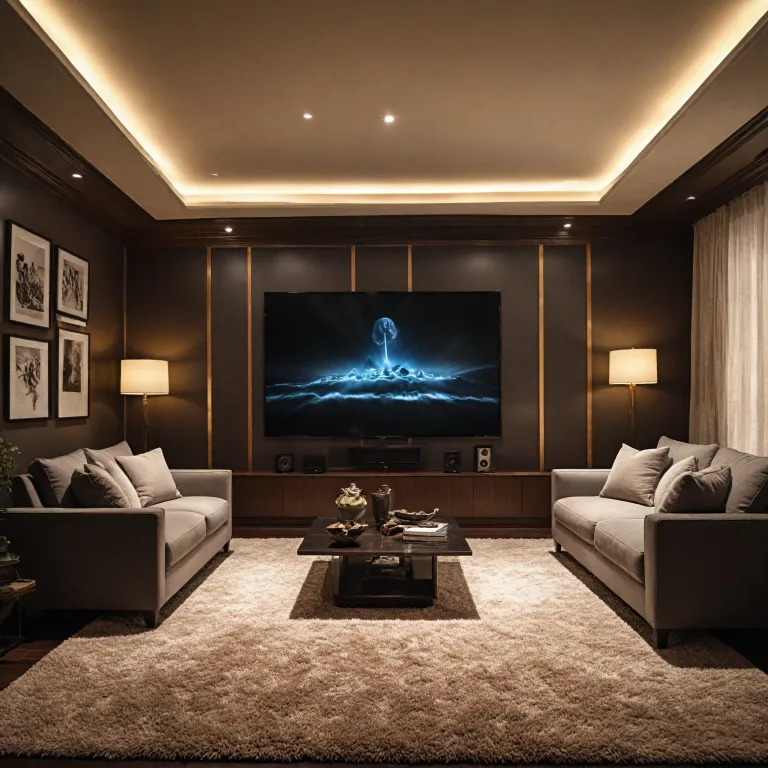
Why center channel speakers matter more than you think
In a serious home theater, the center channel speakers carry most dialogue. This single channel speaker anchors voices to the screen while other speakers handle effects and ambient audio. Without a dedicated center speaker, even an expensive projector and surround sound system can feel strangely flat.
Film mixers place up to 70 percent of dialogue in the center channel, so the center channel speakers must deliver crystal clear speech at every volume. A well designed center speaker keeps voices stable, even when you move across the sofa, and it prevents the sound from drifting toward the left or right speakers. When the center channel is weak, viewers raise the volume, which makes explosions louder but dialogue still muddy.
Matching the center channel speakers to your front speakers is essential for consistent sound quality. Ideally, the center speaker uses similar tweeter and driver materials, so panning effects move smoothly across the front soundstage. Brands like polk audio, svs, and definitive technology design families of speakers where the center channel, bookshelf speakers, and towers share the same acoustic signature.
For many buyers, price and size drive the final decision more than specifications. A slim center model may fit under a screen where a larger black ash cabinet will not, even if the bigger product offers deeper frequency response. The key is balancing budget, aesthetics, and performance so the center channel speakers never become the weak link in your theater surround experience.
Matching center channel speakers to projectors and room layouts
Home theater projector setups create unique challenges for center channel speakers placement. When you use a large screen, the ideal position for the center channel is directly behind the image at ear height, but most living rooms cannot accommodate acoustically transparent screens. As a result, many people compromise by placing the center speaker below the screen, which can pull dialogue downward.
To counter this, angle the channel speaker upward toward ear level and keep the tweeter as close to the screen center as possible. If your projector sits on a shelf, avoid blocking the center speaker with furniture or décor, because any obstruction can scatter sound and reduce clarity. In long rooms, consider a more powerful center channel with higher sensitivity, especially when the main seating position is several meters from the screen.
When integrating sources, an HDMI UDP encoder can help route pristine audio from streaming devices to your theater surround system; see this guide on how to use an HDMI UDP encoder for your home theater projector. This ensures the center channel receives a clean digital signal before your AV receiver decodes it into separate speakers. A stable connection preserves the full frequency response and prevents dropouts that can interrupt dialogue during key scenes.
Room acoustics also shape how center channel speakers behave with a projector based system. Hard floors and bare walls can make the center channel sound harsh, while thick rugs and curtains tame reflections and improve perceived sound quality. Treating first reflection points often yields more benefit than upgrading from a mid priced center speaker to a premium model.
Key technologies that define modern center channel performance
Modern center channel speakers rely on carefully engineered tweeter and driver arrays to keep dialogue intelligible across a wide seating area. Traditional horizontal designs place a tweeter between two midrange drivers, but this can cause off axis lobing that blurs sound for people sitting at the sides. To address this, some brands use a three way layout or vertically aligned drivers inside a slim center cabinet.
Polk audio offers the polk signature and signature elite series, where each center speaker uses a specially tuned tweeter waveguide for crystal clear dialogue. The signature elite models refine the crossover and frequency response to better match high quality front speakers in demanding theater surround rooms. SVS counters with the svs prime and prime center designs, which focus on wide dispersion and robust power handling for larger spaces.
Cabinet finishes such as black and black ash remain popular because they disappear under dim projector light, keeping attention on the screen. Definitive technology often combines gloss and matte textures to reduce visual distraction while still presenting a premium product aesthetic. Internally, bracing and damping materials reduce resonance, allowing the center channel speakers to reproduce subtle audio details without coloration.
Connectivity and amplification also influence performance, even though they sit outside the speaker cabinet. A well matched AV receiver with adequate power ensures the center channel never strains during dynamic peaks. For more on front stage options beyond a traditional center speaker, you can explore this overview of a compact sound solution for projector based systems that pairs well with HDMI encoders.
Balancing price, ratings, and real world performance
Shoppers often start by filtering center channel speakers by price and user ratings. A highly rated stars score can highlight a reliable product, but it rarely tells the full story about audio performance in a specific theater. You must read how people describe dialogue clarity, tonal balance, and integration with their existing speakers.
Many midrange models from polk audio, svs, and definitive technology offer excellent value when paired with a capable projector and AV receiver. The svs prime center, for example, is frequently rated stars for its ability to stay crystal clear at reference levels without sounding harsh. Polk signature and signature elite centers, meanwhile, attract praise for their warm sound quality and forgiving nature in bright rooms.
Finish options like black or black ash do not change sound directly, but they influence how easily you can position the center speaker near your screen. A compact slim center may command a higher price because it solves placement problems under low media consoles. When comparing products, consider whether free delivery, extended warranties, or bundled surround sound packages offset a slightly higher ticket.
Professional reviewers often measure frequency response and distortion, yet your ears and room remain the final judges. A center channel that measures perfectly in a lab can still sound thin if your seating is far away or your audio setup is unbalanced. Whenever possible, audition speakers at home, even briefly, before trusting any rated stars summary.
Optimizing audio setup for dialogue and surround integration
Once you choose a center channel speaker, careful calibration unlocks its full potential. Start by setting the center channel level using your AV receiver’s test tones, ensuring dialogue sits slightly forward compared with effects. Many listeners prefer the center channel boosted by 1 to 2 decibels for clearer speech in projector based theaters.
Next, set the crossover so the center speaker handles only the frequencies it can reproduce cleanly. For compact or slim center models, a crossover around 80 to 100 hertz usually protects the drivers from strain, while larger cabinets with extended frequency response can cross lower. Always redirect deep bass to a subwoofer, which relieves the center channel speakers from reproducing energy that can blur midrange clarity.
Room correction systems can further refine sound quality by smoothing peaks and dips in the center channel’s response. However, you should double check that these systems do not pull dialogue backward by lowering the center level too aggressively. If your projector room doubles as a living space, small acoustic treatments behind and beside the center speaker can significantly improve theater surround immersion.
For users who cannot install a full array of speakers, a high quality soundbar may be an alternative, especially when paired with a projector; see this detailed test of a compact soundbar with HDMI ARC connectivity. Even then, the same principles apply, because the virtual center channel must keep dialogue intelligible and anchored to the screen. Whether you use discrete speakers or an all in one product, prioritize a stable, articulate center image.
Practical buying tips for different rooms and projector styles
Different projector environments demand different center channel speakers strategies. In a small apartment with a short throw projector, a compact black center speaker placed just below the screen can provide excellent dialogue without overwhelming the room. In larger dedicated theaters, a more substantial center channel with multiple drivers and a robust tweeter will better match the scale of the image.
If you often stream films and series, prioritize a center speaker that keeps compressed audio tracks intelligible at low volumes. Models from polk audio’s polk signature and signature elite lines, as well as the svs prime center, are engineered to maintain clarity even when late night listening forces you to turn things down. Definitive technology centers, meanwhile, often emphasize wide dispersion, which helps when seating spans several seats across.
Finish and form factor also matter when integrating with furniture and screens. A black ash cabinet may blend seamlessly with dark media walls, while a slim center profile can slide into narrow shelves without blocking the projector beam. Always confirm that free delivery and return policies allow enough time to test the product in your own audio setup.
Ultimately, the best center channel speakers are those that disappear sonically while making every line of dialogue feel natural. When the center channel, front speakers, and subwoofer integrate smoothly, your attention stays on the story rather than the hardware. That is the hallmark of a high quality theater surround experience built around a carefully chosen center speaker.
Key statistics about center channel speakers and home theater audio
- Up to 70 % of movie and TV dialogue is mixed into the center channel in typical surround sound formats.
- Listeners seated more than 3 meters from the screen often benefit from a center channel with sensitivity above 89 dB.
- Room reflections can increase perceived treble energy from the center speaker by 3 to 6 dB in untreated spaces.
- Crossing the center channel at 80 to 100 Hz can reduce distortion by more than 20 % compared with full range operation.
- Horizontal off axis response can vary by more than 10 dB between different center channel designs.
Common questions about center channel speakers in projector based theaters
Where should I place my center channel speaker with a projector screen ?
Ideally, place the center channel directly below the screen, angled toward ear level at the main seating position. Keep the front edge of the speaker flush with the shelf to reduce reflections from furniture. If you use an acoustically transparent screen, you can mount the center speaker behind the image at ear height for the most natural dialogue.
Do I really need a dedicated center channel speaker for my home theater ?
A dedicated center channel is strongly recommended for any serious projector based theater. It anchors dialogue to the screen and keeps voices clear for every listener, even off axis. Without it, phantom center imaging from left and right speakers often collapses when you sit away from the exact middle seat.
How important is matching my center speaker to my left and right speakers ?
Matching the center to your main speakers is crucial for seamless panning and consistent tone. When all three front speakers share similar drivers and crossovers, effects move smoothly across the screen. Mismatched speakers can make voices change character as they move, which breaks immersion.
What specifications matter most when comparing center channel speakers ?
Focus on frequency response, sensitivity, and recommended amplifier power, along with cabinet size. A flatter response in the vocal range usually yields clearer dialogue, while adequate sensitivity ensures strong output at typical listening distances. Also consider dispersion characteristics, especially if you have a wide seating area.
Can a soundbar replace a traditional center channel in a projector setup ?
A high quality soundbar can approximate a center channel for smaller rooms or minimalist setups. However, discrete center channel speakers generally offer better dynamics, placement flexibility, and integration with full surround sound systems. If you choose a soundbar, look for one with a dedicated center channel driver array and HDMI ARC support.