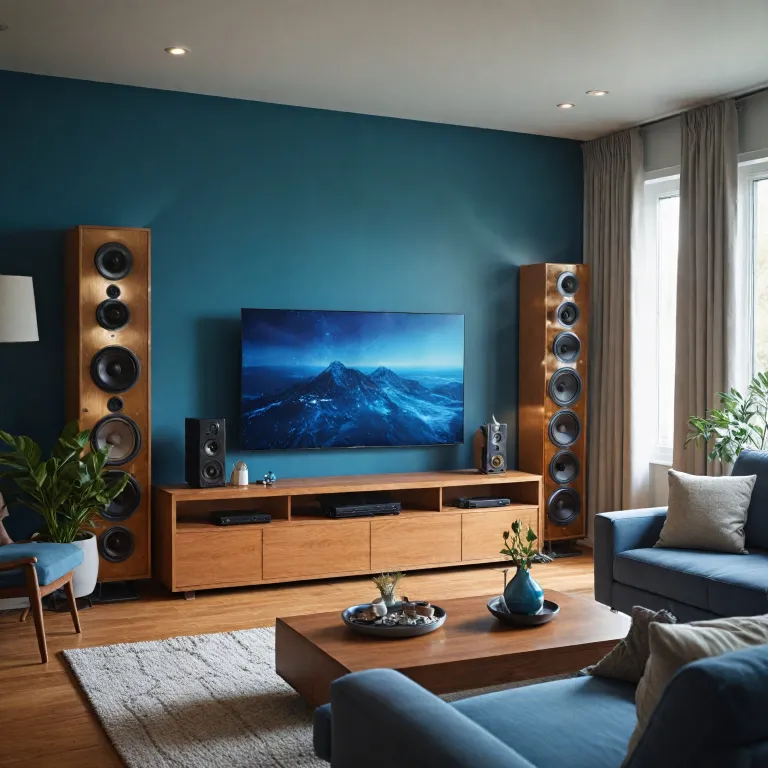
Understanding satellite speakers in a projector based home theater
Satellite speakers sit at the heart of many compact home theater designs. In a projector room where floor space is precious, each small satellite speaker can tuck beside the screen, behind seating, or high on walls without blocking sightlines. These speakers focus on midrange and high frequencies, while a subwoofer handles bass to create a full range sound field.
For a projector user, the main challenge is balancing screen placement, seating distance, and surround sound geometry. Satellite speakers solve this by offering flexible mount options, including wall mount brackets, ceiling mounts, and furniture friendly stands that keep the speaker system visually discreet. Their light weight also makes dual swiveling brackets practical, allowing you to angle each cube speaker or gloss black column precisely toward the listening position.
Because a projector often throws a large image, the soundstage must scale accordingly. A well matched speakers pair of satellite surround units at the rear and compact surround speakers at the sides can stretch the audio image to match the theater sized picture. When combined with a capable subwoofer, even a very small satellite can deliver surprisingly high performance for movies, sports, and gaming.
In this context, satellite speakers become more than accessories; they are structural elements of the theater. Their compact cube form, piano gloss finish, or understated black cabinet helps them blend into darkened projector rooms. This lets you focus on the stars on screen while the surround sound field quietly does its work around you.
Positioning satellite speakers around a projector screen
Precise placement of satellite speakers is critical when your main display is a projector. The large image encourages viewers to sit farther back, which changes how each satellite speaker and speakers pair should be angled and spaced. To maintain coherent surround sound, front left and right speakers usually sit near the screen edges, with a center speaker just below or above the projection surface.
Rear and side surround speakers can be mounted slightly above ear level, using dual swiveling brackets to aim the sound toward the seating area. This helps create a seamless surround sound bubble, especially in narrow rooms where a projector throws across the short wall. If you use compact cube speaker designs, their small footprint makes it easier to avoid casting shadows on the screen or blocking the projector beam.
Projector enthusiasts who also enjoy indoor sports simulations face extra constraints. When building an indoor golf or multi use media room, you may need to keep walls clear for swing space, so a slim satellite speaker with a secure wall mount becomes invaluable. In such hybrid spaces, a carefully planned speaker system can support both cinematic surround and accurate impact sound for games, as explained in many short throw projector setup guides.
Because projectors often sit on ceiling mounts or rear shelves, cable routing also matters. Running speaker cables along projector conduits or within trunking keeps the theater tidy and reduces trip hazards. This thoughtful integration of audio and projection hardware elevates both sound performance and everyday usability.
Balancing sound quality, price, and aesthetics in compact rooms
For many projector owners, the main tension lies between sound quality, price, and visual discretion. Satellite speakers offer a compelling compromise because they deliver strong performance in a small enclosure that does not dominate the room. A well engineered aluminum dome tweeter combined with a compact full range midbass driver can produce detailed audio that belies the cabinet size.
When comparing options, look beyond headline price and rated stars to understand how each product will behave in your specific theater. Check whether the satellite speaker is voiced for neutral surround sound or a more forward stereo presentation, and consider how that character will interact with your projector’s fan noise and room acoustics. Some models, such as svs prime satellite designs, are tuned for both satellite surround duties and nearfield stereo listening, which can be helpful in multipurpose spaces.
Aesthetics matter especially in projector rooms that double as living spaces. Gloss black finishes, subtle piano gloss accents, or minimalist cube forms help speakers recede into the background when lights dim and the stars of your film take center stage. If you plan to wall mount, ensure the speaker system includes robust hardware and supports dual swiveling or tilt adjustments for precise aiming, as highlighted in many compact projector system case studies.
Ultimately, the best value is not always the lowest price but the product that integrates cleanly with your projector, room layout, and listening habits. A carefully chosen speakers pair can provide years of reliable performance while preserving the clean lines of your theater.
Integrating satellite speakers with projector acoustics and room layout
Projector based theaters introduce acoustic challenges that differ from television setups, and satellite speakers can help address them. Large bare walls used for projection often reflect sound strongly, which can blur dialogue and reduce surround sound precision. By placing a satellite speaker closer to listeners and slightly off axis, you can reduce early reflections and improve clarity.
Many compact speakers rely on wall proximity to reinforce bass, but in a projector room you must avoid placing them where they cast shadows or interfere with the beam. Using slim wall mount brackets, you can position each satellite speaker just outside the projected image, maintaining a wide stereo spread without visual distractions. Rear surround speakers can sit on side walls or behind the seating row, angled inward with dual swiveling mounts to envelop the audience.
Some enthusiasts pair satellite speakers with acoustic panels or thick curtains around the screen to tame reflections. This combination can create a more controlled theater environment where the audio dual role of satellites and subwoofer yields a smooth, pure resonance response. When evaluating a speakers pair, consider how its dispersion pattern and aluminum dome tweeter will interact with your room’s surfaces and projector placement.
As one market report notes, "Loudspeakers - A $12.3 Billion Global Market Opportunity by 2030" reflects how demand for compact, visually unobtrusive designs continues to grow. That trend aligns perfectly with projector rooms, where small, gloss black cabinets and piano gloss accents can blend into dark décor. In such spaces, satellite speakers become both acoustic tools and architectural elements.
Evaluating performance metrics and real world listening tests
Technical specifications for satellite speakers provide useful guidance, but projector owners should always relate them to real listening conditions. Frequency response charts show how a satellite speaker handles midrange and high frequencies, yet they do not fully reveal how the speaker system will sound in a reflective theater. Sensitivity ratings help estimate how much amplifier power you need to reach cinema like levels at a typical projector seating distance.
When auditioning speakers, pay attention to dialogue intelligibility at low volumes, because projector fans can mask subtle details. A well designed aluminum dome tweeter and carefully tuned full range driver should keep voices clear even when action scenes grow dense. Listen for how smoothly the satellite speakers hand off to the subwoofer, aiming for a seamless transition that avoids gaps or boomy overlap.
Surround sound immersion is another key metric in a projector environment. Move between seats to judge whether the satellite surround field remains consistent, especially if you use compact cube speaker designs on side walls. Systems like svs prime satellite packages often emphasize wide dispersion, which can help maintain a stable soundstage across a broad theater row.
Online reviews and rated stars can guide your short list, but always interpret them through the lens of your own room and projector layout. If possible, arrange a home trial or buy from a retailer with a fair return policy so you can test the speakers pair with your existing projector and screen. This approach aligns with best practices in many home theater projector buying guides, which stress system level evaluation over isolated specifications.
Buying strategies, retailers, and long term system planning
Choosing satellite speakers for a projector based theater is as much about strategy as specifications. Start by defining your room size, projector throw distance, and seating layout, then map where each satellite speaker and speakers pair can realistically sit. This planning ensures that your final speaker system supports both current needs and future upgrades, such as additional surround speakers or height channels.
When comparing price options, look for transparent product information that details cabinet construction, crossover design, and mounting hardware. Retailers that provide clear diagrams, in room photos, and honest rated stars can help you visualize how gloss black or piano gloss finishes will appear under dim projector lighting. Many enthusiasts use "find retailer" tools on manufacturer sites to locate dealers who can arrange demos or bundle satellite speakers with projectors and subwoofers.
Long term reliability matters because projector rooms often see heavy use for films, series, and gaming. Robust cabinets, quality terminals, and well engineered aluminum dome tweeters reduce the risk of distortion or resonance audio issues over time. Some brands emphasize pure resonance control in their marketing, highlighting how their satellite surround designs minimize cabinet vibrations that could blur sound.
As you evaluate options, consider whether a compact cube speaker or a slightly larger svs prime satellite style cabinet better suits your theater. Gloss black finishes may show dust under projector light, while matte black can be more forgiving in everyday use. By aligning aesthetics, performance, and budget, you can build a surround sound system that keeps the stars on screen shining while your satellite speakers quietly shape an immersive, cinematic soundscape.
Key statistics on satellite speakers and loudspeaker markets
- The global loudspeakers market size is estimated at 8.5 billion USD, reflecting strong demand for compact designs such as satellite speakers used in home theater systems.
- Projections indicate the global loudspeakers market could reach 12.3 billion USD, driven in part by growth in surround sound and projector based home theater installations.
- The satellite and subwoofer speakers segment shows a compound annual growth rate of 4.5 %, underscoring sustained interest in small speakers that pair with subwoofers for full range audio.
Questions people also ask about satellite speakers
What are satellite speakers in a home theater projector setup ?
Satellite speakers are compact speakers that handle midrange and high frequencies while a subwoofer manages low bass. In a projector based home theater, they are typically placed around the room to create an enveloping surround sound field. Their small size and flexible mounting options make them ideal for preserving clear sightlines to the projection screen.
Can satellite speakers be used without a subwoofer in a projector room ?
Satellite speakers can technically operate without a subwoofer, but the sound will lack deep bass impact. In a projector environment where cinematic effects and music scores are important, a dedicated subwoofer is strongly recommended. The combination of satellites and subwoofer delivers a full range experience that better matches the scale of a large projected image.
How do satellite speakers differ from regular bookshelf speakers ?
Satellite speakers are usually smaller and optimized to work with a subwoofer, focusing on mid and high frequencies. Bookshelf speakers are often larger, with drivers designed to reproduce more bass on their own, which can reduce the need for a subwoofer. For projector rooms where space and sightlines are critical, satellites often integrate more discreetly than bulkier bookshelf models.
Where should I place satellite speakers in a projector based surround system ?
Front left and right satellite speakers should sit near the edges of the projection screen, with a center speaker below or above it. Side and rear surround speakers are best placed slightly above ear level, using wall or ceiling mounts angled toward the seating area. This arrangement helps create a cohesive sound bubble that matches the immersive scale of the projected image.
Are premium satellite speakers worth the higher price for projector users ?
Premium satellite speakers often offer better drivers, crossovers, and cabinet construction, which can improve clarity and imaging in challenging projector rooms. If you sit far from the screen or use a large projection size, higher quality satellites can maintain detail and dynamics at greater listening distances. For many projector enthusiasts, this added performance justifies the higher initial investment over the long term.