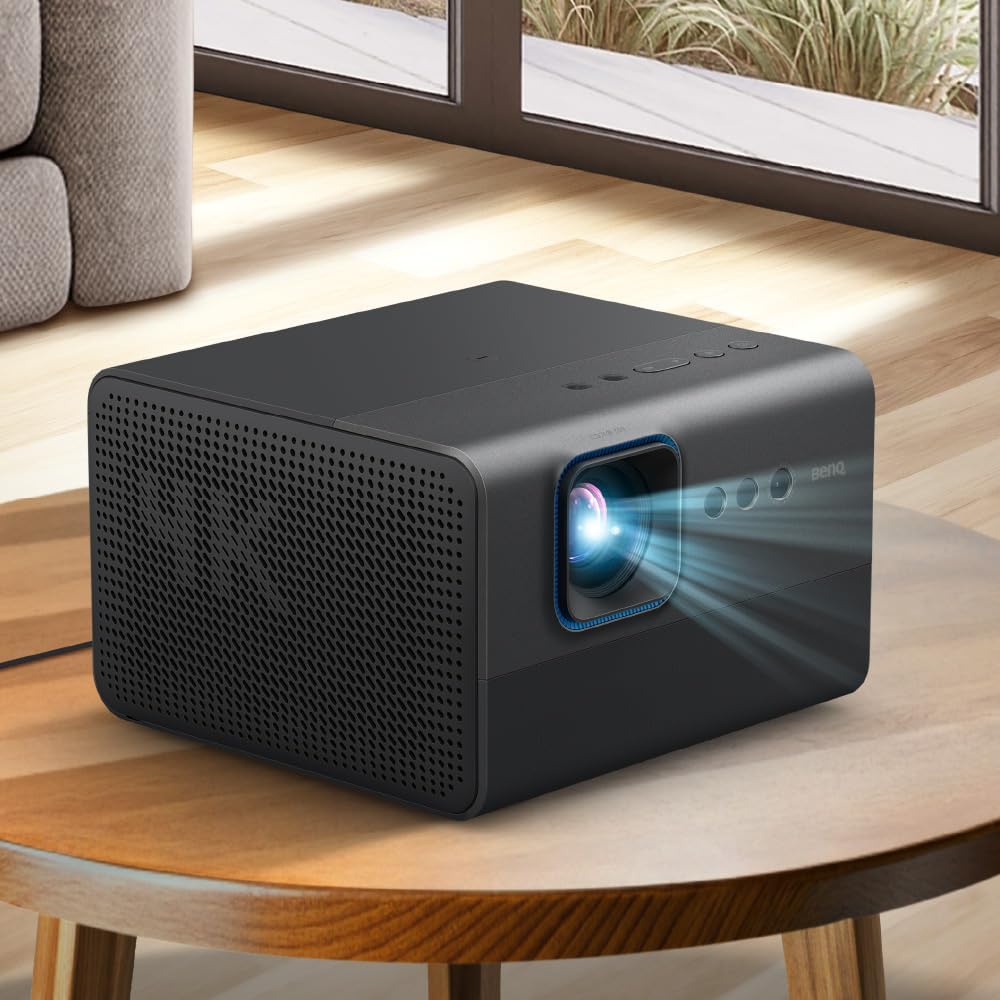
Key picture technologies in home theater projectors with Dolby Audio
When you shortlist the best home theater projectors with Dolby Audio, start with core picture specifications. Resolution, brightness in ANSI lumens, contrast ratio and HDR support define how the image will look in your home cinema. A projector with 4K UHD resolution and strong HDR can reveal fine texture in cinema content that lesser projectors simply blur.
Brightness is usually expressed in lumens or ANSI lumens, and the right level depends on your room. In a dark home theater, a projector with around 1500 to 2000 ANSI lumens can be sufficient, while a bright living room may require 2500 lumens or more. Ultra short throw projectors like Samsung The Premiere LSP9T use a powerful triple laser light source to reach 2800 lumens, which helps maintain picture quality even with some ambient light.
HDR formats such as HDR10 and HDR10+ expand contrast and color, making highlights sparkle without crushing shadow detail. Although many projectors do not yet support Dolby Vision, they can still render HDR movies convincingly when their contrast ratio and color gamut are strong. Look for models that combine high native contrast with dynamic tone mapping, because this pairing keeps the image balanced across dark and bright scenes.
Lens shift is another specification that matters in real homes, especially when ceiling mounting a theater projector. A projector with generous vertical and horizontal lens shift lets you align the image without tilting the chassis, which preserves geometry and focus. If lens shift is absent, as on some ultra short throw projectors, you must position the projector with greater precision to avoid keystone corrections that can soften the image.
For readers comparing different brands, it can help to study a detailed review of a traditional long throw model such as the Sony VPL FX30 projector analysis. Understanding how brightness, contrast and lens characteristics interact on a conventional projector makes it easier to judge ultra short and laser projectors with Dolby Audio. This context clarifies why some projectors excel in a dark cinema room while others are tuned for flexible living room use.
Dolby Audio, room acoustics and the reality of built in speakers
Dolby Audio in a home theater projector is primarily about intelligent processing rather than raw amplifier power. It manages dialogue clarity, volume leveling and spatial cues so that even modest speakers in a projector with compact housing can sound more cinematic. In the best home theater projectors with Dolby Audio, this processing is tuned to match the projector’s acoustic chamber and driver layout.
However, room acoustics strongly influence how Dolby Audio performs in practice. A reflective living room with bare walls and glass can make even a high quality theater projector sound harsh, while a softly furnished home cinema will tame echoes and improve perceived detail. When you place a projector with Dolby Audio in your home, consider adding rugs, curtains and soft furnishings to support the soundstage.
Ultra short throw projectors often sit close to the wall, which lets their front firing speakers project sound directly into the room. This design can create a wider stereo image than many standard throw projectors placed behind the seating position. Yet even the best built in Dolby Audio systems rarely match a dedicated surround setup, so think of them as a strong starting point rather than the final word in home cinema sound.
Security and ambient noise control also matter for immersion in a home theater. Integrating smart monitoring, such as systems described in this guide on how Sony security cameras enhance your home theater experience, can help you keep doors closed and distractions minimized. A quieter home environment allows Dolby Audio processing to reveal subtle effects and low level ambience that would otherwise be masked.
For many households, the deep subject is how to balance convenience, budget and performance when no specific category is tailored to their mixed use rooms. People want the best home theater projectors with Dolby Audio that can handle cinema nights, casual TV and gaming without complex calibration. Understanding how Dolby Audio interacts with room acoustics, projector placement and external speakers helps you make a confident, future ready choice.
Comparing Samsung, Dangbei and GooDee in real home cinema scenarios
Among the best home theater projectors with Dolby Audio, three models illustrate how different design choices affect everyday use. Samsung The Premiere LSP9T is an ultra short throw laser projector with 4K UHD resolution, 2800 lumens and a triple laser light source. Its ultra short throw design lets you place the projector just centimetres from the wall, which is ideal for a tidy living room or compact home.
Dangbei DBOX02 is a standard throw 4K laser projector with HDR10+ support and Dolby Audio, designed for screens up to 200 inches. With 2450 lumens and a laser light engine rated for long life, it suits a dedicated home theater where you can control ambient light. In such a room, the combination of strong brightness, wide color gamut and HDR processing can deliver a rich cinema style image.
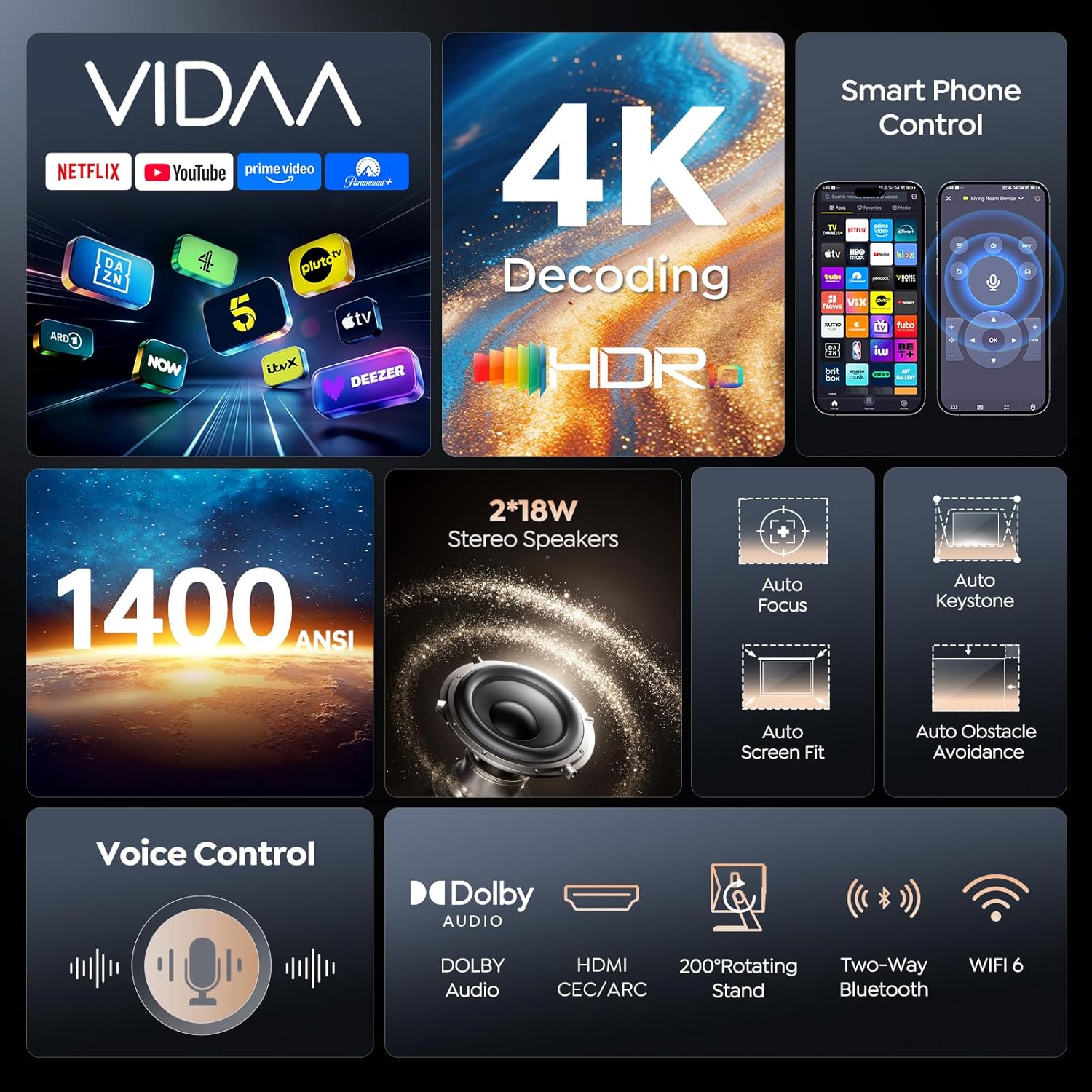
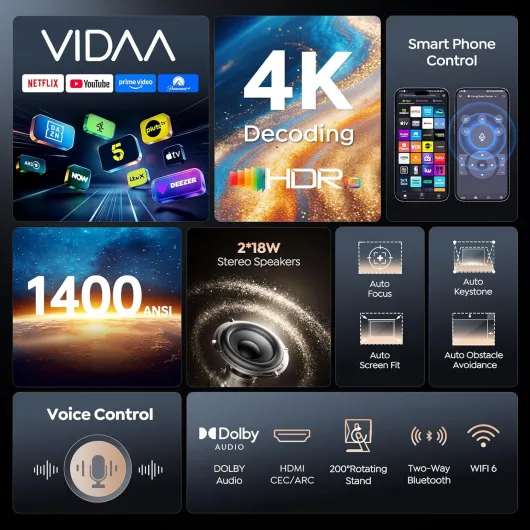
GooDee 4K Smart Projector uses an LED light source rated for up to 30000 hours, with 1500 lumens and Dolby Audio support. This projector with 4K decoding and integrated smart features targets buyers who want a more affordable entry into home cinema. In a darker room, its lower brightness can still produce a satisfying image, especially when the screen size is kept moderate.
All three projectors rely on Dolby Audio to enhance their built in speakers, but their acoustic performance will differ according to cabinet volume and driver configuration. In a larger home theater, pairing any of these projectors with an external AV receiver and speakers will surpass their internal audio. Yet for smaller homes or secondary rooms, their integrated Dolby Audio can be sufficient for casual cinema and gaming sessions.
When comparing these models, it is helpful to read about other reference designs such as the Optoma EH335 DLP projector for home theater. Studying how different manufacturers balance brightness, contrast ratio, lens options and light source technologies will sharpen your sense of what qualifies as best in class. This perspective supports a more nuanced choice between ultra short, short throw and standard throw projectors with Dolby Audio.
Brightness, contrast and HDR in mixed use living rooms
Many buyers of the best home theater projectors with Dolby Audio do not have a fully dark cinema room. Instead, they install a projector with Dolby Audio in a multipurpose living room where light control is limited. In such spaces, brightness and contrast become as important as resolution or Dolby branding.
A projector rated at 2500 to 3000 ANSI lumens can better resist ambient light, especially when paired with a suitable screen. Ultra short throw projectors with laser light sources often reach these brightness levels while maintaining good color accuracy. Their proximity to the wall also reduces the impact of stray light crossing the beam, which helps preserve image contrast in bright homes.
HDR performance in a living room depends on both projector capabilities and viewing conditions. Even a projector with strong HDR support and wide color gamut will struggle if daylight washes out the darkest parts of the image. Blackout curtains, neutral wall colors and careful placement of lamps can significantly improve perceived contrast ratio without changing the projector.
Dolby Vision remains rare in projectors, but HDR10 and HDR10+ can still deliver impressive dynamic range when tone mapping is well implemented. The best home theater projectors with Dolby Audio use processing that respects creative intent while adapting to the projector’s limited peak brightness. When evaluating HDR claims, look beyond logos and focus on measured brightness, contrast and real world reviews of picture quality.
For mixed use rooms, consider how often you watch during the day versus at night. A brighter projector with robust Dolby Audio may be the best compromise, even if its absolute black levels are not as deep as a dimmer cinema focused model. This balance ensures that both image and sound remain engaging across movies, sports and everyday streaming.
Installation, lens options and practical setup tips
Installing the best home theater projectors with Dolby Audio requires more planning than placing a television on a stand. Throw distance, screen size, lens shift and cable routing all influence how comfortably the projector fits your home. Before buying any theater projector, measure your room and decide where you want the image to appear.
Standard throw projectors like Dangbei DBOX02 and GooDee 4K Smart Projector usually sit several metres from the screen. If they offer lens shift, you gain flexibility in mounting height and horizontal placement, which simplifies integration into an existing home cinema. Without lens shift, you must align the projector precisely at the correct height and centre line to avoid relying on keystone correction.
Ultra short throw models such as Samsung The Premiere LSP9T sit very close to the wall, which reduces shadows and frees up floor space. Their ultra short throw ratio demands a perfectly flat wall or dedicated screen to maintain uniform focus and geometry. In return, they can transform a modest living room into a home theater with minimal visual clutter.
When planning audio, decide whether you will rely on the projector’s Dolby Audio system or connect external speakers. A projector with HDMI eARC can pass high quality audio to a soundbar or AV receiver, extending the Dolby experience beyond the built in drivers. Even if you start with internal speakers, leaving space for future upgrades protects your investment.
Cable management and ventilation are often overlooked but critical for long term reliability. Ensure that the projector’s laser light or LED light source has enough airflow, and avoid enclosing it in tight cabinets. Thoughtful installation supports both picture quality and Dolby Audio performance, allowing the projector to operate at its best throughout its rated lifespan.
How to choose the right projector for your home cinema goals
Selecting among the best home theater projectors with Dolby Audio begins with clarifying your priorities. Decide whether your primary goal is a large cinema style image, flexible placement in a small home or the most accurate color and contrast for film viewing. Your answer will guide you toward ultra short, short throw or standard throw projectors with different light source technologies.
If you value simplicity and a clean living room aesthetic, an ultra short throw laser projector with strong brightness and Dolby Audio may suit you best. For a dedicated home theater where you can fully darken the room, a standard throw laser projector or high quality LED model can deliver excellent contrast and color accuracy. In both cases, ensure that the projector’s ANSI lumens rating, contrast ratio and HDR support align with your screen size and seating distance.
Budget is another decisive factor, especially when no specific category is tailored to your exact use case. Premium laser projectors with advanced HDR and wide color gamut cost more upfront but offer stable brightness and long light source life. More affordable projectors can still provide satisfying picture quality and Dolby Audio, particularly in smaller rooms where extreme brightness is unnecessary.
Think about future upgrades to your home cinema, including external audio systems and streaming sources. A projector with multiple HDMI ports, robust smart features and support for formats like Dolby Audio and HDR10 will remain relevant longer. By weighing room conditions, viewing habits and technical specifications together, you can choose a projector that feels genuinely best for your home rather than chasing abstract benchmarks.
Ultimately, the most successful home theater setups treat projector, screen, audio and room design as interconnected elements. When brightness, contrast, color accuracy and Dolby Audio are balanced thoughtfully, even a modest living room can rival the atmosphere of a commercial cinema. This holistic approach embodies the principles of credibility, expertise and trustworthiness that informed this analysis of home theater projectors with Dolby Audio.
Key statistics about home theater projectors with Dolby Audio
- Typical light source life for modern laser projectors ranges from 20000 to 30000 hours, supporting long term home cinema use.
- Brightness levels between 1500 and 3000 ANSI lumens are common for home theater projectors, balancing dark room performance and living room versatility.
- Many 4K home cinema projectors now support HDR formats such as HDR10 or HDR10+, even when Dolby Vision is not available.
- Integrated audio systems in projectors with Dolby Audio often provide between 20 and 40 watts of total output power.
- Ultra short throw projectors can create images exceeding 100 inches from distances under 0.5 metres, enabling large screens in compact homes.
Questions about home theater projectors with Dolby Audio
What is Dolby Audio in projectors and why does it matter ?
Dolby Audio in projectors is a suite of processing technologies that manage dialogue clarity, volume consistency and spatial cues. It helps built in speakers sound more balanced and cinematic, even in compact projector enclosures. For many buyers, Dolby Audio provides a meaningful upgrade over basic stereo sound, especially before investing in external speakers.
How does Dolby Audio enhance the home theater experience ?
Dolby Audio enhances home theater by optimizing how soundtracks are reproduced through the projector’s speakers. It can lift dialogue above background effects, smooth sudden volume jumps and widen the perceived soundstage. These improvements make movies, series and games feel more immersive, particularly in smaller rooms where external surround systems are impractical.
Are there affordable projectors with Dolby Audio for smaller homes ?
Yes, several manufacturers offer relatively affordable projectors with Dolby Audio that target smaller homes and mixed use rooms. Models using efficient LED light sources often combine moderate brightness with long life and integrated smart platforms. When paired with a suitable screen and some basic room treatment, these projectors can deliver engaging home cinema experiences without premium pricing.
Do I still need external speakers if my projector includes Dolby Audio ?
External speakers are not strictly necessary, but they can significantly improve impact and immersion. Projectors with Dolby Audio provide a strong baseline, especially for dialogue heavy content and casual viewing. However, a dedicated soundbar or surround system will usually offer deeper bass, higher output and more precise spatial effects for serious home theater enthusiasts.
How important are brightness and contrast when choosing a Dolby Audio projector ?
Brightness and contrast are crucial because they determine how well the image holds up in your specific room. Even the best Dolby Audio system cannot compensate for a washed out picture caused by insufficient lumens or weak contrast ratio. Matching projector brightness and contrast to your room’s light conditions ensures that both sound and image contribute equally to a convincing cinema experience.
![[Netflix Officially & Dolby Audio] Aurzen Eazze D1 4K Supported Smart Projector with Auto Focus & Auto Keystone, HDR10, 60Hz Portable Projector for iOS/Android/USB/TV Stick, White](https://www.home-theater-projector-guru.com/storage/709110/conversions/71atPB0a8JL._AC_SL1500_-medium.webp)

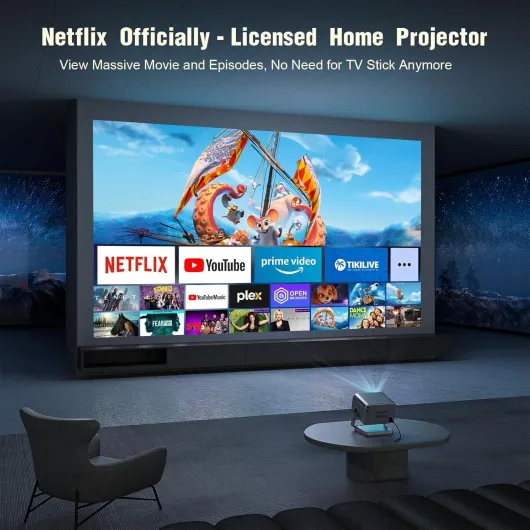
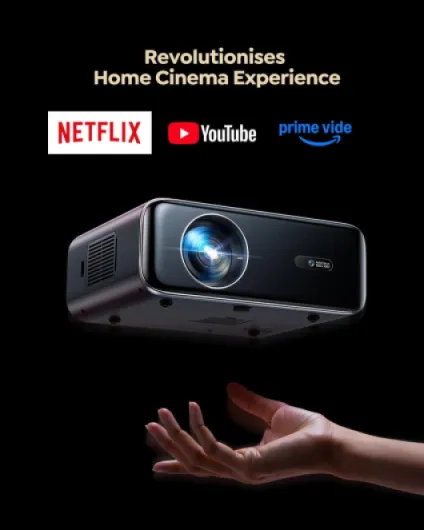
![[Netflix Officially & Dolby Audio] Aurzen Eazze D1 4K Supported Smart Projector with Auto Focus & Auto Keystone, HDR10, 60Hz Portable Projector for iOS/Android/USB/TV Stick, White](https://www.home-theater-projector-guru.com/storage/709110/71atPB0a8JL._AC_SL1500_.jpg)