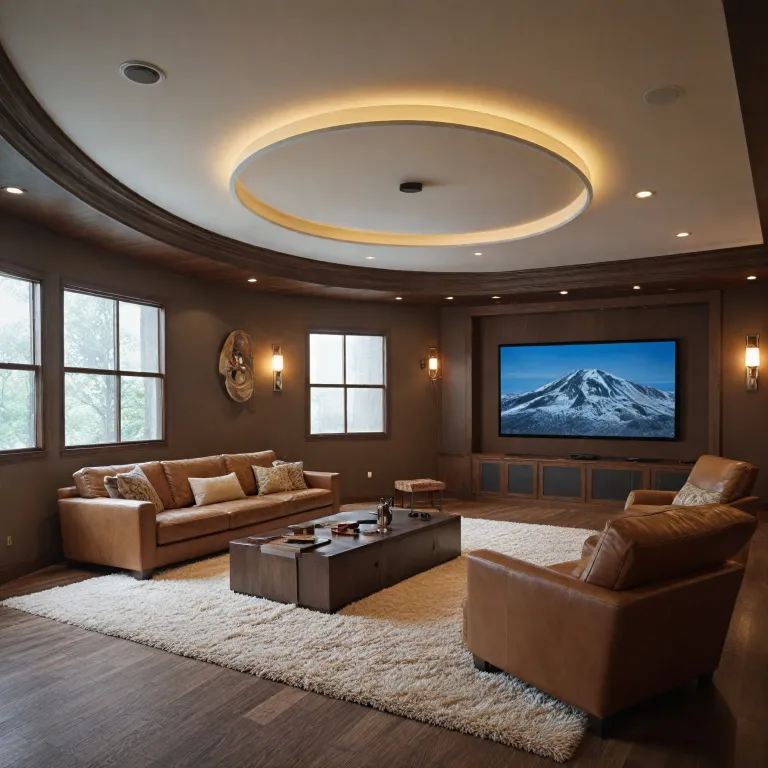
Why ceiling mounted speakers matter in a serious home theater
Ceiling mounted speakers often look discreet, yet they shape how a home theater truly feels. When a projector throws a huge image across the room, the sound must expand with equal authority to keep the audio and video perfectly aligned. In many rooms the ceiling becomes the most practical surface to place each speaker, especially when walls are blocked by furniture or glass.
Thoughtful placement of each ceiling speaker helps anchor dialogue to the screen while allowing effects to float above the audience. This is essential when you want convincing surround sound that matches the scale of a large projected image and does not feel like a small television system. A well designed layout of ceiling speakers and wall speakers can create a seamless dome of audio that tracks every movement on screen.
For people planning a projector based cinema, the ceiling, walls, and floor all become part of one acoustic canvas. Ceiling mounted speakers free the floor from bulky cabinets, which is useful in compact rooms where every centimetre matters. They also allow you to keep a clean wall ceiling line around the projection screen, avoiding visual distractions that pull attention away from the image.
Because ceiling speakers are usually permanent, the initial purchase demands careful thought about speaker watt ratings, impedance, and future formats. A higher speaker watt capacity does not automatically mean better sound, but it offers more headroom for dynamic movie tracks. Matching the speaker watt handling to your amplifier or AV receiver helps prevent distortion and protects your investment over the long term.
Balancing price, performance, and installation for ceiling speakers
Choosing ceiling mounted speakers for a projector room is a balance between price, performance, and installation complexity. Many people focus on the headline watt figure, yet the quality of the drivers, crossover, and enclosure often matters more for realistic sounds. A modestly rated ceiling speaker with refined engineering can outperform a louder but poorly controlled design.
When you compare products, look beyond the marketing and examine frequency response, sensitivity, and build quality. A wide range of models exists, from basic stereo sound pairs for background music to advanced sonos ceiling solutions that integrate with multiroom platforms. In a dedicated cinema, you will want ceiling speakers that can handle sudden peaks in surround sound without strain.
Some ceiling speaker designs use a transformer for compatibility with commercial style distributed audio, but most home theaters rely on standard low impedance wiring. If you see a transformer option, confirm whether your amplifier supports that configuration before you purchase anything. This small check can prevent expensive mistakes and ensure your mount speakers operate safely.
Installation costs vary depending on whether you choose flush mount in ceiling speakers or surface mount enclosures attached to the ceiling wall junction. Flush mount models look cleaner and can align with a smart lighting layout, yet they require cutting into the ceiling and careful routing of cables. Surface mount speakers are easier to reposition later, which can be helpful if you upgrade to a more advanced smart projector system such as a 4K support smart outdoor projector with Wi-Fi and Bluetooth.
Integrating ceiling speakers with projectors and room acoustics
A home theater projector throws a cinematic image, but ceiling mounted speakers complete the illusion by shaping the sound field. The relationship between the projector position, the seating, and each ceiling speaker determines how convincing the audio perspective feels. Ideally, the front speakers ceiling positions align with the left, centre, and right of the screen, while additional ceiling speakers handle height and effects channels.
Room acoustics strongly influence how ceiling speakers and wall speakers perform, especially in hard surfaced spaces. A room with bare walls, a reflective ceiling, and minimal soft furnishings can cause harsh sounds and unclear dialogue. Adding rugs, curtains, and acoustic panels on the wall ceiling boundaries helps tame reflections and lets high quality speakers reveal their detail.
When you plan the layout, think about how the sound will travel from each speaker to every seat. Ceiling mounted speakers should not sit too close to the main listening position, or you risk a narrow soundstage that feels like audio is raining directly on your head. Instead, aim for a geometry where the speakers create a wide range of angles, enveloping the audience in surround sound that matches the movement on screen.
Modern smart AV receivers offer automatic calibration that measures each ceiling speaker and wall speaker with a microphone. This process adjusts levels, delays, and equalisation so that all speakers sonos style systems and traditional wired speakers blend smoothly. For more advanced projection setups, you can study guides such as this comprehensive guide to 1080p DLP projectors to understand how image and audio design interact.
Smart control, sonos ceiling options, and everyday usability
Ceiling mounted speakers become far more valuable when they integrate with smart control systems that simplify daily use. Many households now expect to adjust volume, change inputs, and route audio to different rooms with a single app or voice command. In this context, sonos ceiling solutions and other smart speakers ceiling products can complement a traditional AV receiver rather than replace it.
One approach is to use passive ceiling speakers for the main cinema channels while adding speakers sonos units in adjacent spaces for casual listening. This keeps the home theater tuned for serious surround sound while still offering flexible multiroom audio. When you move from a film to background music, the system can shift emphasis from the projector room to the kitchen or terrace.
Smart platforms also help you find perfect presets for different content types, such as movies, sports, and gaming. A well configured profile will adjust the balance between ceiling speakers, wall speakers, and subwoofers to suit each scenario. Over time you will learn which combinations of speaker watt levels and processing modes deliver the most engaging sounds for your taste.
Every connected system should respect data protection, so always read the privacy policy of any app that controls your audio devices. Some people prefer a more traditional setup with minimal cloud connectivity, relying on local control and simple remotes. Others embrace full smart integration, pairing a compact projector like this mini projector with auto focus and Wi-Fi with discreet ceiling speakers for a clutter free living room.
Technical details that influence ceiling speaker performance
Behind the clean appearance of ceiling mounted speakers lies a set of technical choices that shape performance. Driver size, crossover design, and enclosure volume all affect how a ceiling speaker handles bass, midrange, and treble. A larger driver can move more air, but it must be carefully controlled to avoid muddy sounds in a reflective room.
Many in ceiling speakers use angled tweeters to direct high frequencies toward the listening area. This helps compensate for the fact that the speaker sits above you rather than at ear level on a wall. When you audition products, listen for clear dialogue and stable imaging as you move between seats, not just for impressive volume.
Some ceiling speakers include a transformer option for distributed audio, but in a home theater you will usually bypass this to keep full fidelity. Matching the impedance and speaker watt rating to your amplifier ensures efficient power transfer and reduces the risk of overheating. If you plan to mount speakers in a ceiling wall cavity shared with insulation, check whether the manufacturer offers back boxes to protect the drivers.
Build quality matters because ceiling speakers are not easy to replace once installed. Look for robust grilles, secure mount mechanisms, and a clear year warranty that covers both parts and labour. Reputable brands often highlight their high quality components and provide detailed installation guides, which supports a hassle free project for both professionals and skilled enthusiasts.
Planning, safety, and long term value in a projector based cinema
Thoughtful planning ensures that ceiling mounted speakers enhance your projector based cinema rather than complicate it. Start by mapping the room, noting ceiling height, seating positions, and any obstacles such as beams or ducting. This simple drawing will help you find perfect locations for each ceiling speaker and any complementary wall speakers.
Safety should guide every decision, especially when you cut into the ceiling or run cables through walls. Use appropriate fire rated back boxes where required, and avoid overloading circuits with too many high watt amplifiers. If you are unsure about electrical work, hire a qualified professional and focus your own efforts on layout and calibration.
From a financial perspective, consider the total price of the system rather than only the headline cost of each speaker. A balanced setup with midrange ceiling speakers, reliable amplification, and careful acoustic treatment often outperforms a mismatched collection of premium products. Over time, the combination of robust hardware, a clear year warranty, and a hassle free user experience will matter more than chasing the absolute best specifications on paper.
Finally, remember that your needs may evolve as new formats and smart platforms appear. Choosing flexible mount speakers, accessible cable routes, and a scalable control system will make future upgrades easier. With a well planned blend of ceiling speakers, wall ceiling treatments, and a capable projector, your home theater can deliver immersive stereo sound and surround sound that remains satisfying for many years.
Key statistics about home theater audio and ceiling speakers
- In many residential cinemas, more than half of the speakers are now installed in or on the ceiling to support immersive formats.
- Listeners typically sit between 2,5 and 4 metres from the main screen, which strongly influences optimal ceiling speaker placement.
- Average power output for dedicated home theater amplifiers ranges from 80 to 150 watt per channel, requiring compatible speaker watt handling.
- Rooms with basic acoustic treatment can reduce problematic reflections by up to 40 %, significantly improving clarity from ceiling and wall speakers.
- Surveys show that users rate systems with well integrated ceiling speakers as substantially more immersive than soundbar only setups.
Questions people also ask about ceiling mounted speakers
How many ceiling speakers do I need for a home theater ?
The number of ceiling mounted speakers depends on your room size, seating layout, and the surround sound format you plan to use. For a compact projector room, two ceiling speakers can handle basic height effects, while larger spaces may benefit from four or more. Always prioritise correct placement and calibration over simply adding extra speakers.
Are ceiling speakers good enough for main front channels ?
Ceiling speakers can support immersive effects, but front left, centre, and right channels usually perform best at ear level. When these main speakers sit on or in the wall around the screen, dialogue and on screen action feel more natural. Ceiling mounted speakers then complement this foundation by adding height and ambience.
Do I need a subwoofer if I install ceiling speakers ?
Most ceiling speakers are not designed to reproduce deep bass with authority, especially in larger rooms. A dedicated subwoofer handles low frequencies more effectively and relieves the ceiling speakers from heavy bass duties. This combination delivers cleaner midrange, tighter bass, and a more cinematic impact during films.
Can I use sonos ceiling solutions with a projector based cinema ?
Sonos ceiling options work well for multiroom music and casual viewing, but serious home theater often relies on an AV receiver and passive speakers. Some people integrate both by using speakers sonos units in secondary rooms and wired ceiling speakers in the main cinema. This hybrid approach keeps the projector room optimised for films while preserving everyday convenience.
What should I check before cutting holes for ceiling speakers ?
Before you cut into the ceiling, confirm the location of joists, wiring, and any ducting that might obstruct the mount. Measure carefully from reference points such as walls and the projector screen to ensure symmetrical placement. It is also wise to verify local building regulations and consider fire rated enclosures where required.