Projector screen gain explained in real living rooms
Screen gain explained properly starts with a simple ratio. A gain of 1.0 means the screen reflects the same amount of light as a theoretical matte white reference surface, while higher gain numbers mean more light reflected straight back toward the centre seats. In practice, that gain number only tells part of the story about brightness, contrast and overall viewing experience in real rooms ambient with light.
Think of gain as steering where the light reflected from your projector goes. A gain screen with 1.3 gain sends more light toward viewers sitting on axis, but it also reflects ambient light from lamps and windows with the same enthusiasm, which can crush contrast and wash out the projected image. A lower gain surface, especially a light rejecting ambient light rejecting design, sacrifices some peak brightness to keep stray light away from the image and preserve brightness contrast.
For a first time buyer, the phrase projector screen gain explained should really mean “how bright will the image look from my sofa in my room”. A lumen projector rated at 2,000 lumens on a 1.0 gain projector screen behaves very differently in a dark basement than in bright living rooms with white walls and ceiling. The same lumen projector on a 0.6 low gain ALR screen can actually deliver a brighter perceived image quality in those rooms, because the screen reflects less ambient light and protects contrast where your eyes care most.
Why a 0.6 gain ALR can beat a 1.3 gain white on brightness
On paper, a 1.3 high gain screen looks like an easy win. You see a higher gain number, imagine a brighter projected image and assume the image quality will automatically improve. That logic holds only in a fully dark room, because in any real ambient light the extra light reflected from the screen includes both projector light and room light.
Ambient light is the enemy of contrast, not just of raw brightness. A 0.6 low gain ambient light rejecting screen can absorb or redirect 85 to 90 percent of the ambient light in the room, so the black level stays dark and the brightness contrast between bright and dark areas of the image remains high. Meanwhile, a 1.3 gain projector screen boosts both the signal and the noise, so the image may look brighter but also greyer, flatter and less cinematic in rooms ambient with uncontrolled light.
When you read projector screen gain explained in spec sheets, remember that the eye judges brightness relative to its surroundings. A lower gain ALR surface that keeps the room from glowing on the screen will often look brighter and punchier than a high gain white screen in the same viewing conditions. If you are still choosing the right lumen projector for your setup, pairing a moderately bright gain projector with a 0.6 gain ALR can outperform chasing a brighter projector alone, and you can dig deeper into brightness trade offs in this guide on choosing the brightest projector for your home theater.
Viewing angle, hot spotting and why families should fear high gain
Brightness is useless if only one seat sees it properly. High gain screens above about 1.5 concentrate light into a narrow viewing cone, so brightness falls off sharply once you move more than 30 degrees off axis. That means people on the side sofa see a dimmer image, skewed contrast and sometimes even color accuracy shifts compared with the centre seat.
Hot spotting is the other tax you pay for higher gain. Because the screen reflects more light straight back toward the projector and viewer, you can see a bright patch in the centre of the image where the light reflected is strongest, while the corners look lower in brightness and slightly duller. This uneven brightness contrast can be distracting in bright scenes and makes a supposedly brighter high gain screen feel less natural during long viewing sessions.
Low gain ALR gain screens spread light more evenly across wider viewing angles, so a 0.6 gain projector screen often looks more uniform from seat to seat. Families with sectional sofas or multiple rows will usually prefer a lower gain or mid gain screen that keeps the projected image consistent across the whole viewing angle range. For a deeper dive into how vertical and horizontal viewing angles affect perceived brightness and contrast, see this explainer on understanding the vertical viewing angle in home theater projectors.
Screen materials, ALR designs and matching them to your projector
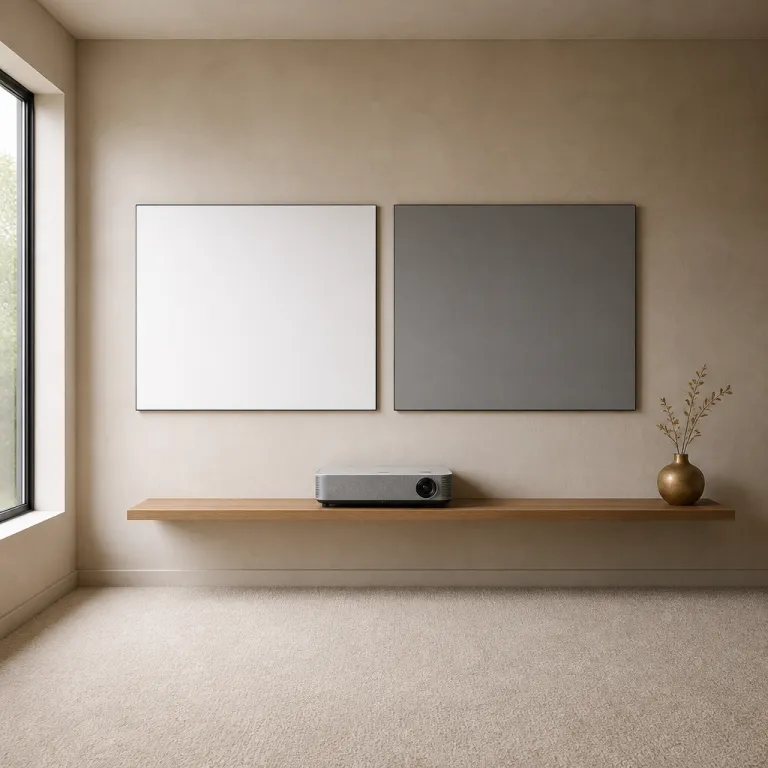
Not all screens with the same gain behave the same way. Classic matte white projector screen materials around 1.0 gain are lambertian, which means they scatter light evenly in all directions and give wide viewing angles but zero ambient light control. Grey screens with slightly lower gain trade a little peak brightness for better perceived contrast in rooms ambient with some light, especially when paired with a bright gain projector.
Ambient light rejecting designs go further by shaping how light is reflected. Angular reflective ALR screens use micro structures to send projector light toward the seating area while directing ambient light from above or the sides away from viewers, which improves brightness contrast and black levels. Fresnel and ceiling light rejecting (CLR) gain screens such as the AWOL Vision 150 inch Fresnel ALR or Epson SilverFlex ALR use layered optics to favour ultra short throw projectors and reject ceiling light very aggressively.
Ultra short throw projectors need a specific type of gain screen to avoid glare and maintain color accuracy. Fresnel and CLR ALR screens are engineered so that light from the low mounted projector is reflected toward the audience, while ambient light from overhead fixtures is absorbed or redirected, which keeps the projected image bright and high in contrast even in bright rooms. Long throw projectors, by contrast, pair better with angular ALR or neutral grey low gain screens that maintain wide viewing angles without introducing artifacts or sparkle, and you can compare several smart projector and screen combinations in this curated list of top smart home theater projectors.
Real world setups: when to choose higher gain and when to go lower
Once you understand projector screen gain explained in context, the right choice depends on your room. A dedicated cinema room with dark walls, controlled ambient light and a mid power lumen projector can benefit from a modest higher gain screen around 1.2 to 1.3, because there is little stray light to amplify. In that scenario, the extra light reflected goes almost entirely into making the projected image brighter without hurting contrast.
Most living rooms are not dedicated cinemas, though. White ceilings, side windows and table lamps create rooms ambient with light that bounces everywhere, so a high gain white screen will reflect that glow back at you and flatten the image, especially in darker scenes. A 0.6 low gain ALR screen in the same space will look darker when the projector is off, but once the movie starts the image appears brighter, richer and with better brightness contrast because the screen reflects mostly projector light and rejects the rest.
Think about your seating layout and typical viewing habits before you pick a gain number. If you host sports nights with lights partially on and friends spread across wide viewing angles, a lower gain ALR or neutral grey screen will give a more consistent experience than a narrow cone high gain white. If you mostly watch films in the dark from a centred sofa, a slightly higher gain screen can help a smaller lumen projector punch above its weight, but the real magic comes from matching gain, room and projector rather than chasing the highest number on the box, because what matters is not the lumens on the box, but the last row on movie night.
FAQ
Is a higher gain screen always better for brightness
A higher gain screen is brighter only for viewers sitting near the centre. In rooms with ambient light, that extra gain also reflects more room light, which can reduce contrast and make the image look washed out. For many living rooms, a lower gain ambient light rejecting screen delivers a brighter looking and more contrasty image overall.
Why does a 0.6 gain ALR screen look brighter than a 1.3 gain white
A 0.6 gain ALR screen rejects most of the ambient light in the room, so black levels stay dark and bright areas stand out more. A 1.3 gain white screen reflects both projector light and room light equally, which lifts the black floor and flattens contrast. Your eyes perceive the higher contrast image from the 0.6 gain ALR as brighter, even though the raw reflected light is lower.
What viewing angle issues should I expect with high gain screens
High gain screens concentrate light into a narrow viewing cone, so brightness drops quickly as you move off axis. People sitting on side seats may see a dimmer image and sometimes a visible hot spot in the centre of the screen. If you have wide seating, a lower gain or mid gain screen with wider viewing angles will usually look more even.
Do ultra short throw projectors need a special type of screen gain
Ultra short throw projectors work best with Fresnel or ceiling light rejecting ALR screens designed specifically for their steep light angle. These gain screens reflect light from below toward the audience while rejecting light from above, which improves contrast in bright rooms. Using a standard matte white screen with a UST projector often leads to low contrast and visible glare from ceiling lights.
How many lumens do I need if I use a low gain ALR screen
A low gain ALR screen usually needs a bit more projector brightness to reach the same peak light level as a higher gain white screen. In a light controlled room, around 1,500 to 2,000 lumens can be enough for a 0.6 gain screen at typical home sizes, while brighter rooms may benefit from 2,500 lumens or more. The key is that the ALR design preserves contrast, so those lumens are used more efficiently for perceived brightness.