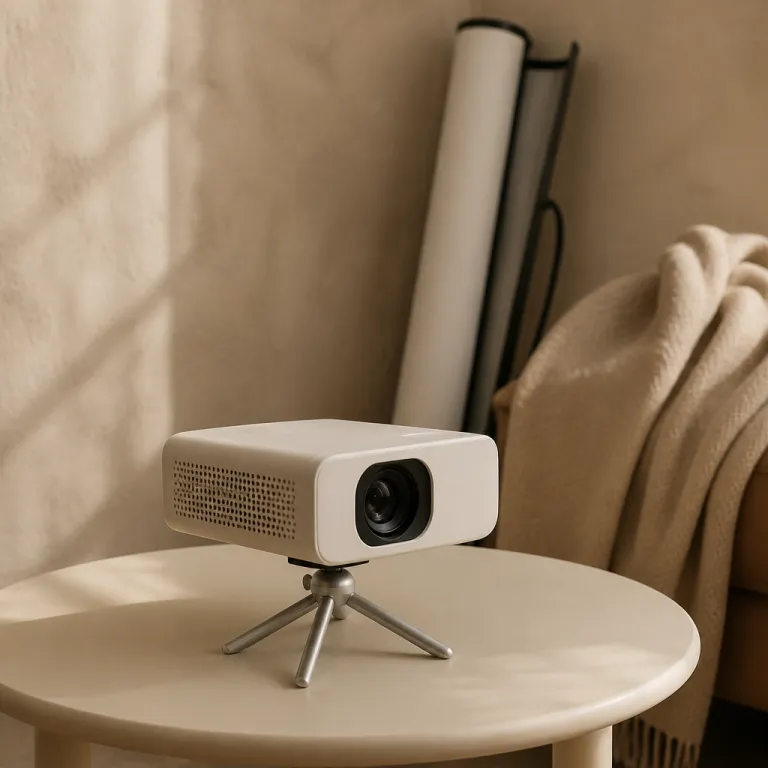
The renter reality: what a projector for apartment must handle
A projector for apartment living has to respect your walls, your neighbors, and your lease. In a compact rental with shared walls and a flexible living room layout, the right home projector avoids drilling, tolerates some ambient light, and sets up in minutes rather than hours. Think of the device as a movable big screen that fits your life, not a permanent home theater installation.
For renters, the first rule is simple: no ceiling mount and no permanent brackets. A short throw or ultra short throw projector that sits on a media console or low cabinet gives you a large image with a very short throw distance, so you can keep the chassis close to the wall and away from curious pets or roommates. These throw projectors turn ordinary living spaces into a temporary theater, then disappear back onto a shelf when the movie projector is off.
Noise matters more in a projector apartment than in a detached house. In a small room or studio, fan noise above roughly 28 dB in eco mode will cut through quiet dialogue; this guideline comes from typical measurements in independent reviews that compare projector noise to a quiet library (around 30 dB). Check real measurements rather than optimistic marketing claims on Amazon listings. Built-in speakers and a clean headphone output are often more valuable than elaborate theater projectors audio features, because you need clear sound at modest volume that will not upset neighbors through thin walls.
White walls can work as a basic projector screen if they are smooth and matte. In many apartments the wall paint is eggshell or slightly textured, which scatters light and softens the image, so a simple roll-up screen or a motorized floor-rising screen is a smart compromise that avoids drilling while preserving contrast. When you pair a portable projector with a compact screen, you get a flexible big-screen setup that can move with you from living room to bedroom or even to a balcony for an occasional outdoor projector session.
Three form factors that actually work in small living spaces
Most people choosing a projector for apartment use end up in one of three workable form factors. First are ultra short throw laser projector models that sit 15 to 30 cm from the wall and throw a 90 to 120 inch image straight up, which makes them ideal for a living room where furniture cannot move far from the wall. Second are compact short throw projectors that live on a bookshelf or coffee table, giving you a big screen without a ceiling mount or a deep room.
The third category is the portable projector and its even smaller cousin, the portable mini projector. These portable projectors and mini projectors are built for renters who rearrange rooms often, because they combine light weight, battery options, and smart connectivity in a single product that can move between living spaces or even become an outdoor projector on a balcony. A good portable mini unit can throw a 100 inch image from a short throw distance, then pack into a drawer when guests arrive.
Ultra short throw projectors work best when paired with a dedicated projector screen that rejects ambient light from above. If you want a deeper technical dive into ultra short models and their throw distance constraints, a detailed ultra short throw projectors buyer’s field guide from 80 to 200 inches on Home Theater Projector Guru explains how to size the screen and position the chassis for different room conditions, including the measurement methods used for screen size and throw ratio. In practice, a laser projector in this category can replace a television in a projector apartment, provided you accept a slightly raised cabinet and keep the wall reasonably flat.
Short throw projectors that sit on a low table or shelf are the most forgiving option for a mixed-use living room. They tolerate a bit of furniture shuffling, and many recent models include auto focus and auto keystone that correct the image geometry each time you move them, which is ideal when your room doubles as an office by day. If you want a projector for apartment flexibility without committing to a single wall, this form factor often offers the best balance of image quality, portability, and price.
Brightness, ambient light, and the honest limits of a living room
Ambient light is the enemy of any projector for apartment use, because you rarely control every window or lamp in a shared living room. In real apartments, you watch video with kitchen lights on, street light leaking through thin curtains, and a laptop glowing on the coffee table, so the projector must deliver enough high brightness to keep contrast intact under imperfect conditions. As a rule of thumb, based on common recommendations from projector testing labs that measure calibrated output with an ANSI checkerboard pattern, aim for at least 2,000 real ANSI lumens for a 100 inch image in a moderately lit room, or accept a smaller screen size.
Marketing numbers on Amazon often quote inflated lumen figures, so look for independent measurements and reviews that distinguish between peak and calibrated brightness. A compact mini projector that claims 10,000 lumens but only produces about 400 to 500 ANSI lumens in movie mode will look washed out on a big screen unless you darken the room aggressively, while a more honest portable projector with roughly 800 to 1,000 ANSI lumens can feel brighter because it preserves contrast and color accuracy. If you want to understand how a bright business-style product compares to a home cinema model, the detailed test of a 4,000 ANSI lumen XGA projector on Home Theater Projector Guru shows how office brightness behaves in a living room and explains the measurement procedure used for ANSI lumens.
For renters who cannot install blackout blinds, a basic curtain hack can transform the experience. Thick, dark curtains from a budget furniture store, combined with a matte grey projector screen, can cut reflected light enough that even small mini projectors become usable in daytime for casual viewing, though serious movie sessions still benefit from darker conditions. When you step outside for an outdoor projector night on a balcony or courtyard, remember that even the best portable projectors struggle against street lighting, so plan for later showtimes or accept a smaller image.
Throw distance also shapes how brightness feels in a projector apartment. A short throw or ultra short model concentrates light on a closer wall, so the same lumen rating looks punchier than on a long throw projector stretched across a deep room, which is why these throw projectors suit small rooms so well. If you are considering a compact short throw mini projector with auto focus and Wi-Fi 6, the in-depth review of a native 1080p mini portable projector for bedroom and home theater on Home Theater Projector Guru is a useful reference for real-world brightness and connectivity behavior, including how throw ratio is calculated by dividing distance by image width.
Portability, connectivity, and the move day stress test
Apartment life means moving, often more than you would like, so a projector for apartment use must survive repeated setups without turning into a calibration project. Every time you change living spaces, you want the projector to lock focus quickly, align the image to a new screen, and reconnect to your streaming devices without drama. Models with strong auto focus, auto keystone, and smart connectivity save hours across the life of the product.
Portable projectors and mini projectors shine here, because they are designed for quick deployment. A good portable projector weighs under 3 kg, fits in a backpack, and offers dual-band Wi-Fi plus Bluetooth audio, so you can pair it with a compact soundbar or headphones in a new room without touching cables, while HDMI remains available for a game console or laptop. Some portable mini designs even include built-in batteries, which are less critical in a living room but extremely handy when you repurpose the same movie projector as an outdoor projector for a courtyard screening.
Smart features are not just marketing fluff in this context. Auto geometry systems such as XGIMI’s ISA 3.0, which combine auto focus, auto keystone, and obstacle avoidance, can correct the image in seconds after each move, so you can shift the projector on a coffee table without worrying about a crooked frame or a blocked corner. When you are evaluating projectors on Amazon or in a store, prioritize these real quality-of-life features over marginal differences in claimed contrast ratios, because they directly affect how often you will actually use the device.
Durability under frequent moves also matters more than in a fixed theater. Look for solid chassis construction, recessed lenses, and lens caps that protect optics when the projector rides in a box between apartments, because a scratched lens will permanently soften the image no matter how high the resolution. If you plan to move every 18 months, a slightly more expensive pro-grade portable projector with better build quality can outlast several cheaper mini projectors, making it the best long-term value even if the spec sheet looks similar.
Real world picks and how to match them to your room
Choosing a projector for apartment life starts with your room layout and ends with your tolerance for compromise. In a narrow living room where the sofa sits close to the wall, an ultra short laser projector on a low console is often the best television replacement, because it delivers a big screen from a very short throw distance without a ceiling mount or dangling cables. In a more flexible room with movable furniture, a compact short throw projector or a bright portable projector can adapt to movie nights, gaming sessions, and occasional outdoor projector use.
For renters who want a smart, portable mini option, models in the XGIMI MoGo Pro family are strong examples of how far mini projectors have come. A MoGo Pro class mini projector is typically rated around 300 to 400 ISO lumens (roughly 250 to 350 ANSI lumens in calibrated movie mode), with a throw ratio close to 1.2:1 and measured fan noise of about 28 to 30 dB in eco mode according to independent lab tests, which suits dim rooms and late-night viewing. When you read user reviews on Amazon, focus less on superlatives and more on comments about fan noise, Wi-Fi stability, and how the image holds up on a 100 inch projector screen in real apartments.
If you have a slightly larger budget and want a more permanent feeling setup without drilling, pair a short throw or ultra short projector with a motorized floor-rising projector screen. This combination gives you a clean white wall during the day and a dedicated theater surface at night, while the screen retracts into a slim base that can sit behind a sofa or under a window, which is ideal for multi-use living spaces. For readers comparing different theater projectors and wondering how business models stack up against home cinema units, the detailed projector tests on Home Theater Projector Guru provide rare long-term insights into color stability, light source aging, and real fan noise in small rooms, including the decibel measurement methods used.
Sound is the last piece of the puzzle in a projector apartment. Built-in speakers on many portable projectors are surprisingly usable at moderate volume, and a simple Bluetooth speaker or compact soundbar can elevate dialogue clarity without shaking shared walls, while headphone outputs or Bluetooth headphones keep late night sessions neighbor friendly. In the end, the best projectors for apartment life are not the brightest or the most expensive; they are the ones that fit your room, respect your lease, and still make the last row on movie night forget they are in a rental.
Quick comparison: three renter-friendly projector examples
- XGIMI MoGo Pro (portable mini projector) – Approx. 250–350 calibrated ANSI lumens; throw ratio about 1.2:1 (roughly 2.6 m for a 100 inch image); fan noise typically 28–30 dB in eco mode in third-party tests.
- Typical short throw 1080p home projector – Around 2,000–2,500 real ANSI lumens in cinema mode; throw ratio near 0.6–0.8:1 (about 1.5–2.0 m for 100 inches); measured noise often 26–30 dB in eco mode.
- Representative ultra short throw laser projector – Commonly 2,200–3,000 ANSI lumens calibrated; ultra short throw ratio around 0.23–0.27:1 (roughly 20–30 cm from the wall for a 100 inch screen); fan noise usually 28–32 dB in quiet mode according to lab measurements.
FAQ
Is a projector for apartment use better than a television in a small living room ?
A projector for apartment use can replace a television if you value a big screen and flexible placement more than daytime brightness. In a small living room with some light control, a short throw or ultra short projector paired with a decent screen can feel more cinematic than a mid-sized television. If you watch a lot of daytime sports with curtains open, a bright television still wins for pure convenience.
Do I need a special projector screen, or can I use a white wall in my apartment ?
A smooth, matte white wall can work as a basic screen for casual viewing. If your apartment walls are textured or painted with eggshell or glossy finishes, a dedicated projector screen will noticeably improve contrast and sharpness, especially in darker scenes. For renters, a pull-down or floor-rising screen is ideal because it avoids drilling and can move with you to the next apartment.
Can a portable projector really handle both indoor and outdoor projector duties ?
A good portable projector can handle indoor movie nights and occasional outdoor projector sessions, provided you respect its brightness limits. Indoors, it works best in dim conditions on an 80 to 100 inch image, while outdoors you should plan for later showtimes and possibly a smaller screen to keep the picture punchy. Battery-powered portable mini models are convenient on balconies or courtyards, but mains power is still preferable for maximum brightness.
How loud are projectors, and will they bother neighbors in an apartment building ?
Most modern projectors run between 26 and 35 dB in eco mode, which is similar to a quiet fan or a low conversation at a few meters. In a small apartment, anything above about 30 dB can become noticeable during quiet scenes, so look for models with documented low noise and consider eco mode as your default. To keep neighbors happy, rely on moderate volume, good built-in speakers or a compact soundbar, and avoid subwoofers that transmit bass through floors and walls.
What throw distance should I look for in a projector apartment setup ?
Throw distance is the space between the projector lens and the screen, and it determines how large an image you can create in your room. In a typical apartment living room, a short throw projector with a throw ratio around 0.6 to 1.0 lets you fill a 100 inch screen from roughly 1.5 to 2.5 m away, based on the standard formula used by reviewers: distance divided by image width. Ultra short models sit even closer, often 20 to 30 cm from the wall, which is ideal when you cannot pull furniture far into the room.