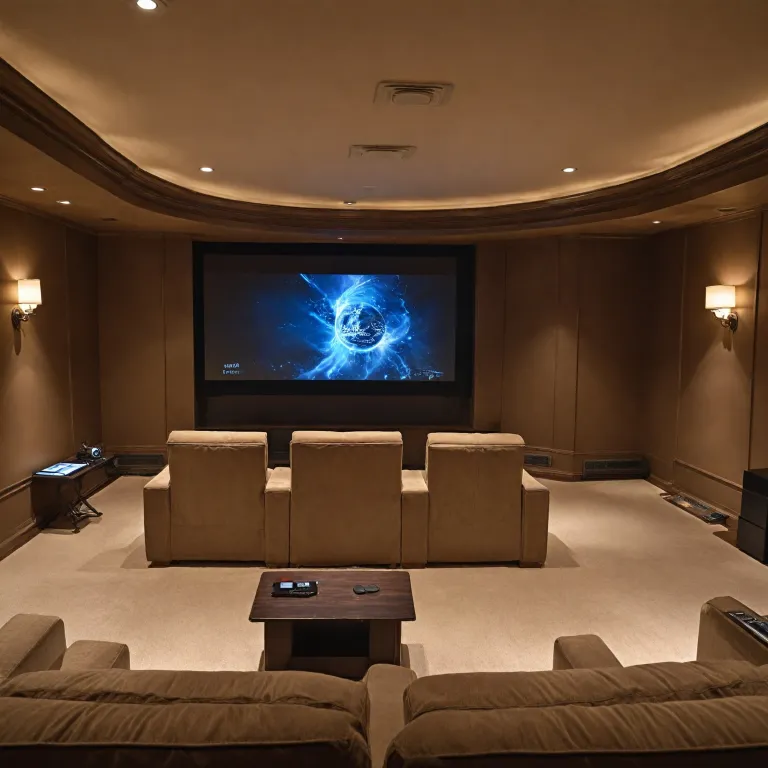
Why rear surround speakers matter in a projector based room
Rear surround speakers often feel secondary when people plan a projector based theater. Yet these surround speakers shape how sound wraps around the room and how convincing the surround sound feels. A carefully chosen rear speaker pair can elevate even a modest sound system into something genuinely cinematic.
In a projector space, the screen and projector usually dominate attention, while speakers and subwoofer fight for position and distance. Rear surround speakers must integrate with the main speakers, front speakers, and center channel without drawing visual focus away from the image. When the rear speakers and side surrounds are balanced, the listener perceives a continuous audio bubble rather than isolated sound sources.
Brands such as Klipsch and Polk offer compact surround speaker and sound speaker designs that suit tight rooms. These speakers can deliver surprisingly high sound quality and strong bass response when paired with a capable subwoofer and well tuned surround channels. Matching the tonal character of rear speakers with the main speakers helps dialogue and effects move smoothly from front to rear.
Dolby Digital and Dolby Atmos formats rely on precise surround channels and accurate rear surround placement. In a projector based theater, the listening position often sits close to the rear wall, which complicates rear speakers placement and angle. Thoughtful system surround planning ensures that every speaker, including each rear speaker, contributes to a coherent and enveloping sound field.
Balancing projector placement, room layout, and rear surround position
Home theater projector placement strongly influences where rear surround speakers and side surrounds can sit. The throw distance, screen size, and seating layout define the listening position and therefore the ideal surround speaker geometry. When the projector forces seats against a wall, rear speakers must work harder to maintain convincing surround sound.
Ideally, each rear speaker sits slightly above ear height and behind the listening position. This position allows the rear surround channels to create depth without drawing attention away from the front speakers and center channel. If the room is shallow, angling the rear speakers toward the center of the room can compensate for limited distance.
Side surround and rear surround speakers should form a smooth arc around the seating area. In many projector rooms, doors, windows, or acoustic treatments restrict where a speaker or subwoofer can go. Wall mounting compact Klipsch or Polk surround speakers often solves these constraints while preserving good sound quality and bass response.
Lighting control also affects how high you can mount rear speakers without casting distracting shadows. Guidance on optimizing lighting for your home theater experience helps align projector beams, light fixtures, and speaker brackets. When the room layout, projector beam, and surround channels work together, the entire sound system feels more natural and less like a collection of separate products.
Calibrating surround channels for precise sound in a projector space
Even the best rear surround speakers sound average without careful calibration of levels, distance, and timing. Modern AV receivers measure each speaker, including every rear speaker and side surround, to align sound arrival at the listening position. This calibration is especially important in projector rooms where seating and speaker position rarely follow textbook layouts.
Dolby Digital and Dolby Atmos formats expect accurate distance data for all speakers and subwoofer. When the system surround processor knows the exact distance to each surround speaker, it can time align effects that pan from front speakers to rear speakers. This timing preserves the illusion of objects moving naturally through the theater space.
During setup, start by matching the sound level of each speaker, including the center channel and main speakers, to a reference volume. Then fine tune the bass response by adjusting the crossover between the subwoofer and the surround speakers. Many Klipsch and Polk models handle high crossover points well, which helps keep bass energy consistent around the room.
Projector fans and room acoustics can mask subtle surround sound details. Soft furnishings, wall panels, and careful speaker angle improve sound quality and reduce harsh reflections from the rear surround channels. When calibration is complete, the sound system should make the projector image feel larger and more immersive, rather than competing with it.
Integrating rear surround speakers with Dolby Atmos and advanced formats
As more projector owners adopt Dolby Atmos, the role of rear surround speakers becomes even more strategic. Atmos adds height channels above the listening position, but it still relies on strong surround speakers at ear level. A balanced combination of side surrounds, rear speakers, and height channels creates a three dimensional sound field that matches the projector’s large image.
In an Atmos capable theater, each rear speaker must blend seamlessly with the main speakers and front speakers. The center channel anchors dialogue, while the surround channels handle ambience, effects, and directional cues. If the rear surround speakers sound thin or lack bass response, the overall sound quality suffers, even with a powerful subwoofer.
Brands like Klipsch and Polk design product lines where a speaker, subwoofer, and surround speaker share similar tonal balance. Using matching speakers for front, side surround, and rear surround positions helps Dolby Digital and Dolby Atmos mixes sound as intended. This consistency is especially noticeable when effects move rapidly from the screen to the back of the room.
Projector based systems often route multiple channels through a compact AV receiver, which must manage system surround processing efficiently. Choosing an amplifier that can drive high quality surround speakers at realistic theater levels is essential. When the electronics, speakers, and projector work together, the home theater feels closer to a professional cinema than a simple living room setup.
Practical placement strategies for small and irregular projector rooms
Many projector owners work with small rooms, sloped ceilings, or asymmetrical walls that complicate rear surround placement. In such spaces, flexibility with speaker position and distance matters more than strict adherence to diagrams. The goal is to maintain balanced surround sound at the main listening position, even if the speakers sit in unconventional spots.
When the sofa touches the back wall, mounting each rear speaker slightly higher and angling it down can help. This position reduces harsh reflections and allows the rear surround channels to envelop rather than shout at the listener. Side surrounds can then sit slightly forward of the listening position to complete the surround speakers arc.
Compact Klipsch or Polk surround speaker models often fit on narrow walls or ceiling brackets. Pairing these speakers with a capable subwoofer preserves bass response without overloading the room with large cabinets. In some cases, using smaller main speakers and front speakers frees space for better rear speakers placement.
For projector enthusiasts exploring wireless connectivity and flexible layouts, resources on top home theater projectors with Wi Fi and Bluetooth can guide product choices. Wireless audio links can simplify routing surround channels to the back of the room. Whatever the configuration, the sound system should prioritize coherent surround sound over visual symmetry alone.
Evaluating speakers, brands, and system upgrades for rear surrounds
Selecting the best rear surround speakers for a projector room involves more than reading product labels. Consider how each speaker integrates with existing main speakers, front speakers, and the center channel. A cohesive family of speakers usually delivers better sound quality than a mix of unrelated models.
Klipsch speakers often emphasize dynamic impact and high efficiency, which suits large projector rooms. Polk speakers typically aim for a smooth tonal balance that flatters both movies and music. Either brand can serve effectively as a surround speaker or rear speaker when matched thoughtfully with the rest of the sound system.
Upgrading the subwoofer can sometimes improve perceived bass response from the rear surround channels. When the subwoofer handles low frequencies cleanly, the surround speakers can focus on midrange detail and spatial cues. This division of labor helps Dolby Digital and Dolby Atmos mixes retain clarity during intense action scenes.
As you plan system surround upgrades, prioritize the center channel, then main speakers, and finally rear speakers and side surrounds. However, do not underestimate how much a well chosen rear surround pair will enhance immersion. A balanced investment across all surround channels ensures that every seat in the theater room benefits from consistent and engaging audio.
Fine tuning listening position, distance, and overall theater synergy
The listening position in a projector based theater acts as the reference point for every speaker decision. Small adjustments in seat distance from the screen and rear wall can dramatically change how rear surround speakers perform. Aim for enough space behind the seating to let each rear speaker breathe acoustically.
Measure and record the distance from the listening position to each speaker, including front speakers, side surrounds, and rear speakers. Feed these distances into the AV receiver so the system surround processor can time align all channels. This alignment allows Dolby Digital and Dolby Atmos soundtracks to maintain precise imaging across the theater room.
Pay attention to how the subwoofer interacts with the room and the surround speakers. Moving the subwoofer slightly can smooth bass response and reduce boomy spots that mask subtle surround sound effects. When bass integrates cleanly with every surround speaker, the overall sound quality feels more natural and less fatiguing.
Ultimately, the best projector based theater is one where image and audio support each other gracefully. Rear surround speakers, main speakers, and the center channel should frame the screen without drawing visual attention. With careful calibration, thoughtful product choices, and respect for room acoustics, a home theater projector setup can rival many commercial cinemas for immersive surround sound.
Key statistics on home theater audio and surround speakers
- [No statistics available in the provided dataset.]
Common questions about rear surround speakers in projector rooms
How important are rear surround speakers in a small projector room ?
Rear surround speakers remain important even in small rooms, because they complete the surround channels and help effects move naturally behind the listener. In compact spaces, careful position, distance, and angle matter more than sheer speaker size. Wall mounting compact surround speakers slightly above ear level usually delivers the best balance between immersion and practicality.
Can I mix different brands for front speakers and rear speakers ?
Mixing brands for front speakers and rear speakers is possible, but it can affect tonal consistency. Using Klipsch at the front and Polk at the rear, for example, may create subtle differences in sound character. Whenever possible, choose a surround speaker set from the same product family to maintain coherent sound quality across all channels.
Where should I place the subwoofer relative to the rear surround speakers ?
The subwoofer does not need to sit near the rear surround speakers, because bass is largely non directional. Instead, experiment with subwoofer placement along the front wall or side walls to achieve smooth bass response at the listening position. Once the subwoofer integrates well with the main speakers and surround speakers, the entire sound system will feel more balanced.
Do I need Dolby Atmos height speakers if I already have rear surrounds ?
Dolby Atmos height speakers are not mandatory, but they add a vertical dimension that complements existing rear surround speakers. If your projector room allows ceiling or height module installation, Atmos can significantly enhance immersion. However, well placed side surrounds and rear speakers running Dolby Digital can still deliver excellent surround sound without height channels.
How high should I mount rear surround speakers behind the seating ?
Rear surround speakers typically work best when mounted about 30 to 60 centimeters above ear level. This height helps the surround channels blend smoothly with the front speakers and center channel while avoiding localization. In projector rooms with tall ceilings, avoid placing rear speakers too high, as excessive height can weaken the sense of envelopment.