
Summary
Editor's rating
Value for money: where they make sense and where they don’t
Discreet look, basic but smart design
Build quality and long-term feel
Sound: solid for the price, but you still want a sub
Install: doable for a DIYer, with a few gotchas
What you actually get with the RC80i
Pros
- Easy DIY-friendly installation with clear templates and simple clamp system
- Neutral, decent sound quality for the price, especially with a subwoofer
- Low-profile, paintable design that blends well into ceilings and works in damp rooms
Cons
- Not true Bluetooth speakers; require a separate amp/receiver and wiring
- Bass is limited without a subwoofer and specs are a bit optimistic on low-end response

Specifications
View full product page →| Brand | Polk Audio |
In-ceiling speakers that don’t feel like a DIY mistake
I put the Polk Audio RC80i 8" in-ceiling speakers in my living room and kitchen because I wanted clean background music and better movie sound without big boxes on stands everywhere. I’m not an installer, just a reasonably handy person with a drywall saw and a basic AV receiver. I wired them to a standard home theater receiver, nothing high-end, and used them both for TV/movies and Spotify/Apple Music streaming. So this is very much a “normal user with a bit of patience” point of view, not an audiophile lab test.
First important point: these are passive speakers, not true Bluetooth speakers, even though the listing throws “Bluetooth” in the title. You still need an amp or AV receiver and separate Bluetooth (from the receiver or a streamer). If you’re expecting to pair your phone directly to the ceiling, that’s not how these work. Once you accept that, the rest of the experience is pretty solid for the price.
In daily use, the RC80i pair does exactly what you buy in-ceiling speakers for: they stay out of the way, sound decent, and cover the room evenly. They’re clearly not on the same level as a serious floorstanding setup, but for background music, TV, and even some home theater use, they hold up better than I expected. The bass is not earth-shaking, but with a sub they integrate nicely.
Over a few weeks, I used them for movies like action blockbusters, some YouTube stuff, and a lot of casual music while cooking. The overall impression: good value, easy to live with, but not magic. If you go in with realistic expectations for the price and type of product, you’ll probably be pretty happy. If you’re chasing reference-level sound, you’ll hit their limits quickly.
Value for money: where they make sense and where they don’t
Price-wise, the RC80i sits in a sweet spot for casual users: not cheap junk, but also far from the high-end in-ceiling stuff that costs several times more. For the cost of this pair, you get sound that is clearly better than most TV speakers or basic soundbars, plus the clean look of having everything in the ceiling. If you’re building a whole-house audio setup with multiple rooms, the price per pair makes it realistic to do 4–6 speakers without blowing up your budget.
Where they really shine in terms of value is background and multi-room audio. For a kitchen, living room, or office, they deliver more than enough quality, and the ease of installation keeps labor costs down if you’re doing it yourself. Compared to some of the more expensive in-ceiling options, the jump in price isn’t always justified for the average ear, especially if you’re mostly streaming compressed music or watching TV.
On the flip side, if you’re planning a serious dedicated home theater and you’re picky about sound, you might outgrow these pretty fast as your main front speakers. They work well as Atmos or surround channels, but for front L/R in a high-end setup, I’d personally spend more. Also, if you were attracted by the “Bluetooth” wording and expected a self-contained wireless system, you’ll need to budget for a decent receiver or amp, which changes the value equation.
Overall, I’d say the value is good to very good if you: already have or plan to buy a receiver, are okay with running wires, and want a clean look with solid sound for normal home use. If you’re after audiophile-level performance or a truly wireless solution, these aren’t the right product, and the money is better spent elsewhere. But as a practical, budget-conscious choice for in-ceiling audio, they get the job done well.
Discreet look, basic but smart design
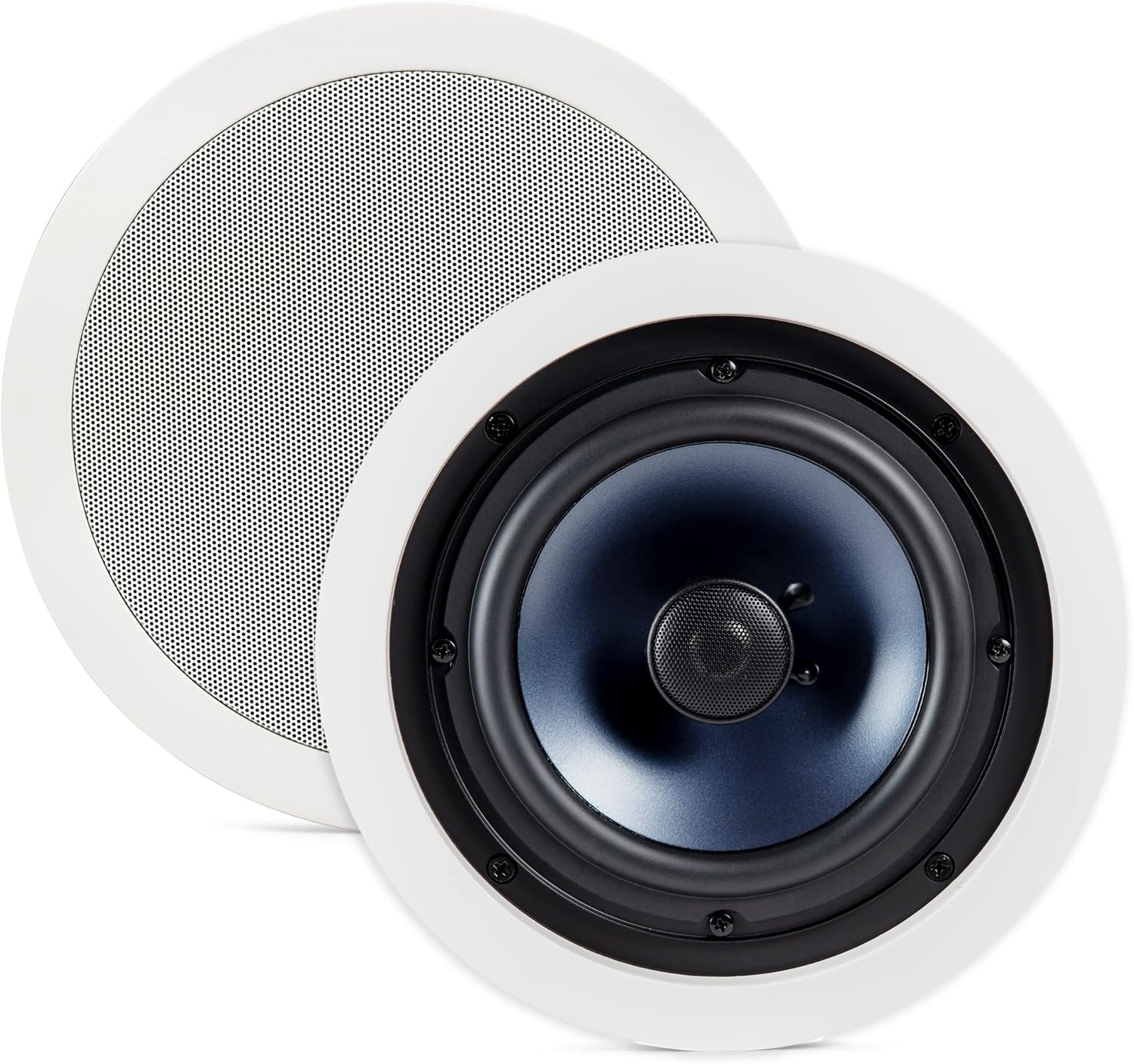
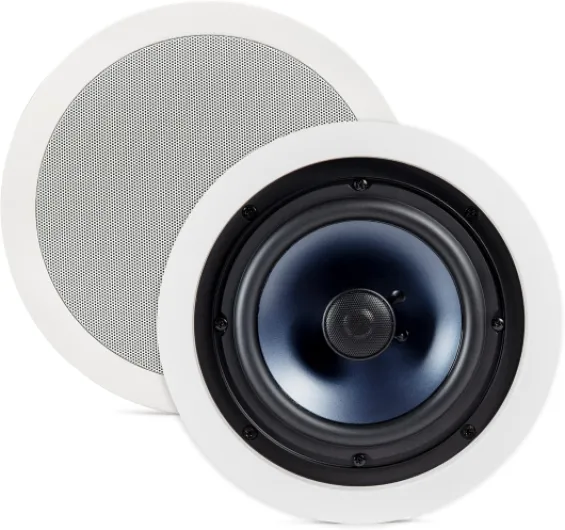
Design-wise, the RC80i is exactly what you’d expect from an in-ceiling speaker: a white round frame with a white metal grille. The whole point is to disappear into the ceiling, and they do that pretty well, especially if you take the time to paint the grilles. The edges are wide enough that your drywall cuts don’t have to be picture-perfect, which is a relief if you’re not used to cutting big circles overhead.
The grilles are paintable, and Polk includes cardboard masks so you don’t clog the speaker with paint. I sprayed mine with the same ceiling paint and they blend in nicely. Up close, you still see the perforated grille, but from normal viewing distance they just look like standard ceiling vents. If you’re picky about aesthetics, this is a big plus: no logos screaming for attention, no shiny trim, just simple, neutral white.
One design detail I liked is the aimable tweeter. You can gently tilt it toward the main listening position, which helps a bit with clarity if the speakers aren’t placed perfectly. It’s not a night-and-day difference, but in my living room I could hear a small improvement in dialogue and high-frequency detail when the tweeters were pointed towards the couch instead of straight down.
The mounting system uses rotating cam arms that clamp to the drywall as you tighten the screws from the front. It’s a common design, but here it feels reliable enough and doesn’t rattle once tightened properly. There’s no fancy magnetic grille system like on some pricier models; the grilles just press-fit in. They hold fine, but you do need a fingernail or a thin tool to pop them off if you want to access the screws later. Overall, the design is practical and low-key, not pretty in a showroom sense, but once installed, you basically stop noticing them, which is the whole point.
Build quality and long-term feel
In terms of build, the RC80i feels decent and in line with the price. The frame is plastic, the grille is metal, and the drivers look like typical midrange Polk parts. Nothing about them screams high-end, but nothing feels super flimsy either. Once they’re in the ceiling, you’re not touching them much anyway, so the most important thing is that the clamps hold and the grille doesn’t warp or rust.
Polk advertises them as moisture-resistant, not waterproof. That means bathrooms, kitchens, and covered porches are fine as long as they’re not directly hit by water. I’ve had a pair near a bathroom for a while, and the grilles haven’t rusted and the sound hasn’t changed. Just don’t put them in a steam shower ceiling or somewhere they’ll be constantly soaked; that’s asking for trouble. The rubber seal around the frame is a nice touch to help keep moisture out of the ceiling cavity and also help with vibration.
Regarding lifespan, Polk gives a lifetime warranty, which is pretty reassuring. That said, I did see at least one user mention a “sparkling” or crackling sound in one speaker after a couple of months. That can be a defect, a wiring issue, or someone pushing them too hard with a bad amp. In my setup, I haven’t had any weird noises so far, but like any budget speaker, there’s always a small risk of a dud unit. The good thing is Polk support tends to be decent, and with a lifetime warranty, you’re not totally stuck if something goes wrong.
Physically, once you install them correctly and don’t over-tighten the clamps, they feel like they’ll just sit there for years without drama. The only real wear point is the grille paint if you go too heavy with it and clog the holes or cause peeling. So if you paint them, do light coats and let them dry properly. Overall, I’d call the durability pretty solid, especially for indoor use. Just respect their limits and don’t treat them like commercial PA gear.
Sound: solid for the price, but you still want a sub
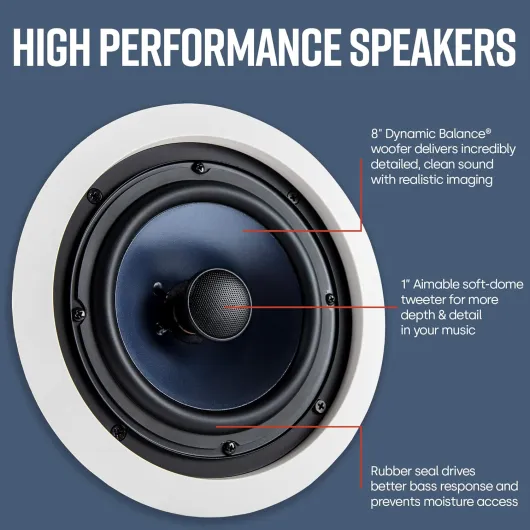
On the sound side, the RC80i lands in the “better than basic, not high-end” zone. For background music and TV, they’re more than enough. For serious listening, they’re okay, but you feel the limitations of an in-ceiling design with no real enclosure. The 8" woofer gives you decent midbass and body, but if you’re expecting deep, punchy bass from these alone, that’s not realistic. Pairing them with a subwoofer makes a big difference.
For movies, I tried them both as front L/R in a small room and as Atmos height speakers in a larger setup. As front speakers with a sub, they handled action scenes from stuff like Star Trek and big CGI-heavy movies without obvious distortion at normal to loud home volumes. I wouldn’t blast them at full receiver power for long, but at around half volume on a mid-range Denon and Sony receiver, they stayed clean enough and didn’t sound harsh. Effects moved around the room pretty well when used in a 5.1 or 7.1 setup, and the timbre match with other Polk speakers was good.
For music, they’re neutral to slightly warm, which is fine for long listening sessions. Vocals are clear, guitars and pianos sound natural enough, and the tweeter doesn’t get painfully sharp unless you crank the treble on your receiver. The stereo image is obviously not as precise as good bookshelf speakers at ear level, but for ceiling speakers, the soundstage is decent. In a kitchen or open-plan living room, they fill the area nicely and you don’t get big dead zones.
On the downside, at higher volumes you can tell they’re not premium drivers. The bass gets a bit loose, and complex tracks can sound a little congested. Also, that "35 Hz" frequency response on the spec sheet is optimistic; in real-world use without a proper back box, they don’t hit that low with authority. You absolutely should plan on a subwoofer if you care about movie impact or full-range music. Still, for what they cost and what they’re meant to do, the performance is pretty solid. Just keep your expectations in check and don’t try to turn them into nightclub speakers.
Install: doable for a DIYer, with a few gotchas
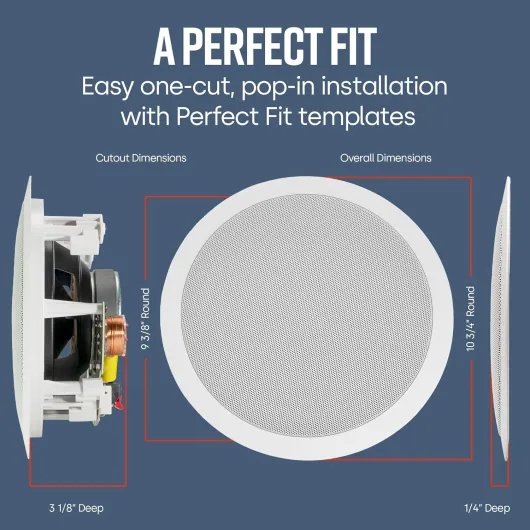
Installation is where these speakers are actually pretty friendly. Polk includes cardboard templates that you can tape to the ceiling, trace, and then cut along the line. I used a simple drywall saw, and as long as you don’t rush, it’s straightforward. The trim ring hides small mistakes, so you don’t need a perfect circle. I’d say if you’re comfortable drilling holes and patching minor drywall, you can handle this.
The clamp system is easy: slide the speaker into the cutout, tighten the front screws, and the little dog-leg clamps swing out behind the drywall and pull the speaker tight. Once tightened, mine felt secure with no wobble. I also followed the common tip of putting some insulation or batting behind the speaker (not packed tight, just loosely), which helped a bit with perceived bass and reduced the hollow sound from the ceiling cavity. It’s not a proper enclosure, but it’s better than nothing.
Running the wires is where things can get annoying, but that’s not Polk’s fault. In my case, I had an attic above the rooms, so I ran 14-gauge speaker wire through the attic, dropped it through small holes above the speaker locations, and pulled it into the cutouts. Then I fed the wire into the spring terminals on the speakers. If you don’t have attic access, you’ll be fishing wires through walls and maybe cutting extra holes, so plan some time for that.
One thing to highlight: they are not plug-and-play. You need a receiver or amp, some basic tools, and at least a rough idea of where your joists and electrical lines are. A stud finder and checking for existing wires is important so you don’t cut into something you shouldn’t. Overall, though, for in-ceiling speakers, this is about as painless as it gets. The manual is clear enough, and if you’ve ever mounted anything in drywall, you’ll probably be fine. Just don’t start at 10 PM the night before a party, because if you run into a concrete section or weird framing, it can get messy fast.
What you actually get with the RC80i
Out of the box, the Polk RC80i set is pretty straightforward: two 8" in-ceiling speakers, two metal grilles, templates/paint masks, and a basic manual. No fancy extras, no cables, no mounting hardware beyond what’s already built into the speaker frames. They’re clearly designed for someone who already has a receiver and some speaker wire lying around. The packaging is simple but protective enough; mine arrived without any damage or bent grilles.
Each speaker is an 8" woofer with a 1" aimable tweeter. Polk markets them as suitable for bathrooms, kitchens, and covered porches because the components are moisture-resistant. Just to be clear: they’re not waterproof, so I wouldn’t mount them in a fully exposed outdoor spot. In my case, one pair went in a regular living room ceiling, another pair in a kitchen ceiling near, but not directly above, the cooking area. No issues so far with steam or humidity.
The specs on paper are pretty typical for this category: 8 ohms, 35 Hz low end (on spec, not in real life without a box), 50W rated, and they’re timbre-matched with other Polk speakers. That timbre-matching thing basically means if you mix them with other Polk models in a home theater setup, the sound character should be fairly consistent. In practice, when I mixed them with a Polk center and a different sub, the blend was decent and nothing sounded totally off.
Where the product page is a bit misleading is the “Bluetooth ceiling speakers” label. These are just standard wired speakers. The “Bluetooth” part only happens if your amp or receiver has Bluetooth. If someone buys these expecting a direct phone-to-speaker pairing with no extra gear, they’ll be disappointed. So in terms of presentation and promise vs reality: the speakers themselves are fine, but the wording around Bluetooth is borderline confusing. Once you understand that, the rest of the package is pretty honest for the money.
Pros
- Easy DIY-friendly installation with clear templates and simple clamp system
- Neutral, decent sound quality for the price, especially with a subwoofer
- Low-profile, paintable design that blends well into ceilings and works in damp rooms
Cons
- Not true Bluetooth speakers; require a separate amp/receiver and wiring
- Bass is limited without a subwoofer and specs are a bit optimistic on low-end response
Conclusion
Editor's rating
The Polk Audio RC80i in-ceiling speakers are a practical, no-nonsense option if you want sound without visible boxes everywhere. They’re easy enough to install for a moderately handy person, the design blends into a typical white ceiling, and the sound is solid for TV, movies with a sub, and everyday music. They’re not trying to be high-end, and they don’t pretend to be once you get past the slightly misleading “Bluetooth” mention. Paired with a decent receiver and a subwoofer, they can handle a 5.1 or 7.1 setup in a normal-sized room without falling apart at reasonable volumes.
They make the most sense for people who want whole-house or multi-room audio, Atmos height channels, or clean-looking living room speakers on a budget. If you’re okay with running wires and already have (or plan to get) an amp or AV receiver, the value is pretty strong. On the other hand, if you’re expecting direct Bluetooth from your phone, deep chest-thumping bass from the ceiling alone, or audiophile-level detail, you’ll be disappointed and should look at more expensive or different-style speakers. In short: they’re good value, decent performers, and very practical, as long as your expectations match what in-ceiling speakers at this price can realistically do.